

Understanding “Broken Heart Syndrome” — its science, symptoms, and hope for recovery
By Rafael R. Castillo, MD
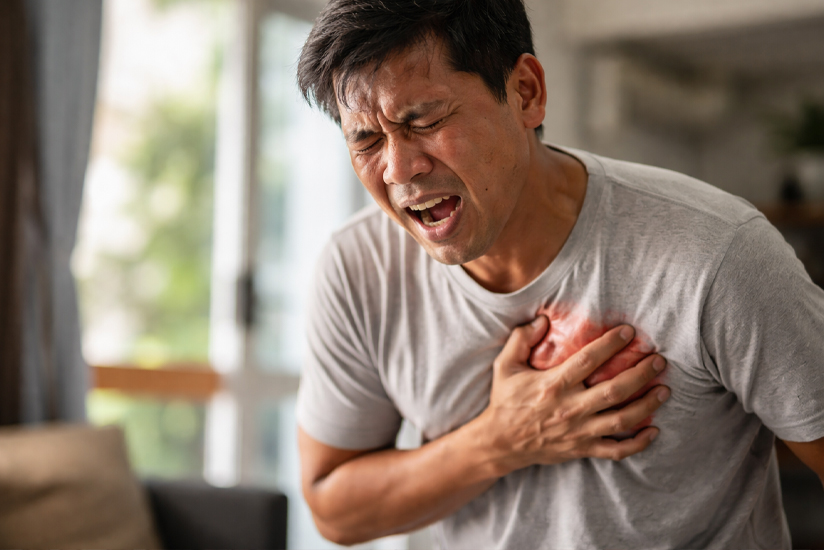
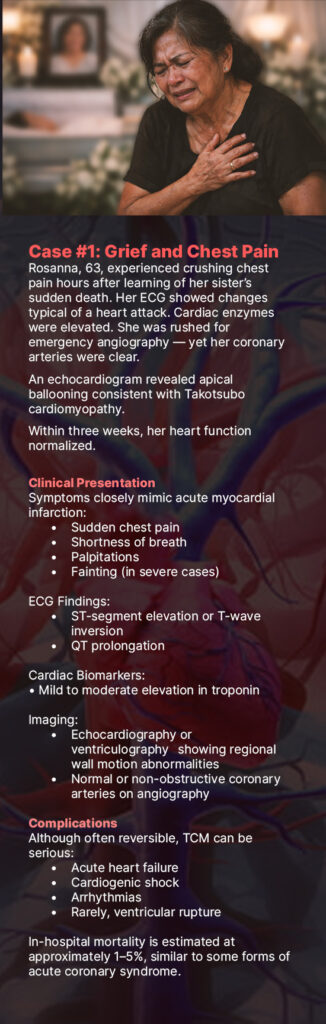
A devastating phone call. The loss of a loved one. Even overwhelming joy. For some people, intense emotional or physical stress can trigger sudden chest pain and heart failure symptoms that look exactly like a heart attack — yet the coronary arteries are normal. This condition, known as Takotsubo cardiomyopathy, or “broken heart syndrome,” is real, potentially serious, and increasingly recognized worldwide. The good news: with prompt care, most patients recover.
What Is Takotsubo Cardiomyopathy?
Takotsubo cardiomyopathy (TCM), first described in Japan in 1990, is a transient weakening of the heart muscle, usually affecting the left ventricle. The name “takotsubo” refers to a Japanese octopus trap that resembles the ballooned shape of the affected heart seen on imaging.
Unlike a classic heart attack, TCM does not involve blocked coronary arteries. Instead, a surge of stress hormones appears to temporarily “stun” the heart muscle.
The Science: Pathophysiology
The exact mechanism is still being studied, but leading theories include:
1. Catecholamine Surge
Severe emotional or physical stress triggers a spike in adrenaline and related stress hormones. These catecholamines can:
• Directly injure heart muscle cells
• Cause coronary microvascular spasm
• Alter calcium handling within myocardial cells
• Produce temporary contractile dysfunction
Blood levels of catecholamines in TCM patients are often markedly elevated compared to those with typical heart attacks.
2. Microvascular Dysfunction
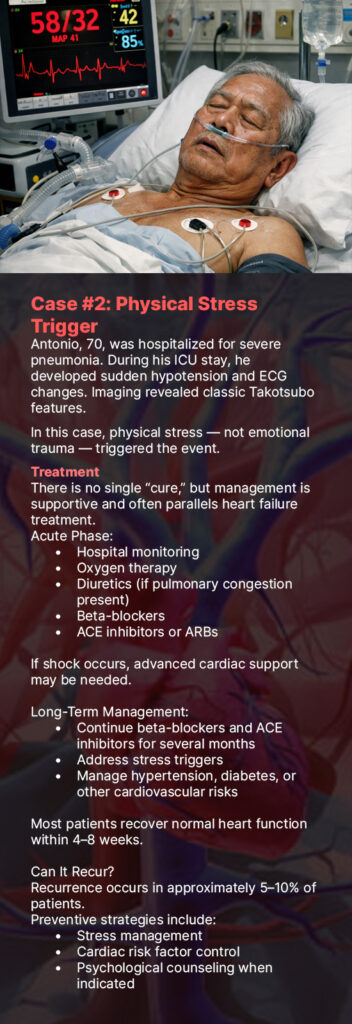
Small coronary vessels may constrict or fail to dilate properly, reducing oxygen delivery to the heart muscle despite normal major arteries.
3. Myocardial Stunning
The left ventricular apex becomes akinetic (does not contract properly), while the base of the heart may contract normally or even hyperactively — producing the classic “apical ballooning” appearance.
Importantly, this dysfunction is reversible in most cases within days to weeks.
Who Is at Risk?
Takotsubo cardiomyopathy accounts for approximately 1–2% of suspected acute coronary syndrome cases.
Most common in:
• Postmenopausal women (≈90% of cases)
• Individuals exposed to severe emotional stress
• Patients undergoing major medical illness or surgery
• Those with neurologic conditions (stroke, seizures)
Hormonal factors may play a role, particularly reduced estrogen’s protective cardiovascular effects after menopause.
Why This Matters in the Philippines
In a culture where emotional resilience is admired and stress is often internalized, chest pain after emotional shock may be dismissed as “nerbiyos” or anxiety. Public awareness is essential so that symptoms are evaluated promptly.
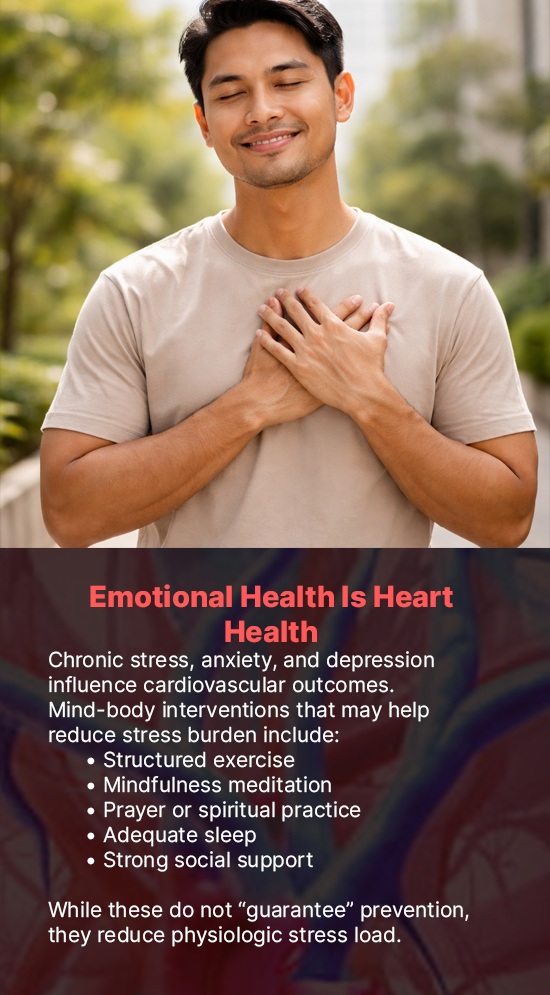
Moreover, the condition highlights the deep interplay between mental health and cardiovascular health — an area that deserves stronger integration into primary care.
Final Reflection
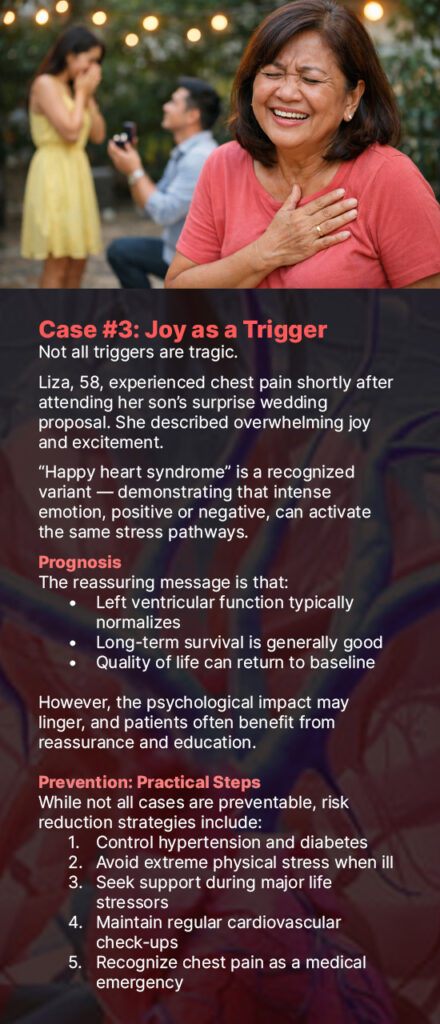
Takotsubo cardiomyopathy teaches us that the heart responds not only to cholesterol and blood pressure, but also to loss, fear, excitement, and shock. The boundary between emotional trauma and physical illness is thinner than we once believed.
Fortunately, science now recognizes this syndrome — and most patients recover.
The heart may break. But with proper care, it also heals.
“Takotsubo cardiomyopathy reminds us that the heart is not only a pump — it is profoundly connected to our emotional and neurologic world.”
References
1. Sato H, et al. Takotsubo-type cardiomyopathy due to multivessel spasm. In: Kodama K, Haze K, Hon M, editors. Clinical Aspect of Myocardial Injury. Tokyo: Kagakuhyouronsha; 1990.
2. Templin C, et al. Clinical features and outcomes of Takotsubo cardiomyopathy. N Engl J Med. 2015;373(10):929–938. doi:10.1056/NEJMoa1406761
3. Lyon AR, et al. Current state of knowledge on Takotsubo syndrome. Eur Heart J. 2016;37(15):1202–1211. doi:10.1093/eurheartj/ehv757
4. Pelliccia F, et al. Pathophysiology of Takotsubo syndrome. Circulation. 2017;135(24):2426–2441. doi:10.1161/CIRCULATIONAHA.116.027121
5. Ghadri JR, et al. International expert consensus document on Takotsubo syndrome. Eur Heart J. 2018;39(22):2032–2046. doi:10.1093/eurheartj/ehy076
6. Madias JE. Recurrence of Takotsubo syndrome. Heart Fail Clin. 2016;12(4):569–578. doi:10.1016/j.hfc.2016.06.007
7. Wittstein IS, et al. Neurohumoral features of myocardial stunning due to sudden emotional stress. N Engl J Med. 2005;352(6):539–548. doi:10.1056/NEJMoa043046