

By Dr. Tony Leachon
Mr. President, the health of a nation is inseparable from the strength of its social institutions and the clarity of its leadership. In the Philippines, the Department of Health (DOH) stands at the center of this mission, tasked not only with healing but also with protecting and empowering citizens. To achieve this, a comprehensive game plan must be anchored on fiscal responsibility, preventive measures, and partnerships that transcend traditional boundaries.
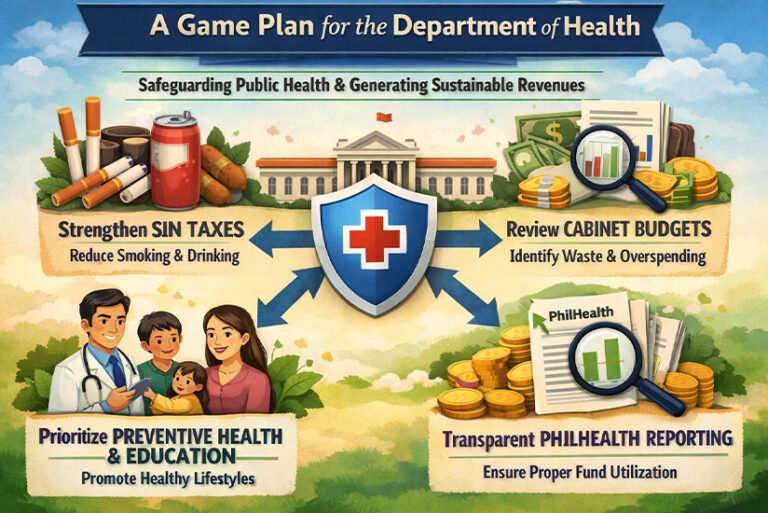
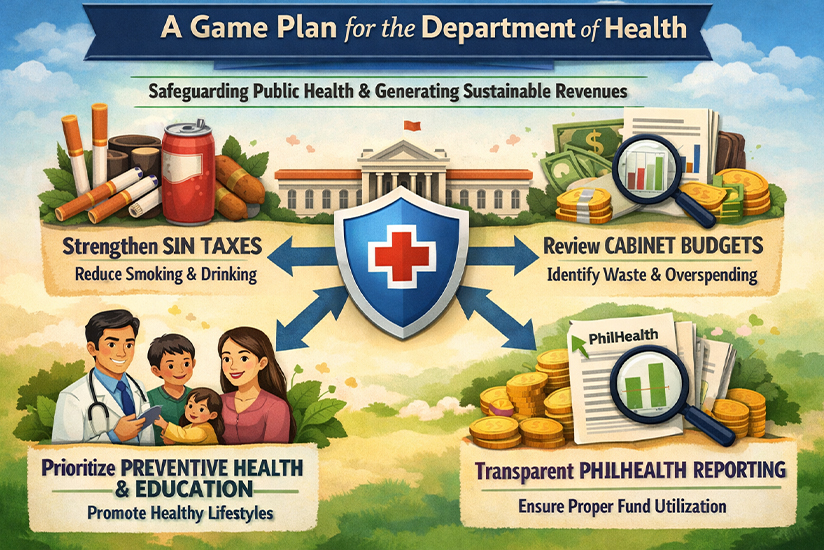
One of the most effective strategies to both safeguard public health and generate sustainable revenues is the strengthening of sin taxes. By raising excise taxes on tobacco, alcohol, and vape products, the government can achieve a dual purpose: discouraging harmful consumption and reducing the burden of lifestyle-related illnesses, while simultaneously creating a reliable stream of funds. These revenues should be directed to PhilHealth, ensuring that the nation’s health insurance system is adequately resourced to expand coverage and reduce the crushing out-of-pocket expenses that many families face.
Fiscal discipline must also extend to the broader machinery of government. A thorough review of cabinet budgets can uncover inefficiencies and areas of overspending. Savings identified from this process should be redirected toward social services, preventive health programs, and primary care strengthening. In this way, the presidency can demonstrate not only prudence but also compassion, ensuring that every peso saved is a peso invested in the well-being of the people.
Beyond government resources, the private sector must be engaged as a partner in nation-building. Public–private partnerships can accelerate progress in areas such as telemedicine, vaccination campaigns, and hospital infrastructure. Rather than relying on appeals to wealthy individuals, structured collaborations with corporations and institutions can harness innovation, technology, and corporate social responsibility for the common good.
Equity must remain at the heart of this agenda. Programs such as the Medical Assistance for Indigent Patients (MAIP) should be honored not only in government hospitals but also in private institutions. This expansion would ensure that vulnerable populations are not excluded from quality care simply because of where they seek treatment.
Preventive health and education must also be prioritized. Nationwide campaigns on healthy living, vaccination, and early screening can reduce the incidence of disease before it becomes catastrophic. Schools should be integrated into this effort, instilling lifelong habits of wellness among the youth.
Finally, governance and accountability are indispensable. Transparent reporting of PhilHealth fund utilization, coupled with independent monitoring bodies, will restore public trust and ensure that resources are not only allocated but also effectively used.
In sum, this game plan for the DOH is built on three pillars:
1. Raising revenues through health-protective measures
2. Optimizing government spending for social services
3. Forging partnerships that expand access and equity
It is a vision that balances pragmatism with compassion, fiscal discipline with moral clarity. By pursuing this path, the government can honor its responsibility to protect the health of its people while laying the foundation for a stronger, more resilient nation.