


By Hudson Pelayo

Why geopolitical shocks demand smarter cost discipline, sharper marketing, and stronger digital execution
The sudden escalation of conflict in Iran has sent waves of uncertainty across global boardrooms, forcing corporate leaders to reassess their strategic priorities for 2026. For many executives, one realization is unavoidable: key performance indicators (KPIs) are no longer insulated from geopolitical disruptions. What once appeared to be stable growth forecasts can quickly unravel under the weight of supply chain interruptions, volatile energy prices, and shifting consumer sentiment.
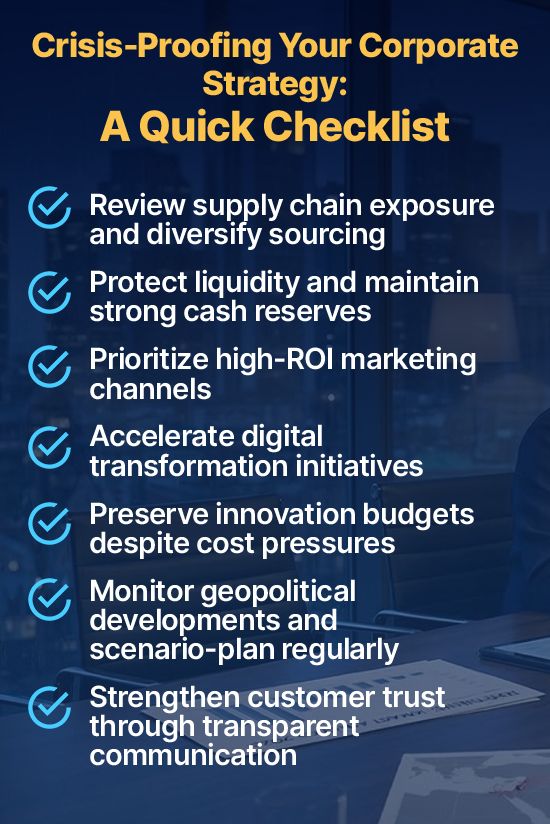
The financial implications are immediate. The cost of goods sold (COGS) is expected to rise as fuel prices climb and logistics routes become more complicated. Operational expenses (OPEX) may follow suit, driven by currency fluctuations, higher borrowing costs, and increased insurance premiums for global trade. Together, these pressures threaten to squeeze margins and slow consumer demand across industries.
In times like these, contingency planning becomes more than a corporate buzzword—it becomes a matter of survival.
Management meetings increasingly revolve around scenario mapping, risk mitigation, and liquidity protection. Cost-containment measures resurface as urgent priorities, while marketing teams confront a familiar dilemma: conserve cash to preserve the balance sheet or invest in visibility to protect market share.
Crisis leadership requires resisting the temptation of simplistic decisions. Across sectors, three strategic imperatives deserve careful consideration.
1. Cost Discipline Without Strategic Paralysis
The instinctive response to crisis is aggressive cost-cutting. Travel budgets shrink. Hiring freezes are imposed. Capital expenditures are postponed. While such measures may provide short-term relief, indiscriminate reductions can weaken a company’s long-term competitiveness.
Effective cost discipline is not about cutting everything—it is about cutting wisely.
Corporate leaders must distinguish between defensive retrenchment and strategic optimization. Non-core expenditures should be reviewed and rationalized. Supplier contracts can be renegotiated to reflect new market realities. Process efficiencies, automation initiatives, and productivity improvements should be accelerated.
However, investments that sustain growth—such as innovation pipelines, digital transformation, and talent development—must be protected.
History shows that companies emerging strongest from crises are those that streamline operations without sacrificing future readiness. Cost discipline should create resilience, not stagnation.
2. Marketing Recalibration, Not Marketing Retreat
Economic uncertainty inevitably changes consumer behavior. In times of geopolitical tension, households prioritize essentials, defer discretionary purchases, and become more value-conscious. For companies in leisure, luxury, hospitality, and service industries, this shift requires marketing recalibration.
However, reducing marketing visibility entirely can be a strategic mistake.
Silence in the marketplace often translates to lost relevance. Competitors that maintain communication—even at lower volumes—retain mindshare and customer loyalty.
The key lies in reframing marketing strategies:
–Emphasize value-driven messaging rather than aspirational positioning
–Highlight affordability, practicality, and reliability
–Reassure customers through trust-building communication
Precision becomes more important than scale. Data-driven targeting, localized campaigns, and performance-based digital placements can deliver stronger returns on smaller budgets.
In crisis environments, marketing must evolve from mass promotion to intelligent engagement.
3. Digital Presence as a Strategic Growth Driver
If physical markets slow, digital ecosystems remain active.
Even during periods of economic stress, consumers continue to research products, compare options, and transact online. E-commerce platforms, digital payment systems, and social media marketplaces become vital channels for sustaining revenue streams.
Companies with strong digital infrastructures are better positioned to adapt.
This is not the time to scale back digital investment. Instead, organizations should strengthen their omnichannel presence and ensure seamless customer journeys across platforms.
Key priorities include:
–Enhancing e-commerce capabilities
–Strengthening mobile platforms
–Leveraging targeted digital advertising
–Using analytics to personalize customer experiences
Promotions delivered through digital channels can stimulate demand while maintaining cost efficiency. More importantly, sustained digital visibility keeps brands top-of-mind when consumer confidence rebounds.
In volatile environments, digital agility becomes a decisive competitive advantage.
Strategic Agility as Corporate Lifeblood
Geopolitical crises are unpredictable. But corporate responses need not be reactive.
Organizations that balance cost discipline with marketing recalibration and strategic digital investments can transform disruption into opportunity. Slower competitors that freeze spending indiscriminately may lose visibility, talent, and customer trust.
Agility—defined by quick decision-making, data-driven adjustments, and disciplined execution—becomes the corporate lifeblood for 2026.
Periods of instability often reshape competitive landscapes. Companies that remain visible, adaptable, and forward-looking can capture market share while others retreat.
In crisis, survival belongs not to the biggest players—but to the most responsive.
“Organizations that balance cost discipline with marketing recalibration and strategic digital investments can transform disruption into opportunity.”