

By Dr. Tony Leachon
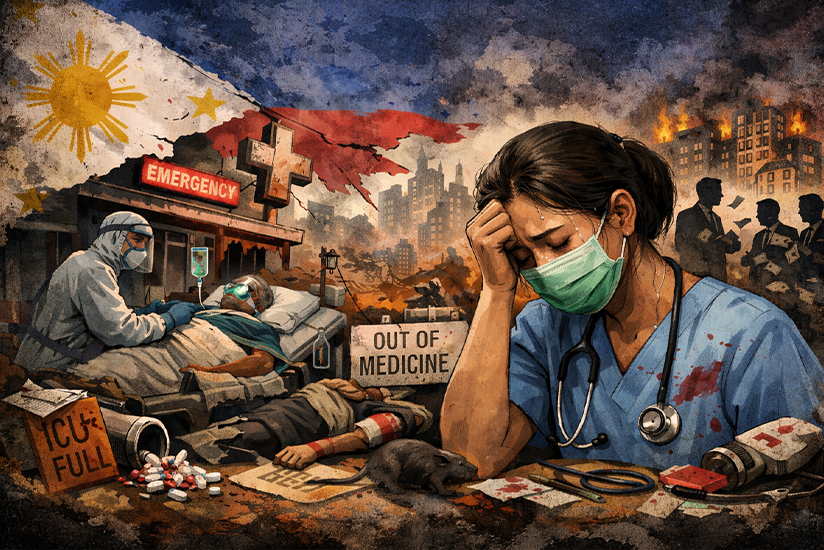
The Philippine healthcare system today stands at a dangerous crossroads—while nations across Asia, Europe, and Oceania strengthen universal health coverage, the Philippines is dismantling its own foundations, leaving millions vulnerable.
The Crisis at Home
The Philippine healthcare system is now among the weakest globally, not because of lack of talent or resources, but because of government neglect and systemic corruption.
Key failures include:
• Defunding of PhilHealth in 2024, compounded by the Supreme Court’s ruling on the unconstitutional transfer of ₱60 billion.
• Zero subsidy in 2025, leaving PhilHealth without government support despite the Universal Health Care (UHC) law mandating it.
• Diversion of funds into discretionary programs like MAIFIP, weakening PhilHealth and violating the UHC law.
• Non-payment of arrears from Sin Tax, PAGCOR, and PCSO, stripping billions meant for healthcare.
• Low salaries for healthcare workers, driving migration and worsening shortages
• Ghost hospitals and poor preventive programs, exposing the public to catastrophic health risks.
This is not merely mismanagement—it is a betrayal of constitutional duty to protect the health of the people.
Lessons from the World
While the Philippines retreats, other nations demonstrate what vision and prioritization can achieve:
• United Kingdom (NHS): Despite resource constraints, the NHS ensures care free at the point of service, covering nearly 100% of the population. – The King’s Fund
• Canada: Universal healthcare guarantees access, with government spending consistently above 10% of GDP on health. – Fraser Insti…
• Australia & New Zealand: Both countries combine public and private systems, ensuring equity while maintaining high-quality preventive care.
• Taiwan: Its National Health Insurance covers 99% of citizens, funded sustainably through payroll contributions and government subsidies. – Statista
• Other Asian nations (Japan, South Korea): Strong preventive programs and government prioritization have led to some of the highest life expectancies in the world.
These countries prove that universal healthcare is achievable when governments prioritize people over politics.
The Human Cost
In the Philippines, the absence of subsidy and the rise of ghost hospitals mean ordinary Filipinos face catastrophic out-of-pocket expenses, pushing families into poverty. Healthcare workers, underpaid and undervalued, continue to leave for better opportunities abroad. Preventive programs—vaccination, maternal care, community health—remain underfunded, leaving the nation vulnerable to epidemics and chronic disease burdens.
Call to Action
The Philippines must urgently:
• Restore government subsidy to PhilHealth as mandated by law.
• Redirect discretionary funds back to universal healthcare financing.
• Pay arrears from Sin Tax, PAGCOR, and PCSO to stabilize funding.
• Invest in healthcare workers’ salaries and training to stop the brain drain.
• Strengthen preventive and public health programs to protect future generations.
Without these reforms, the Philippines will remain an outlier—a country that abandoned its people while the rest of the world moved forward.
References
• Fraser Institute. Comparing Performance of Universal Health Care Countries, 2024. Fraser Insti…
• The King’s Fund. How does the NHS compare to the health care systems of other countries? (2023). The King’s Fund
• Statista. Global health care systems comparison – Statistics & Facts. Statista
#RelentlessForChange
#HealthWithHonor