


By Dr. Tony Leachon
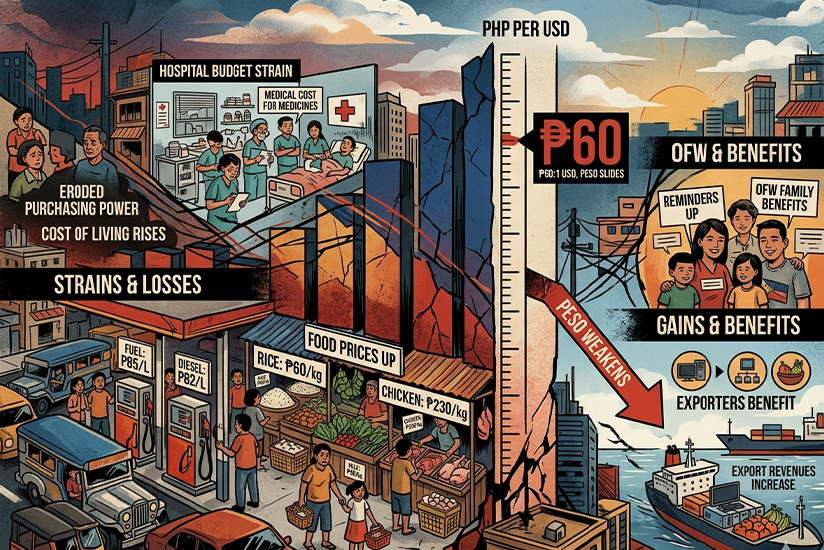
The peso’s slide to ₱60 against the US dollar has wide-ranging effects. It raises the cost of fuel, food, and medicine, strains hospital budgets, and erodes household purchasing power, while offering some benefits to exporters and overseas Filipino workers (OFWs).
This exchange rate is not just a financial statistic—it is a mirror of how economic instability translates into public health challenges.
For households, the impact is immediate and painful. Fuel and transport costs rise as imported oil becomes more expensive, pushing up jeepney and bus fares. Families already living on tight budgets must now spend more just to reach hospitals or workplaces.
Food inflation worsens as logistics costs climb, increasing the price of rice, wheat, and other staples. Medicines, many of which are imported, also become less affordable, reducing adherence to treatment. In the end, purchasing power weakens, forcing households to spend more on essentials and leaving less for healthcare, education, and savings.
The healthcare system itself is under strain. Hospitals face higher operating costs as electricity, fuel for generators, and imported medical supplies become more expensive. Patients postpone check-ups or procedures due to transport and cost barriers, while public health programs such as vaccination drives and rural clinics become costlier, limiting coverage. The peso’s weakness thus directly undermines the accessibility and quality of healthcare.
Economically, the picture is mixed. Exporters in electronics, BPO, and agriculture benefit, earning more pesos per dollar and potentially boosting jobs. OFWs also gain, as remittances sent in dollars have higher peso value, helping families cope with inflation. Yet import-dependent industries suffer: manufacturing reliant on imported raw materials faces higher costs, risking layoffs. Government finances are likewise affected—foreign debt servicing becomes more expensive, even as tax revenues from imports rise.
The risks are clear. A sustained peso weakness can trigger an inflationary spiral, pushing prices beyond manageable levels. Equity concerns deepen, as poorer households bear the brunt of rising costs while exporters and OFWs benefit. Government foreign debt also becomes more expensive to service, straining fiscal stability.
To cushion the blow, several measures are urgent. Fuel subsidies for transport and healthcare providers can offset rising costs. Nutrition programs must be strengthened to counter food inflation impacts. PhilHealth funding should be expanded to reduce out-of-pocket expenses. Renewable energy adoption must be accelerated to reduce dependence on imported oil. And transparent fiscal management is essential to maintain investor confidence and stabilize the peso.
In summary, a ₱60:$1 exchange rate is a double-edged sword—benefiting exporters and OFWs but hurting households, healthcare, and government finances.
Without decisive policy action, the burden will fall hardest on the poor and the sick. The challenge before us is not only economic but moral: to ensure that fiscal discipline, equity, and compassion guide our response, so that the health of our people remains the true measure of national strength.