


or decades, stroke care has focused—rightly—on survival. We count minutes to thrombolysis, celebrate when patients walk again, and breathe a sigh of relief when another stroke is prevented. But emerging evidence now tells us that for many stroke survivors, the most profound battle begins after discharge—not in the arteries, but in the mind.
The new Canadian study presented at the American Stroke Association’s 2026 meeting and reported in this issue of H&L is sobering. It confirms what many clinicians have long suspected: dementia after stroke is common, predictable, and often overlooked. Over the long term, cognitive decline may occur more frequently than recurrent stroke.
What makes this study important is not fear—but clarity. By identifying who is most at risk, we gain an opportunity to act earlier, follow patients more closely, and design interventions that go beyond preventing the next stroke to preserving memory, independence, and dignity.
Cognitive symptoms, depression, diabetes, and disability are not merely “side issues.” They are signals. And listening to them may shape the future of post-stroke care.
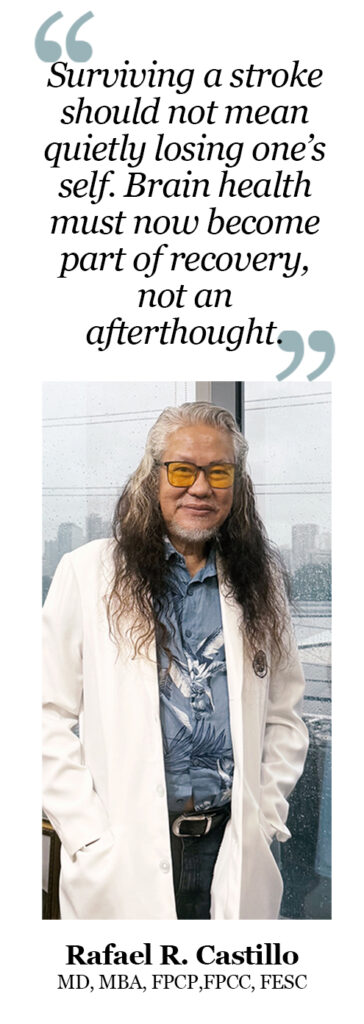
Surviving a stroke should not mean quietly losing one’s self. Brain health must now become part of recovery, not an afterthought.