

By Henrylito D. Tacio
“I would rather make mistakes in kindness and compassion than work miracles in unkindness and hardness.” – Mother Teresa in A Gift for God: Prayers and Meditations
As darkness fell and rain poured outside, my five-year-old nephew, Cole, was present in my living room when he unexpectedly inquired, “What is compassion?”
I was completely taken aback by his question. However, recognizing that he is merely a young child, I decided to narrate a story to help him grasp the concept behind his inquiry.
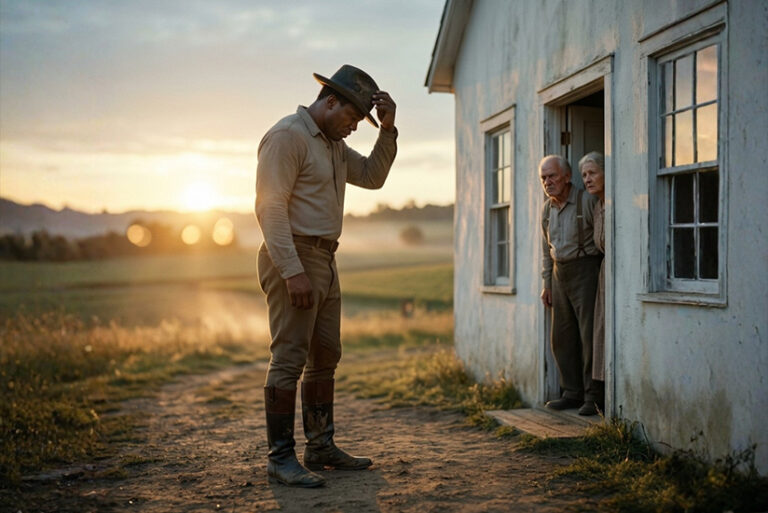
In the United States, I told him, there was this former black world heavyweight champion boxer. He invested some of his earnings in a 500-hectare farm. One day, he went out riding, to visit his newly-bought farm for the first time.
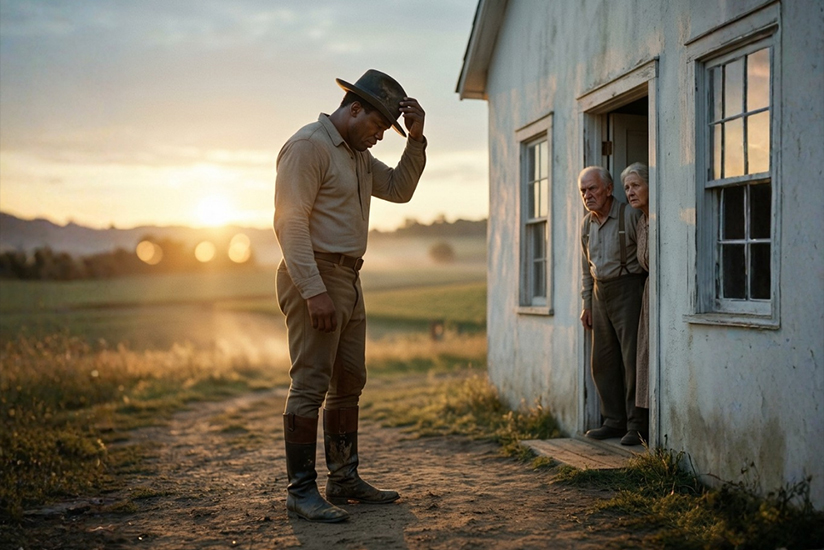
In the course of his inspection, he came upon an old whitewashed house in a secluded corner of the farm. Like the rest of the farm, it belonged to the ex-boxer; but he knocked politely at the closed door. An elderly white man and his venerable wife came to the door.
“What do you want?” the old man demanded, full of hostility. “Good morning,” the ex-boxer said, tipping his hat. “I was just riding by and…” “Keep riding!” the old man declared.
The ex-boxer looked a little sad. “Is there anything wrong,” he asked. The man replied, “Wrong? Of course, something’s wrong. Some nigger just bought this place.”
The ex-boxer looked down at his feet, embarrassed, and thinking. “I come with a message for you,” he said, looking at the old couple. Without telling that he was the “nigger” the squatters were talking about, he added, “You see, I know the fellow who bought this place. He sent me to tell you that he wants you to stay here, just like you have been doing, for the rest of your lives. And he told me to tell you that you’ll never be bothered, and that there won’t be any rent anymore.”
The ex-boxer tipped his hat, went back to his horse and rode off, humming.
“You see, the ex-boxer was showing his compassion to the old couple. Although he was called a ‘nigger,’ which a big slap on his face, he still managed to forgive the couple and showed mercy by allowing them to stay at his farm,” I told my nephew.
“Now, I know what compassion is!” my nephew said.
Compassion stems from the Latin term compati, which means “to suffer with,” merging com– (“together”) and pati (“to suffer”). This term made its way into the English language around the 14th century. It signifies a profound awareness of another’s pain, accompanied by a wish to alleviate that suffering. Compassion is deeply embedded in human evolution for the purpose of social connection and is fundamental to numerous religious beliefs.
“If you want others to be happy,” the Dalai Lama XIV once reminded, “practice compassion. If you want to be happy, practice compassion.” Sam Levenson also said, “Remember, if you ever need a helping hand, it’s at the end of your arm, as you get older, remember you have another hand: the first is to help yourself, the second is to help others.”
More often than not, we help others because we know they can also repay sometime in some ways. This is what we call as “utang kabubut-on” or “utang na loob.” It is some kind of a debt that can never be repaid.
But that is not what compassion is all about. Compassion is about doing something to someone who can never repay. It does not necessarily mean helping those who have less in life. It is more of aiding a complete stranger.
In Guideposts, an American publication, Sidney Robbins shared this story: “I was with an infantry platoon standing at ease at the railroad siding in the Canal Zone during World War II. The blistering tropical sun frayed our tempers and we were harassed by a group of barefoot ragged children who milled about begging for candy, a stick of gum, or anything.
Suddenly, the youngsters propelled an urchin forward, jeering in broken English, “He got six toes; he got six toes.”
The embarrassed boy tried to hold back, ashamed. A corporal who, I had always thought was insensitive and hard as nails, suddenly cried out, “Everybody with sex toes gets a reward!” and proceeded to press some candy into the hands of the surprised youngster.
Swiftly, other men followed his lead and the grateful boy’s hands were filled with dimes and gum and candy. His tormentors, suddenly quieted by this unexpected turn of events, trailed after their gift-laden friend, begging for his favor.
“Compassion is not a relationship between the healer and the wounded,” explained Pema Chodron, author of The Places That Scare You: A Guide to Fearlessness in Difficult Times. “It’s a relationship between equals. Only when we know our darkness well can we be present with the darkness of others. Compassion becomes real when we recognize our shared humanity.”
Henri J.M. Nouwen has the same view in mind. “Compassion asks us to go where it hurts, to enter into the places of pain, to share in brokenness, fear, confusion, and anguish,” he wrote. “Compassion challenges us to cry out with those in misery, to mourn with those who are lonely, to weep with those in tears. Compassion requires us to be with the weak, vulnerable with the vulnerable, and powerless with the powerless. Compassion means full immersion in the condition of being human.”
John Wesley’s rule of life was to save all he could and give all he could. When he was at Oxford, he had an income of £30 a year. He lived on £28 and gave £2 away.
When his income increased to £60, £100 and £120 a year, he still lived on £28 and gave the balance away.
At one time, the Accountant General for Household Silverware demanded of him a report of his silverware. His reply was, “I have two silver teaspoons in London and two at Bristol. This is all the silverware I have at present, and I shall not buy anymore while so many around me want bread.”
Wesley summed up his life with these words: “Do you not know that God entrusted you with that money (all above what buys necessities for your families) to feed the hungry, to clothe the naked, to help the stranger, the widow, the fatherless, and, indeed, as far as it will go, to relieve the wants of all mankind?”