


By Reuben Ricallo
Living with diabetes does not require extreme diets or punishing routines. What it requires is consistency—small, daily habits that protect blood sugar, prevent complications, and preserve quality of life. When practiced early and maintained steadily, a healthy lifestyle becomes one of the most powerful “medicines” for diabetes.
1. Eat for stability, not restriction
The goal is steady blood sugar, not deprivation. Meals should be balanced—combining carbohydrates with protein, fiber, and healthy fats. Portion control matters more than elimination. Rice, bread, and fruit can still be part of meals when eaten mindfully and in reasonable amounts. Avoid sugar-sweetened drinks and highly processed foods, which cause rapid glucose spikes.

2. Move every day—no gym required
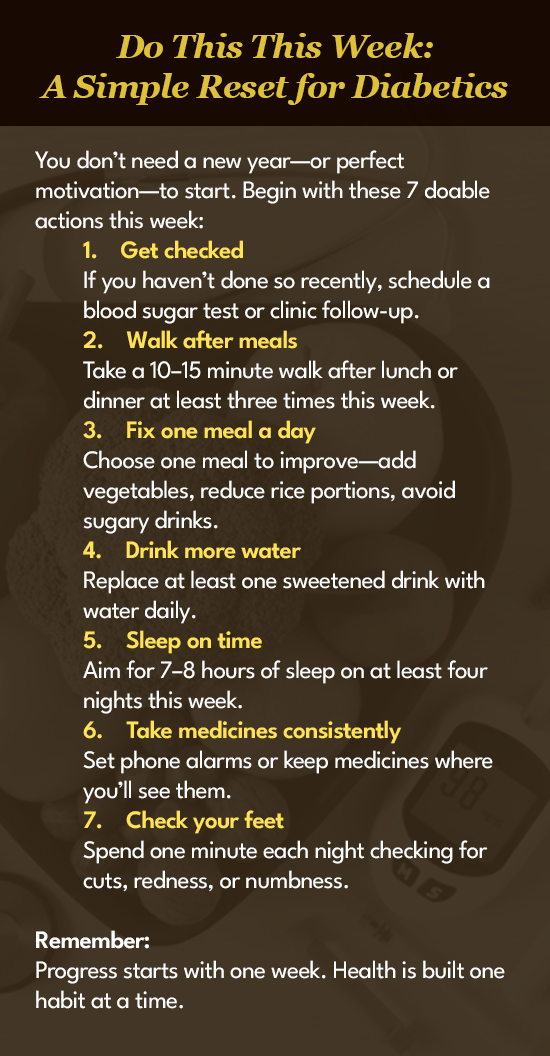
Regular movement improves insulin sensitivity and lowers blood sugar. A daily routine of walking, light household activity, or gentle exercise is enough to make a difference. Even short walks after meals help the body use glucose more efficiently. Consistency matters more than intensity.
3. Maintain a healthy weight—gradually
Even modest weight loss can significantly improve blood sugar control in people with type 2 diabetes. Crash diets are unnecessary and often harmful. Slow, sustainable changes in food choices and activity levels produce better long-term results.
4. Prioritize sleep and stress control
Poor sleep and chronic stress raise blood sugar levels. Adults with diabetes should aim for regular sleep schedules and adequate rest. Simple stress-management practices—such as deep breathing, prayer, quiet reflection, or short breaks—help stabilize glucose levels.

5. Take medications exactly as prescribed
Lifestyle changes work best when paired with proper medication use. Skipping doses or stopping treatment without medical advice can quickly undo progress. Medications are not a sign of failure—they are tools for protection.
6. Monitor and follow up regularly
Regular blood sugar checks and clinic visits allow early adjustment of treatment and prevent silent complications. Even when symptoms are absent, ongoing monitoring protects the heart, kidneys, eyes, and nerves.

7. Avoid smoking and limit alcohol
Smoking accelerates blood vessel damage and increases the risk of heart disease and stroke in diabetics. Alcohol should be limited and never taken on an empty stomach.
The Bottom Line
Diabetes is best managed not through extremes, but through daily discipline and informed choices. When healthy habits become routine, blood sugar stabilizes, complications are delayed or prevented, and life remains full and active. In diabetes care, lifestyle is not optional—it is essential.