


What a new American study means for Filipino families—Heart attacks are no longer just a lolo-and-lola problem.
By Rafael R. Castillo, MD
A major new study analyzing nearly one million hospitalizations found that deaths after a first heart attack increased between 2011 and 2022 among adults under 55 — and young women were more likely than men to die in the hospital. Even more concerning, many of the strongest risk factors were not the traditional ones like high cholesterol or blood pressure, but “nontraditional” factors such as low income, kidney disease, and non-tobacco drug use. For the Philippines — where cardiovascular disease remains a leading cause of death — this is not just American data. It is a warning signal.
A Disturbing Reversal
For years, public health messaging emphasized that heart attack deaths were declining. And overall, that was true — especially among older adults.
But this new study, published in the Journal of the American Heart Association in its Go Red for Women spotlight issue, tells a more complicated story.
Researchers analyzed nearly 946,000 first-time hospitalizations for heart attack among adults aged 18 to 54 between 2011 and 2022. They focused on two types:
- STEMI – a severe heart attack caused by complete blockage of a coronary artery
- NSTEMI – a less severe heart attack caused by partial blockage
The findings were sobering:
- Deaths during hospitalization for first-time STEMI increased by an absolute 1.2%.
- Young women were more likely than men to die after both STEMI and NSTEMI.
- Women received fewer cardiovascular procedures than men.
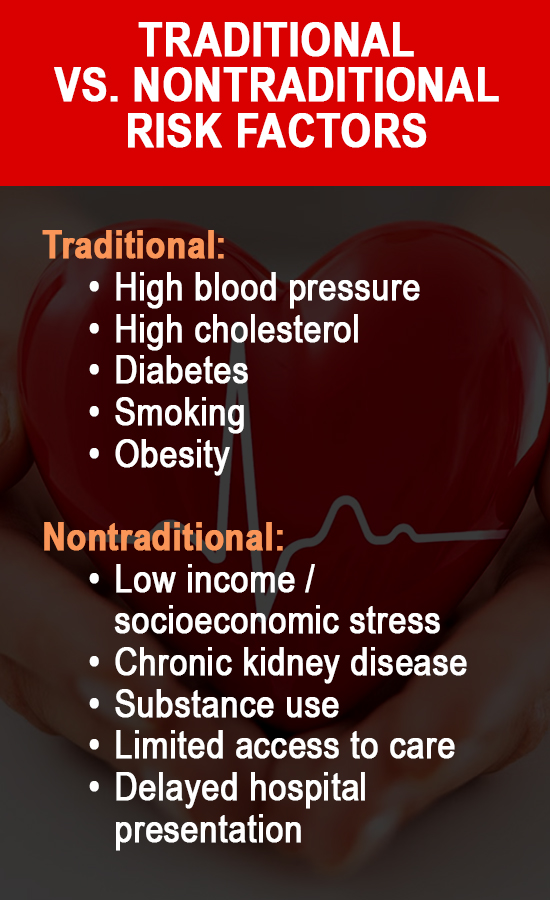
- Nontraditional risk factors were more strongly associated with death than traditional ones.
We often think heart attacks are a disease of aging. This study reminds us that youth is not immunity.
Why This Matters for the Philippines
The Philippines has a relatively young population compared to Western countries. But our epidemiologic profile is shifting.
Urbanization, sedentary work, processed foods, rising diabetes rates, and persistent smoking prevalence are reshaping cardiovascular risk at earlier ages.
If young American adults are experiencing rising mortality, Filipino adults — exposed to similar and sometimes greater risk factors — should pay attention.
The Gender Gap: Why Young Women Are at Higher Risk
One of the most striking findings: women aged 18–54 were more likely than men to die after their first heart attack.
This mirrors earlier findings that women often:
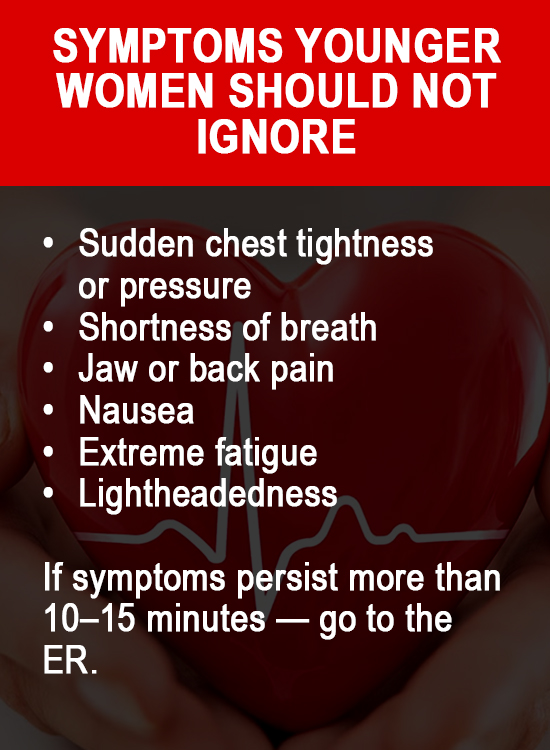
1. Present later to the hospital
- Experience atypical symptoms
- Receive fewer invasive procedures
- Have more nontraditional risk burdens
In the Filipino setting:
Young women often juggle employment, childcare, extended family responsibilities, and financial pressures. When chest discomfort arises, it may be dismissed as: stress, gastritis, muscle strain, or fatigue.
Cultural norms also play a role. Filipino women frequently prioritize family over personal health. “Tiisin na lang muna” (Just endure it) becomes the default response.
Unfortunately, delay is dangerous.
The Role of Nontraditional Risk Factors
Perhaps the most important finding of the study was this: After adjusting for traditional risk factors like hypertension and cholesterol, nontraditional risk factors were more strongly linked to in-hospital death.
These included:
- Low income
- Chronic kidney disease
- Non-tobacco drug use
This shifts the conversation. Heart attack risk is not purely biological. It is also social.
The Filipino Context: Socioeconomic Stress as Cardiac Risk
In the Philippines, income inequality and access disparities remain significant.
Low-income patients may:
1. Delay consultation due to cost concerns
- Self-medicate instead of seeking ER care
- Lack routine preventive screening
- Experience chronic stress related to financial instability
Chronic stress elevates cortisol and sympathetic nervous activity — both contributors to cardiovascular strain.
If nontraditional factors predict mortality more strongly, then public health must expand beyond cholesterol screening.
Tobacco and Beyond
Among STEMI patients in the study, tobacco use remained prevalent. In the Philippines, smoking rates remain high, particularly among young men — but exposure among women is increasing in some urban areas.
Secondhand smoke remains common in multi-generational households. Add to this rising e-cigarette use among younger Filipinos, and we have another layer of risk emerging.
Women Receiving Fewer Procedures
Another concerning observation: women received fewer cardiovascular procedures.
While the study did not determine causality, possible explanations include:
1. Atypical presentation leading to diagnostic delay
- Implicit bias in treatment decisions
- Smaller vessel size complicating intervention
- Later arrival to hospital
In the Philippine healthcare system, disparities may be amplified by resource limitations in provincial hospitals.
STEMI vs NSTEMI: Why It Matters
STEMI is more severe because the artery is completely blocked. Immediate reperfusion (angioplasty or clot-busting therapy) is critical.
NSTEMI may appear less dramatic but still carries substantial risk — especially when treatment is delayed.
In the Philippine setting, rapid access to PCI-capable hospitals varies widely by region. Time is muscle. And geography sometimes determines survival.
What Should Change in the Philippines?
1. Earlier Risk Assessment
Routine cardiovascular screening should begin earlier — especially for adults with:
a. Family history of early heart disease
- Diabetes
- Hypertension
- Kidney disease
- Socioeconomic vulnerability
2. Recognizing Social Determinants
Risk assessment tools should incorporate socioeconomic stress and healthcare access barriers.
3. Public Education Targeted to Young Women
Awareness campaigns should address younger demographics — not only seniors.
4. Strengthen Emergency Access
Improved referral networks and faster ambulance systems could reduce in-hospital mortality.
5. Gender-Sensitive Clinical Protocols
Healthcare professionals should remain alert to atypical presentations in women.
A Filipino Case Scenario

A 42-year-old call center supervisor develops chest tightness during her shift. She attributes it to stress. She goes home, takes antacids, and sleeps.
The next morning, the pain worsens. By the time she reaches the ER, heart muscle damage is extensive.
Her risk factors? Borderline diabetes. Irregular meals. High stress. Limited sleep. Family financial pressure.
Not dramatic cholesterol numbers. Not obvious red flags. This is precisely the profile highlighted by the study.
The Bigger Picture
Heart attack mortality trends are no longer uniformly improving. Younger adults are entering the danger zone earlier.
The study’s message is not alarmist — it is corrective. If prevention strategies focus only on older men with high cholesterol, we miss the emerging at-risk population.
In the Philippines, where economic stress intersects with metabolic risk, the implications are profound.
Final Takeaway
Heart attacks in younger adults are rising. Young women face disproportionately higher in-hospital death rates. And nontraditional risk factors may carry greater weight than previously recognized.
For Filipino families, the lesson is clear:
· Prevention must begin early.
· Symptoms must not be ignored.
· Socioeconomic stress is not separate from heart health.
· And young women deserve equal vigilance.
Cardiovascular disease is no longer confined to retirement age.
It is increasingly a midlife issue — and sometimes, heartbreakingly, a young-life issue.
“Heart attacks are no longer confined to senior citizens. Younger adults — especially women — are at real and rising risk.”
References
1. Satish M, et al. Trends in In-Hospital Mortality After First Myocardial Infarction Among Adults Aged 18–54 Years, 2011–2022. Journal of the American Heart Association. 2026; Go Red for Women Spotlight Issue.
(Open access publication; peer-reviewed.)
2. American Heart Association. Heart Attack Deaths Rose Between 2011 and 2022 Among Adults Younger Than Age 55. News Release. February 26, 2026.
3. American Heart Association. 2026 Heart Disease and Stroke Statistics Update. Circulation. 2026;143:eXXX–eXXX.
(Comprehensive annual cardiovascular epidemiology report.)
4. Benjamin EJ, et al. Heart Disease and Stroke Statistics—2023 Update: A Report From the American Heart Association. Circulation. 2023;147:e93–e621.
(Provides broader epidemiologic context.)
5. Virani SS, et al. Heart Disease and Stroke Statistics—2021 Update. Circulation. 2021;143:e254–e743.
6. World Health Organization. Cardiovascular Diseases (CVDs) Fact Sheet. Updated 2023.
Available at: https://www.who.int/news-room/fact-sheets/detail/cardiovascular-diseases-(cvds)
7. Institute for Health Metrics and Evaluation (IHME). Global Burden of Disease Study 2023 Results: Philippines.
(National cardiovascular mortality and risk factor data.)
8. Philippine Statistics Authority (PSA). Causes of Death in the Philippines (Latest Available Annual Report).
(Cardiovascular disease as a leading cause of mortality.)
9. Department of Health (Philippines). National Objectives for Health 2017–2022 and updated NCD action plans.
(Policy framework on cardiovascular disease prevention.)
10. Peters SAE, et al. Sex Differences in the Presentation and Management of Myocardial Infarction. Lancet. 2018;391:164–176.
(Seminal paper on sex differences in acute coronary syndromes.)
11. Mehta LS, et al. Acute Myocardial Infarction in Women: A Scientific Statement From the American Heart Association. Circulation. 2016;133:916–947.
(Foundational AHA statement on women and heart disease.)
12. Shaw LJ, et al. Women and Ischemic Heart Disease: Evolving Knowledge. Journal of the American College of Cardiology. 2021;78(13):1366–1378.
13. Arnett DK, et al. 2019 ACC/AHA Guideline on the Primary Prevention of Cardiovascular Disease. Circulation. 2019;140:e596–e646.
(Guideline reference for prevention strategies.)