


In the clinic, we often rely on numbers — weight, BMI, cholesterol levels — to assess cardiovascular risk. But increasingly, one of the most important indicators is something far simpler: the waistline.
Many patients come in reassured. “Normal naman ang timbang ko, Doc.” And yet, as they sit down, one detail stands out — a prominent abdomen. This is not merely a cosmetic concern. It is a clinical signal.
Visceral fat, the type of fat that accumulates around the abdominal organs, behaves differently from other fat. It actively releases inflammatory substances that damage blood vessels, disrupt metabolism, and gradually weaken the heart muscle. Over time, this silent process may culminate in heart failure.
What makes this especially concerning in the Philippine setting is the prevalence of individuals who are not visibly obese but carry excess abdominal fat — the so-called “payat pero may tiyan.” These patients often fall through the cracks of traditional screening because their BMI appears acceptable.
The emerging evidence reminds us that cardiovascular prevention must evolve. Measuring waist circumference should become as routine as checking blood pressure. Counseling should go beyond weight loss to emphasize fat distribution, diet quality, and inflammation control.
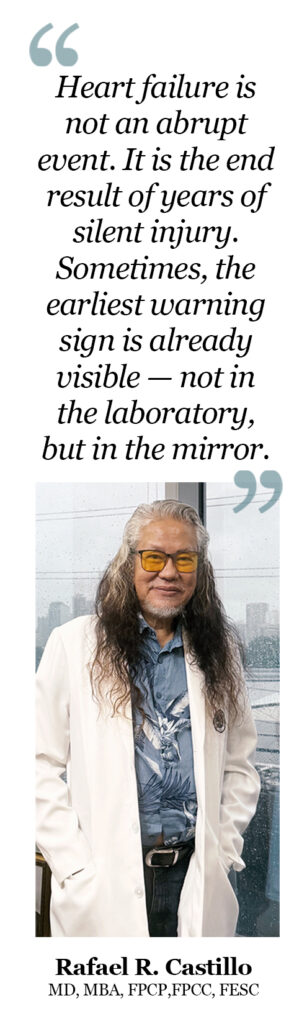
Heart failure is not an abrupt event. It is the end result of years of silent injury.
Sometimes, the earliest warning sign is already visible — not in the laboratory, but in the mirror.