


By Henrylito D. Tacio

“Vision without action is merely a dream. Action without vision just passes the time. Vision with action can change the world.”—Joel A. Barker
During my high school years, several of my friends encouraged me to campaign for a position in our student council. Despite their enthusiastic backing, I chose not to participate. Even though I was an honor student, I did not see myself as a leader.
Reflecting on that time, I believed I lacked the essential qualities of a leader, which include charisma, discernment, commitment, initiative, passion, discipline, and a positive attitude. Most importantly, an effective leader must possess a clear vision. “The very essence of leadership is that you have to have a vision,” commented Theodore Hesburgh.
“A leader’s role is to raise people’s aspirations for what they can become and to release their energies so they will try to get there,” says David Gergen. Ralph Lauren adds, “A leader has the vision and conviction that a dream can be achieved. He inspires the power and energy to get it done.”
A leader without vision is bound to fail. “Vision is everything for a leader,” explains American author and inspirational speaker John C. Maxwell. “It is utterly indispensable. Why? Because vision leads the leader. It paints the target. It sparks and fuels the fire within and draws him forward. It is also the fire lighter for others who follow the leader.”
“The most pathetic person in the world is someone who has sight but has no vision,” Helen Keller once said. For as Jonathan Swift pointed out, “Vision is the art of seeing things invisible.”
One of the best leaders the world has ever known is Jesus Christ. He walked up to the fishermen and told them, “Follow me, and I will make you fishers of men.” They dropped their nets and followed him.

On another occasion, Jesus met a woman at a well and said, “Follow me, and you will never be thirsty again.” She dropped her bucket and ran to get all of her friends.
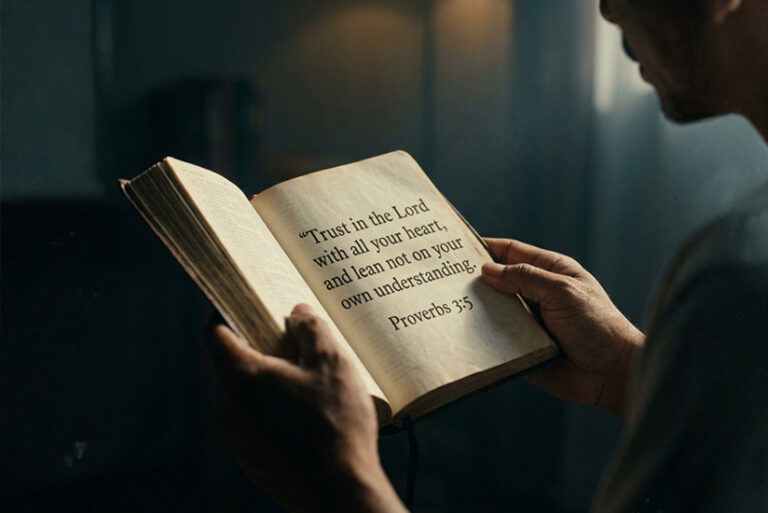
The Bible says, “Where there is no vision, the people perish” (Proverbs 29:18). And Jesus Christ had a vision for His followers.
Studies show that people will work harder and longer on projects when they understand the overall significance of their individual contribution.
A study of airplane workers can vouch for this. They were divided into two groups. Members of one group simply did what they were told to do, while the other group’s members were taken to the engineering lab and shown how their particular pieces were part of a magnificent jet that would fly higher and faster than any jet had ever flown before.
Without any additional incentive, the second group’s productivity soared. They knew how important their contribution was to a larger plan.
“Give us clear vision that we may know where to stand and what to stand for – because unless we stand for something, we shall fall for anything,” Peter Marshall reminded.
Or to quote the words of Nobel Peace Prize winner Woodrow Wilson, “No man that does not see visions will ever realize any high hope or undertake any high enterprise.”
Follow your dream, so they say. However, mere dreaming will not lead you to your destination. Combine your dreams with resolve and proactive efforts, and you will be on the path to success.
High Eagle enlightens: “In life, many thoughts are born in the course of a moment, an hour, a day. Some are dreams, some visions. Often, we are unable to distinguish between them. To some, they are the same; however, not all dreams are visions. Much energy is lost in fanciful dreams that never bear fruit. But visions are messages from the Great Spirit, each for a different purpose in life.
“Consequently, one person’s vision may not be that of another. To have a vision, one must be prepared to receive it, and when it comes, to accept it. Thus, when these inner urges become reality, only then can visions be fulfilled. The spiritual side of life knows everyone’s heart and who to trust. How could a vision ever be given to someone to harbor if that person could not be trusted to carry it out. The message is simple: commitment precedes vision.”
From 1923 to 1955, Robert Woodruff held the position of president at Coca-Cola. During his tenure, he aimed for the soft drink to be accessible to every American serviceman worldwide for just five cents, regardless of the cost to the company. What an audacious objective!
Yet, it paled in comparison to the grand vision he envisioned. Throughout his life, he aspired for every individual globally to have experienced Coke. “The future belongs to those who see possibilities before they become obvious,” stated John Scully, the former CEO of Pepsi and Apple Computer.
So, don’t ever underestimate the power of a vision. Ray Kroc, the founder of McDonald’s pictured his empire long before it existed, and he saw how to get there. He invented the company motto – “Quality, service, cleanliness and value” – and kept repeating it to employees for the rest of his life.
According to American novelist F. Scott Fitzgerald, the test of a first-rate intelligence is the ability to hold two opposed ideas in the mind at the same time and still retain the ability to function. For instance, he said, “One should be able to see that things are hopeless and yet be determined to make them otherwise.”
Thomas Alva Edison was talking one day with the governor of North Carolina, and the governor complimented him on his inventive genius. “”I am not a great inventor,” Edison said. “But you have over a thousand patents to your credit, haven’t you?” queried the governor.
“Yes, but the only invention I can really claim as absolutely original is the phonograph,” Edison admitted. “I guess, I’m an awfully good sponge. I absorb ideas from every source I can and put them to practical use. Then I improve them until they become of some value. The ideas which I use are mostly the ideas of other people who don’t develop them themselves.”
“Leadership,” Warren Bennis said, “is the capacity to translate vision into reality.”