
By Rafael R. Castillo
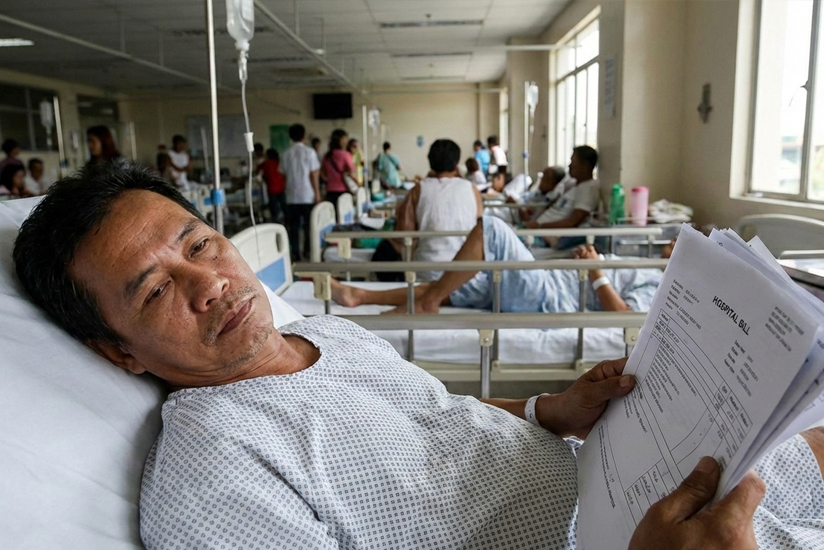
Rising hospitalization costs in the Philippines are a legitimate and urgent concern for policymakers, patients, and providers alike. The Department of Health (DOH) is right to focus on the growing financial burden faced by Filipino families. However, the recent emphasis on physicians’ professional fees (PFs) risks misdiagnosing the problem—and, in doing so, diverting attention from the real and far more significant drivers of medical inflation.
Doctors’ fees are a visible component of hospital bills, but visibility should not be confused with magnitude. A closer examination of how healthcare costs are actually structured in the Philippines shows that professional fees are not the dominant factor behind high hospitalization expenses.
What the Data Actually Show
National Health Accounts compiled by the Philippine Statistics Authority and analyzed by institutions such as the World Health Organization and the World Bank consistently show that out-of-pocket (OOP) spending accounts for roughly 44–50 percent of total health expenditure in the Philippines, among the highest shares in Southeast Asia. Crucially, the bulk of this OOP spending is attributed to hospital charges, medicines, diagnostics, and medical supplies, not professional fees alone.
In most inpatient bills, the largest cost components are:

1. room and facility charges,
2. medicines (largely imported and often branded),
3. laboratory and imaging services,
4. operating room and equipment use, and
5. medical supplies and consumables.
Professional fees typically represent a minority share of total hospitalization costs, especially in complex or prolonged admissions where non-physician charges accumulate rapidly.
Professional Fees Are Already Partly Constrained
It is also inaccurate to portray doctors’ fees as largely unregulated. In practice, PFs are already implicitly capped or constrained through several mechanisms.
First, PhilHealth (Philippine Health Insurance Corporation) case rates and package payments bundle professional fees together with facility charges, effectively limiting what can be billed if patients are to remain within reimbursable ceilings.
Second, relative value–based schedules used by many institutions standardize professional fees according to procedure complexity and time.
Third, ethical guidelines and peer norms—long upheld by organizations such as the Philippine Medical Association (Philippine Medical Association)—continue to shape professional conduct, particularly in private practice.
This does not mean abuses never occur. But system-wide data do not support the claim that PFs are the primary driver of escalating hospitalization costs.


The Real Cost Drivers Are Structural
What truly drives hospital bills upward are structural and systemic factors.
One is the length of hospital stay, which multiplies room, nursing, diagnostic, and medication costs daily. Another is utilization patterns, including defensive diagnostics, fragmented care, and delayed discharges—often driven by weak primary care and post-hospital support.
A third factor is the country’s heavy reliance on private hospitals, stemming from capacity gaps in the public or government hospitals. When public facilities are overcrowded or under-resourced, patients are pushed into private settings where costs are inherently higher.
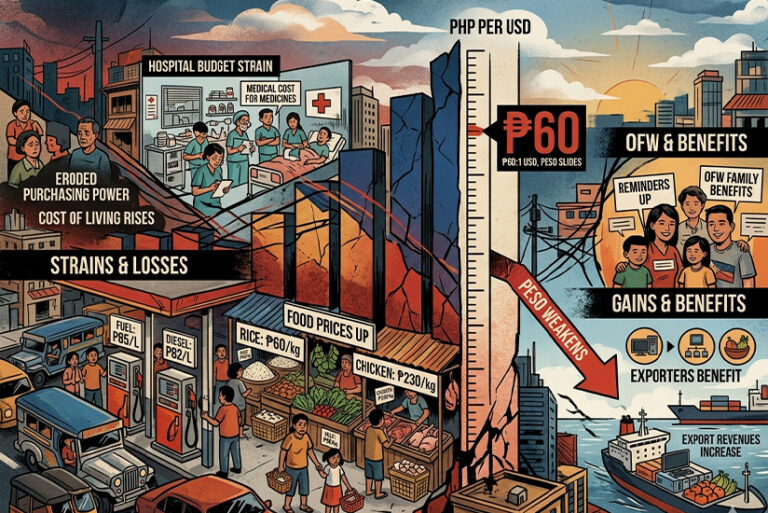
Finally, the price of medicines, devices, and medical technology plays an outsized role. Many drugs, implants, and consumables are imported, exposing hospitals and patients to currency fluctuations, supply chain markups, and limited price regulation.
Why Singling Out Doctors Misses the Point
Targeting professional fees may offer political simplicity, but it delivers limited relief to patients while risking unintended consequences. Excessive pressure on PFs can discourage specialist availability, worsen geographic maldistribution of doctors, and push costs into less transparent channels.
More importantly, it distracts from reforms that would genuinely protect patients, including:
1. improving PhilHealth benefit adequacy and timeliness of reimbursement,
2. strengthening price transparency for hospital services and medicines,
3. expanding public hospital capacity to reduce forced private-sector utilization, and
4. addressing medicine and supply costs through procurement reform and regulation.
These measures strike at the largest components of hospital bills, not just the most visible ones.
A Systemic Problem Requires a Systemic Solution
Healthcare costs rise not because of a single factor, but because of how the system is designed and financed. When prevention is weak, patients arrive sicker. When primary care is fragmented, hospital stays lengthen. When insurance coverage is shallow, out-of-pocket payments soar.
If the goal is genuine patient protection, reform must be evidence-based and system-wide, rather than focused narrowly on one professional group. Physicians are partners in healthcare delivery—not the principal cost drivers of hospitalization.
The healthcare problem in the Philippines does not need scapegoats. It needs structural reform.
Addressing the real sources of hospital costs—facilities, medicines, technology, utilization patterns, and insurance adequacy—offers a far more credible and equitable path toward affordable care. Anything less risks mistaking the symptom for the disease, and leaving patients no better protected than before.
________________
Author’s Note on Figures
Percentages referenced are based on recent National Health Accounts and international comparisons; exact shares vary by year but consistently show high OOP spending driven primarily by non-physician hospital costs.
This commentary was initially published in CoverStory.ph.