


Understanding Cognitive Aging and Protecting Your Memory
By Reuben Ricallo
We all misplace keys. We forget a name mid-conversation. We walk into a room and momentarily forget why. But when does ordinary forgetfulness cross the line into something more serious? As populations age, distinguishing normal cognitive slowing from early dementia has become one of the most important health conversations of our time.
The Aging Brain: What’s Normal?
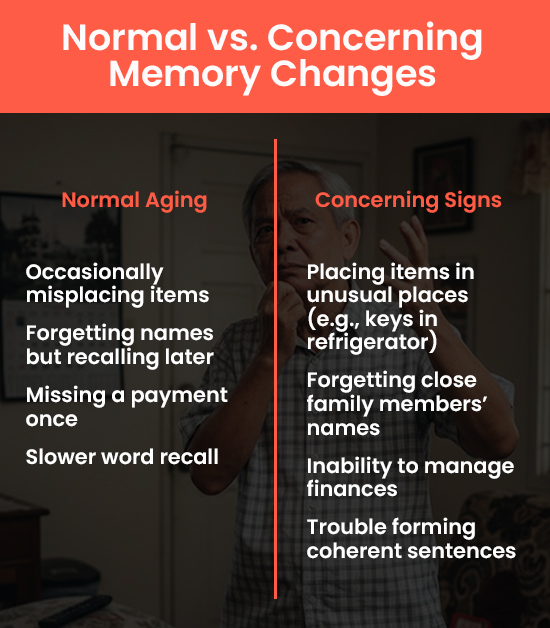
Aging affects the brain much like it affects muscles and joints. Processing speed may slow. Retrieval of information can take longer. Mild word-finding difficulty becomes more common.
Large longitudinal studies show that:
- Vocabulary and general knowledge (crystallized intelligence) often remain stable or even improve with age.
- Processing speed and working memory may gradually decline after age 60.
- Occasional forgetfulness — such as missing an appointment but remembering later — is common and not necessarily pathologic.
Normal aging does not typically impair independence.
When Forgetfulness Signals Disease
Pathological memory decline, particularly from mild cognitive impairment (MCI) or dementia (including Alzheimer’s disease), involves more than occasional lapses.
Red flags include:
- Repeating the same questions frequently
- Getting lost in familiar places
- Difficulty managing finances or medications
- Trouble following familiar recipes
- Personality or behavior changes
- Forgetting recent major events entirely
Unlike normal aging, these changes interfere with daily functioning.
Globally, dementia affects over 55 million people, with nearly 10 million new cases annually (WHO). Alzheimer’s disease accounts for 60–70% of cases.
What Happens in Pathological Decline?
Neurodegenerative diseases involve:
- Abnormal protein accumulation (amyloid plaques and tau tangles in Alzheimer’s)
- Synaptic loss
- Neuronal death
- Brain volume reduction, especially in the hippocampus
By contrast, normal aging shows mild structural changes without the widespread neuronal damage seen in dementia.
Final Word
Forgetting occasionally is human. Losing the ability to function independently is not.
Early evaluation matters. If memory changes are progressive, persistent, or affecting daily life, seek medical assessment. Early diagnosis allows planning, risk modification, and in some cases, treatment that may slow progression.
Aging is inevitable. Severe cognitive decline is not always.
The brain, like the heart, thrives on prevention.
“Normal aging may slow recall. Dementia disrupts daily life.”
References
- World Health Organization. Dementia Fact Sheet. Updated 2023.
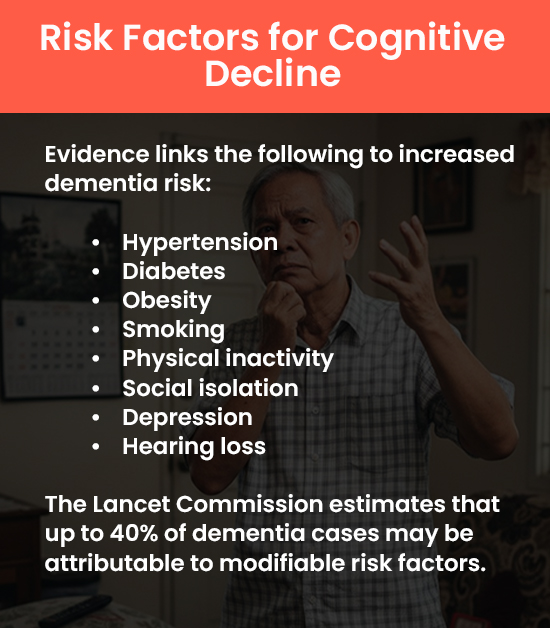
- Livingston G, et al. Dementia prevention, intervention, and care: 2020 report of the Lancet Commission. Lancet. 2020;396:413–446.
- Alzheimer’s Association. 2023 Alzheimer’s Disease Facts and Figures. Alzheimers Dement. 2023.
- Salthouse TA. Consequences of age-related cognitive declines. Annu Rev Psychol. 2012;63:201–226.
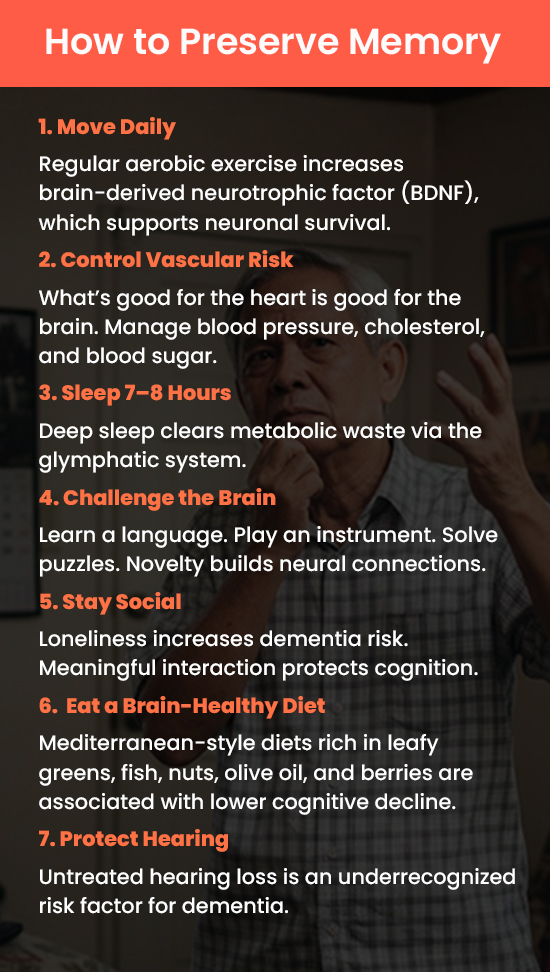
- Erickson KI, et al. Exercise training increases size of hippocampus and improves memory. PNAS. 2011;108(7):3017–3022.
- Jack CR Jr, et al. NIA-AA Research Framework: Toward a biological definition of Alzheimer’s disease. Alzheimers Dement. 2018;14(4):535–562.