

Cigarette smoking is often framed as a lung problem. In reality, it is a whole-body assault. Tobacco smoke contains thousands of chemicals, including dozens known to cause cancer, and its damage reaches far beyond the airways—to the heart, brain, blood vessels, eyes, mouth, skin, bones, reproductive organs, kidneys, gut, immune system, and even the developing baby in the womb. The tragedy is that many of these harms begin quietly, long before symptoms appear. The good news is just as important: quitting at any age lowers risk and begins healing almost immediately.
By Rafael R. Castillo, MD
The cigarette is not a local poison—it is a systemic one. When a person inhales cigarette smoke, toxic chemicals rapidly enter the lungs and then the bloodstream. From there, they travel throughout the body. Nicotine increases heart rate and blood pressure. Carbon monoxide reduces the blood’s oxygen-carrying capacity. Oxidants and carcinogens inflame tissues, injure blood vessels, damage DNA, and weaken normal immune defenses. That is why smoking is linked not just to one disease, but to a wide spectrum of chronic illnesses across organ systems.
The lungs: the most obvious victim
The lungs bear the first blow.
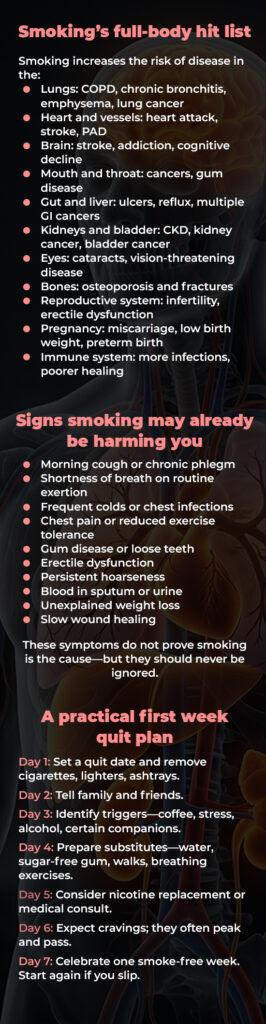
Smoking damages the airways and the tiny air sacs where oxygen exchange occurs. Over time, this leads to chronic bronchitis, emphysema, and chronic obstructive pulmonary disease (COPD). It also causes lung cancer, which remains one of the deadliest smoking-related cancers. Smokers are also more vulnerable to respiratory infections because smoke weakens airway defenses and immune function.
Many smokers become accustomed to daily cough, phlegm, or wheezing and dismiss these as “normal.” They are not normal. They are early warnings.
The heart and blood vessels: a perfect storm for cardiovascular disease
Smoking is among the most powerful preventable causes of cardiovascular disease.
It narrows arteries, promotes clot formation, raises blood pressure, accelerates atherosclerosis, and reduces oxygen delivery to tissues. This sharply increases the risk of heart attack, stroke, peripheral arterial disease, and sudden death. Even younger smokers can suffer devastating vascular events because tobacco rapidly damages endothelial function—the inner lining of blood vessels.
The heart is forced to work harder while receiving less oxygen. That is a recipe for long-term injury.
The brain: stroke, cognitive decline, and addiction
Smoking harms the brain in at least three major ways.First, it raises the risk of stroke by damaging blood vessels and promoting clots. Second, nicotine is highly addictive, altering brain pathways involved in reward, attention, and dependence. Third, smoking has been associated with a higher risk of cognitive decline and dementia. In other words, smoking can injure both the brain’s circulation and its function.
The mouth, throat, and digestive tract: cancer and chronic injury
Smoking dramatically raises the risk of cancers of the mouth, throat, larynx, esophagus, stomach, pancreas, liver, colon, and rectum. It also contributes to gum disease, tooth loss, delayed wound healing in the mouth, and persistent irritation of the upper airway. In the digestive tract, tobacco smoke promotes ulcers, worsens reflux, and is associated with inflammatory bowel disease and gastrointestinal malignancies. Far from being confined to the lungs, smoking leaves a toxic trail from the lips to the colon.
The kidneys and bladder: silent targets
The kidneys filter the blood continuously, which means they are repeatedly exposed to tobacco-related toxins. Smoking increases the risk of chronic kidney disease and kidney cancer. It also significantly raises the risk of bladder cancer because carcinogens excreted in the urine come into prolonged contact with the bladder lining. These harms often remain silent until disease is advanced.
The immune system: weaker defenses, more inflammation
Many people think smoking “toughens” them. Biologically, the opposite happens.Smoking weakens immune defenses and causes chronic inflammation throughout the body. This makes smokers more susceptible to infections and impairs their ability to recover. It also contributes to a pro-inflammatory state that fuels heart disease, vascular injury, and possibly worse outcomes from respiratory infections.
The eyes and skin: visible signs of invisible damage
Smoking can increase the risk of cataracts and other eye diseases, including conditions that threaten vision. It also reduces blood flow to the skin, accelerates wrinkling, and impairs wound healing. The face may reveal the habit long before a scan does. What some call “premature aging” is often chronic vascular and oxidative damage made visible.
The bones and muscles: fragility over time
Smoking contributes to poorer bone health and increases fracture risk. It impairs healing after injury and surgery and may worsen physical conditioning over time by reducing oxygen delivery and exercise tolerance. A smoker may feel less stamina not because of “age alone,” but because nearly every organ involved in exertion is under strain.
Reproductive health and pregnancy: harms across generations
Smoking affects fertility in both men and women. It can worsen erectile dysfunction in men through vascular damage and impair reproductive function in women. During pregnancy, smoking increases the risk of miscarriage, premature birth, low birth weight, and serious complications for the developing baby. The harm of cigarettes can begin before birth and extend into infancy and childhood. Smoking, in this sense, is not just self-harm. It can become intergenerational harm.
Cancer beyond the lung
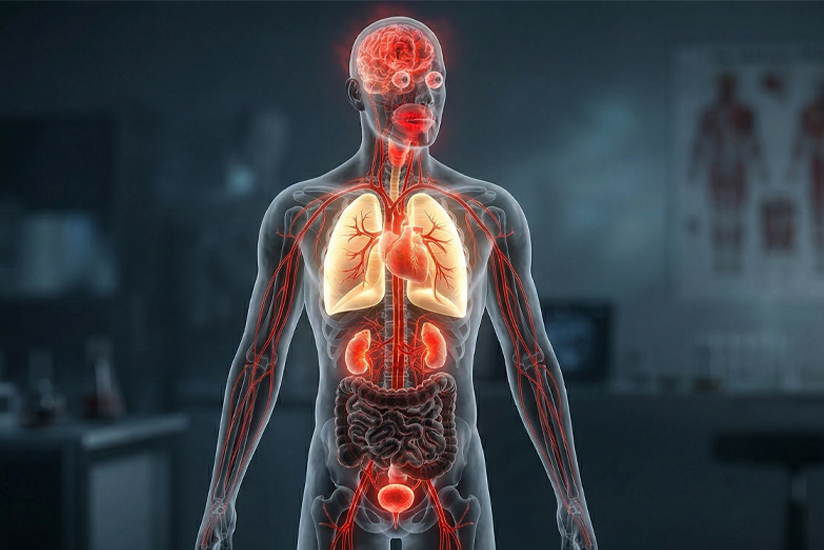
One of the most dangerous myths is that smoking mainly causes lung cancer. In fact, it is linked to cancers of multiple organs, including the mouth, throat, esophagus, pancreas, kidney, bladder, cervix, liver, stomach, colon and rectum, as well as acute myeloid leukemia. This broad cancer burden reflects a brutal truth: the chemicals in tobacco smoke do not stay where they first enter.
Why quitting matters—even after years of smoking
Some smokers feel it is “too late” to quit. That is untrue.Quitting lowers the risk of early death and reduces the likelihood of many smoking-related diseases. Benefits begin quickly: circulation improves, carbon monoxide levels drop, and over time the risks of heart disease, stroke, lung disease, and cancer all decline. While some damage may not fully reverse, quitting always improves the odds compared with continuing to smoke. There is no “safe level” of smoking, but there is always benefit in stopping.
What helps people quit
Quitting is difficult because nicotine is addictive, not because the smoker is weak.Evidence-based strategies include:
- behavioral counseling
- nicotine replacement therapy (patch, gum, lozenge)
- prescription medications where appropriate
- family and workplace support
- removing environmental triggers
Many people require repeated attempts before quitting for good. That is not failure. That is recovery in progress.
The public health lesson
Cigarette smoking remains one of the most preventable causes of disease and premature death in the world. It is not merely a habit. It is a chronic toxic exposure that affects nearly every organ, often silently at first and devastatingly later. Public education, strong tobacco control, early cessation support, and compassion for people trying to quit are all essential.The real message is not only that smoking kills. It is that smoking steals—breath, circulation, fertility, vision, resilience, and time.And quitting, while difficult, gives much of that future back.
“Smoking is not a lung problem alone—it is a full-body assault that damages nearly every organ, often long before the smoker feels seriously ill.”