


Fasting: Discipline, Not Deprivation

In the clinic, I often meet patients who approach fasting with two extremes: enthusiasm or fear.

Some see it as a miracle solution—“Doc, magfa-fasting na lang ako para gumaling.” Others worry it is dangerous—“Baka mahilo ako, baka bumagsak ang asukal ko.”

Both reactions miss the point.

Fasting is neither a cure-all nor a threat. It is a tool.

Used properly, fasting can improve metabolic health, reduce inflammation, and help patients regain control over eating patterns. Used improperly, it can lead to hypoglycemia, dehydration, or nutritional imbalance—especially in those with underlying illness.

The key is not intensity. It is appropriateness.

Not everyone should fast. Patients with diabetes on medication, pregnant women, the elderly, and those with chronic illness require careful assessment. Even among healthy individuals, fasting should be introduced gradually, not abruptly.

Equally important is what happens outside the fasting window. If fasting is followed by overeating or unhealthy food choices, its benefits are lost. In fact, harm may result.

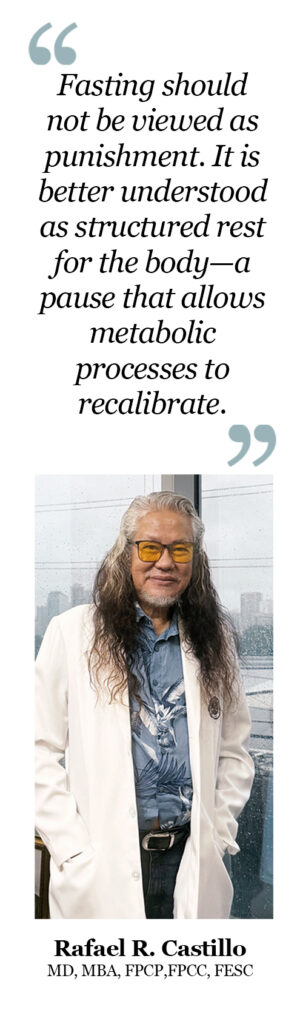
Fasting should not be viewed as punishment. It is better understood as structured rest for the body—a pause that allows metabolic processes to recalibrate.

Interestingly, many of our cultural and spiritual traditions have long embraced fasting—not merely for physical benefit, but for discipline, reflection, and clarity. Modern science is only beginning to explain what these traditions have practiced for centuries.

As physicians, our role is not to promote or discourage fasting indiscriminately, but to guide patients toward safe, sustainable practices tailored to their condition.

Health is rarely found in extremes.

It is found in balance.

Share this Article
Facebook
X
LinkedIn
WhatsApp
Email

More News

banner-copy4-copy-4
Faith: Believing without seeing
By Henrylito D. Tacio  “Take the first step in faith. You don’t have to see the whole staircase,...
banner-copy4-copy-3
Why Defunding PhilHealth Weakens Universal Health Care in the Philippines
By Dr. Tony Leachon  Across the world, medical bankruptcy is virtually unheard of in countries...
banner-copy5-copy-1
How to Practice Fasting Safely and Sustainably
Small Habits That Make Fasting Work for You By the H&L Editorial Team 1. Start Slow, Not Strong Don’t...
banner-copy4-copy-1
Fasting: Healing Practice or Hidden Risk?
Understanding the Science, Benefits, and Boundaries of Going Without Food Fasting — the voluntary...
banner-copy4-copy
The Day Heaven Was Silent*
Between the suffering of the Cross and the glory of the Resurrection lies a day we often overlook—Holy...
banner-copy5-copy
Fasting: Discipline, Not Deprivation
In the clinic, I often meet patients who approach fasting with two extremes: enthusiasm or fear. Some...
banner-copy5-copy-20
Christ’s death: Why did He have to die?
By Henrylito D. Tacio  “The death of the Lord our God should not be a cause of shame for us;...
banner-copy5-copy-25
How to Sustain a Healthy Lifestyle 
“Small Habits, Big Health” Nutrition Hacks Use smaller plates Eat vegetables first Replace...
banner-copy5-copy-23
The Peso at ₱60 to the Dollar: A Public Health and Economic Crossroads
By Dr. Tony Leachon  The peso’s slide to ₱60 against the US dollar has wide-ranging effects....
banner-copy6-8
Pandemics as Stress Tests of Civilization
Pandemics, from the Spanish Flu to COVID-19, do more than just spread disease—they expose the hidden...