

By Dr. Tony Leachon
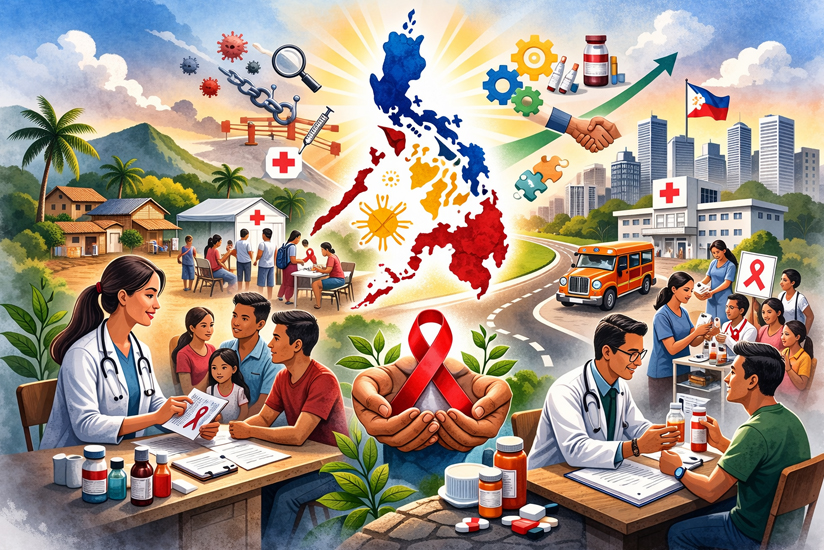
The HIV epidemic in the Philippines remains one of the fastest-growing in Asia, with daily new infections reported among vulnerable populations, particularly the youth. The Department of Health (DOH) recently announced that 338 HIV care facilities are now operating nationwide, offering free testing, counseling, antiretroviral therapy (ART), viral load monitoring, and combination prevention methods. This expansion marks a significant step forward in decentralizing access to care, with 186 facilities in Luzon, 77 in the Visayas, and 75 in Mindanao.
Yet, despite this progress, the epidemic continues to pose serious challenges. The story of HIV in the Philippines is one of both promise and peril—an urgent reminder that infrastructure alone is not enough.
Problems
The epidemic is driven by several persistent issues:
• Rising infections among youth: A growing number of new cases are among adolescents and young adults, reflecting gaps in education, awareness, and preventive services.
• Diagnosis gap: Only about 59% of people living with HIV (PLHIV) have been diagnosed, leaving thousands unaware of their status.
• Treatment coverage: While ART coverage has improved, only 67% of diagnosed PLHIV are on treatment, far below the global benchmark of 95%.
• Stigma and discrimination: Social stigma continues to discourage testing and treatment-seeking behavior, especially among marginalized groups.
• Supply chain and access issues: Despite the expansion of care facilities, distribution of medicines and services remains uneven, particularly in rural areas.
Solutions
The DOH and its partners have begun implementing strategies to address these challenges:
• Expansion of HIV care facilities: The establishment of 338 centers nationwide ensures wider access to free HIV-related services.
• Youth-focused interventions: Programs targeting schools and communities aim to reduce infections among adolescents.
• Community-based testing and outreach: Civil society organizations are distributing self-test kits and providing grassroots support.
• Policy and legislative support: The Philippine HIV and AIDS Policy Act (RA 11166) guarantees rights-based approaches to care and prevention.
• Innovative treatments: Discussions are underway to secure access to lenacapavir, a long-acting injectable treatment administered twice a year, which could be a game-changer in adherence and viral suppression.
Metrics of Success
Success in combating HIV will be measured by:
• Diagnosis coverage: Raising the current 59% to at least 90% by 2030.
• Treatment coverage: Increasing ART uptake from 67% to the global target of 95%.
• Viral suppression: Ensuring that PLHIV on ART achieve suppression rates above 90%, reducing transmission risks.
• Reduction in daily new cases: Lowering the current rate of 16–57 new infections per day.
• Youth engagement: Demonstrating measurable declines in infections among those under 18.
Conclusion
The expansion of HIV care facilities is a milestone, but it is only the beginning. The epidemic demands not just infrastructure, but leadership, accountability, and values-driven reform. The Philippines must close the gaps in diagnosis, treatment, and viral suppression while dismantling stigma and discrimination. Success will be measured not only in numbers but in lives saved, futures secured, and dignity restored.
References
• GMA News Online. DOH: More than 300 HIV care centers now accessible in PH. February 14, 2026.
• UNAIDS. Philippines HIV Epidemic Data and Projections. 2025.
• WHO Western Pacific Regional Office. HIV Situation in the Philippines. 2025.
#RelentlessForChange