
A public-education cover story for H&L on recognition, diagnosis, treatment, and prevention—and whether the Philippines is at risk.
By Rebecca L. Castillo, MD
Headlines about Nipah virus can sound alarming: a rare infection, spread from animals, that can cause severe brain inflammation and respiratory failure—and has a high fatality rate in documented outbreaks. But public safety starts with clarity. What is Nipah, where is it occurring now, and is there a real threat in the Philippines? This guide summarizes the latest international updates, explains how Nipah is recognized and confirmed, what treatment looks like today, and the practical steps that reduce risk for families, communities, and healthcare facilities.
What is Nipah virus?
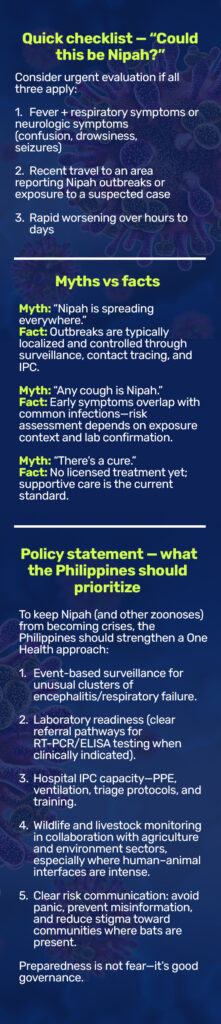
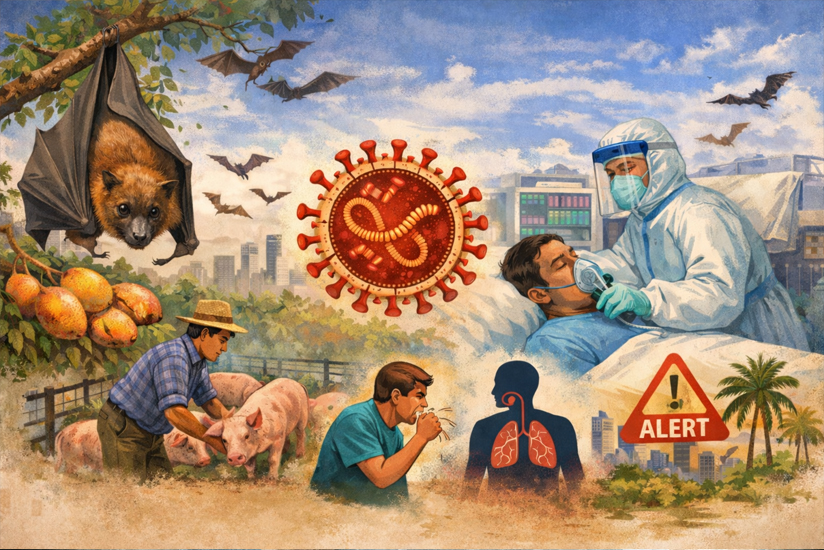
Nipah virus (NiV) is a zoonotic virus—meaning it can spread from animals to humans. Its natural reservoir is fruit bats (flying foxes) in the Pteropus genus. Infection in humans ranges from mild illness to severe disease, including encephalitis (brain swelling) and serious respiratory illness.
The World Health Organization (WHO) notes that Nipah has been reported in several countries since it was first identified in 1998, and that the case fatality rate has ranged roughly from 40% to 75%, depending on the outbreak setting and how quickly cases are detected and managed.
“Latest update”: What is happening in 2026?
As of early 2026, WHO has published outbreak updates in India and Bangladesh, emphasizing that outbreaks are typically limited and controllable with strong surveillance, contact tracing, and infection prevention measures—but that the virus remains a priority pathogen because it can cause severe disease and has no licensed vaccine or specific treatment.
Is there a threat in the Philippines?
Right now, there is no evidence of ongoing Nipah transmission in the Philippines, and WHO notes that the Philippines had an outbreak in 2014 with no new cases since then.
So why talk about it? Because risk is about possibility, not panic. Fruit bats are present across parts of Asia, and health authorities emphasize vigilance and preparedness—especially for unusual clusters of severe encephalitis or respiratory illness. The DOH has also highlighted border and screening readiness (e.g., surveillance at ports of entry) in recent public-facing communications carried by local news.
Bottom line for H&L readers:
–Not an everyday threat in the Philippines today.
–Not a reason for fear or stigma.
–A reason for preparedness, accurate information, and early consultation for severe symptoms—especially after travel to outbreak areas or exposure risks.
How Nipah spreads
People can be infected through:
- Direct contact with infected animals (notably bats; pigs have been important in some outbreaks).
- Food contaminated by bats—for example fruit or products contaminated by bat saliva/urine. In Bangladesh/India, raw date palm sap contamination is a known pathway (less relevant in the Philippines, but the principle—avoiding potentially bat-contaminated raw products—matters).
- Human-to-human transmission through close contact, especially among family caregivers and in healthcare settings without adequate infection prevention.
Recognizing Nipah: symptoms and red flags
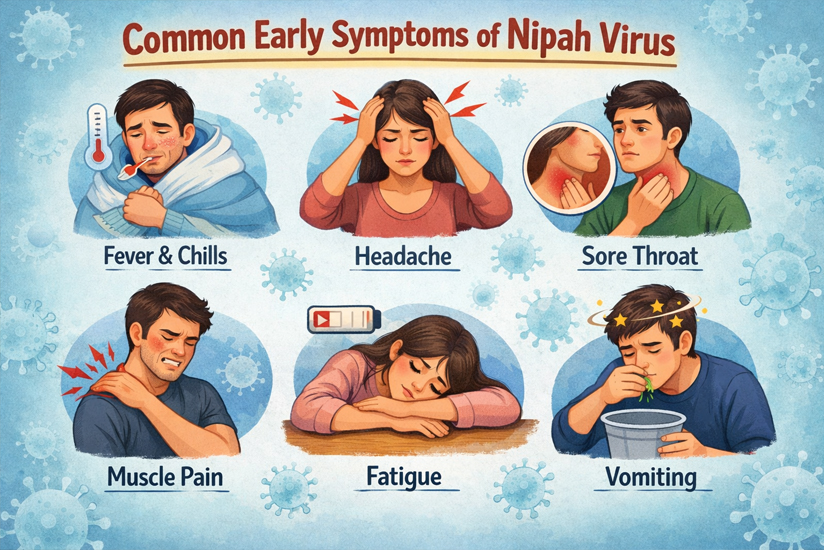
Early symptoms can be non-specific—making awareness important.
Common early symptoms (often 3–14 days after exposure):
- fever
- headache
- muscle aches
- sore throat
- vomiting
- cough or difficulty breathing
Danger signs suggesting severe disease (urgent emergency care):
- drowsiness, confusion, altered consciousness
- seizures
- rapidly worsening breathing problems
- signs of encephalitis (brain involvement)
Hypothetical anecdote (for public education only)
A 32-year-old returns from travel where an outbreak has been reported. Four days later, he develops fever and sore throat. He assumes it’s “ordinary flu” and continues working. On day six, his family notices unusual drowsiness and confusion. Because they know this is a danger sign, they bring him to the ER early—allowing the hospital to isolate appropriately and begin intensive supportive care while confirmatory testing is arranged.
How Nipah is diagnosed (what doctors and labs look for)
Because early symptoms mimic many common infections, diagnosis depends on clinical suspicion + exposure risk + laboratory confirmation.
Key tests used internationally:
- RT-PCR (real-time polymerase chain reaction) on appropriate specimens during acute illness.
- ELISA antibody testing (often IgM/IgG) later in illness or during recovery.
Clinicians are urged to consider Nipah in patients with compatible symptoms and relevant exposure (travel to outbreak areas, contact with suspected cases, or animal/food exposures).
Treatment: what can be done today?
As of 2026, there is no licensed specific antiviral treatment or vaccine for Nipah. Care is largely supportive, which can still be life-saving.
Supportive treatment typically includes:
- careful monitoring in hospital
- oxygen and respiratory support when needed
- seizure control and neurologic support
- fluids and electrolyte management
- treatment of secondary infections and complications
What about “experimental” therapies?
CDC notes several candidates under development, including monoclonal antibodies and research on antivirals such as remdesivir in animal models; ribavirin was used in a small number of cases historically but its benefit remains unclear.
Prevention: practical precautions for families and communities
Prevention focuses on blocking the known routes of transmission:
At home and in the community
- Hand hygiene (soap and water; alcohol rub when appropriate).
- Avoid contact with bats and avoid handling sick or dead animals without guidance.
- Food safety: wash and peel fruit; discard fruit with bite marks; avoid consuming potentially bat-contaminated produce.
- If someone has severe fever + neurologic symptoms, seek urgent care and minimize close contact until evaluated.
In healthcare settings (critical for stopping outbreaks)
- Rapid triage and isolation of suspected cases
- Appropriate PPE for healthcare workers
- Good ventilation and infection prevention and control (IPC) measures
Conclusion
Nipah virus is a serious infection, but it is also understandable and containable when systems are prepared and the public is informed. For the Philippines, the most accurate message today is balanced: no ongoing outbreak, but readiness matters because the ecological conditions for spillover exist in the region. Knowing the warning signs—and practicing basic hygiene and food safety—can protect families while supporting calm, science-based public health.
“With Nipah, the most powerful tools are early recognition, fast isolation, and excellent supportive care—before complications spiral.”
References:
- World Health Organization. Nipah virus (Fact sheet). Updated Jan 29, 2026.
- World Health Organization. Disease Outbreak News: Nipah virus disease – India (DON593). Jan 30, 2026.
- World Health Organization. Disease Outbreak News: Nipah virus infection – Bangladesh (DON594). Feb 6, 2026.
- US Centers for Disease Control and Prevention (CDC). Nipah Virus: Facts for Clinicians. Updated Feb 13, 2026.
- US Centers for Disease Control and Prevention (CDC). About Nipah Virus (signs/symptoms, transmission, prevention).
- SunStar (Philippine News Agency report). DOH steps up border watch vs. Nipah virus. Feb 1, 2026.
- WHO. Nipah virus infection health topic page (overview and key concepts