
Understanding the Diseases That Claim the Most Lives—and How to Prevent Them
March is Women’s Month in the Philippines—a time to celebrate the achievements, resilience, and leadership of Filipina women. But celebration should also come with reflection. Behind the remarkable strength of Filipino mothers, daughters, professionals, and caregivers lies a sobering reality: many still face preventable diseases that cut lives short.
Understanding the major causes of illness and death among Filipina women—and how to detect and prevent them—may be one of the most empowering acts of public health.
By Rebecca L. Castillo, MD
The Silent Health Crisis Among Filipina Women
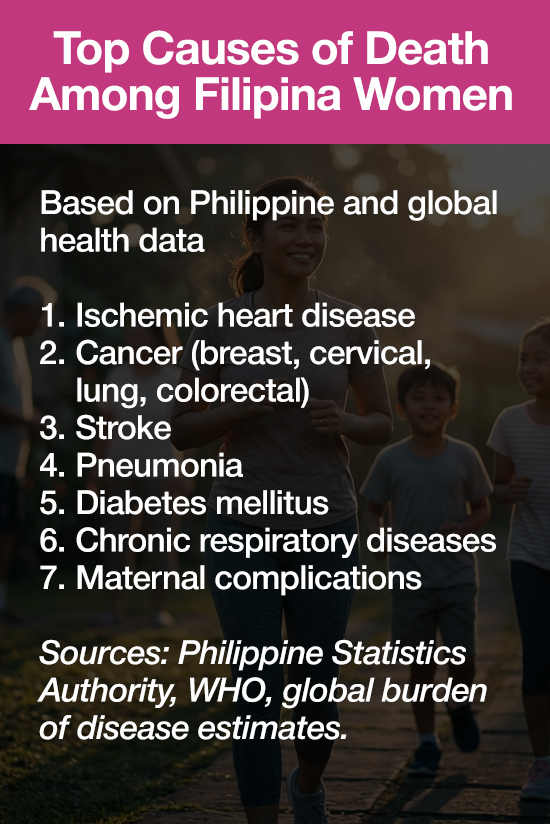
Filipina women today live longer than previous generations. Yet longevity does not always translate to healthy years. Across the Philippines, the majority of deaths among women are now caused not by infections but by non-communicable diseases (NCDs)—chronic conditions that develop slowly but carry devastating consequences if left untreated.
In fact, seven out of ten deaths among Filipinos are due to non-communicable diseases, with cardiovascular diseases, cancer, and stroke leading the list.
Recent national statistics show that the top three causes of death in the Philippines remain ischemic heart disease, cancer, and cerebrovascular disease (stroke).
For women, the picture is similar—with some additional gender-specific risks such as breast cancer, cervical cancer, and maternal complications.
Understanding these conditions is the first step toward prevention.
1. Cardiovascular Disease: The Number One Killer
Heart disease remains the leading cause of death in the Philippines, accounting for tens of thousands of deaths annually.
More than 225,000 Filipinos died from cardiovascular disease in 2021 alone, according to global health estimates.
While often perceived as a “male disease,” cardiovascular illness is equally dangerous for women—particularly after menopause.
Major risk factors
- Hypertension
- Diabetes
- Smoking
- High cholesterol
- Obesity
- Sedentary lifestyle
- Poor diet (high salt and processed foods)
Hormonal changes after menopause also increase women’s vulnerability to heart disease.
Warning signs
Women may experience atypical symptoms compared with men:
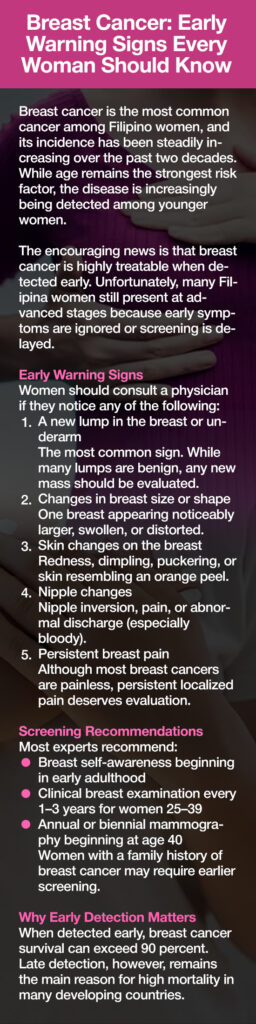
- Chest discomfort or pressure
- Shortness of breath
- Unusual fatigue
- Nausea or indigestion
- Pain in the jaw, neck, or back
Prevention
The good news is that most cardiovascular disease is preventable.
Key strategies include:
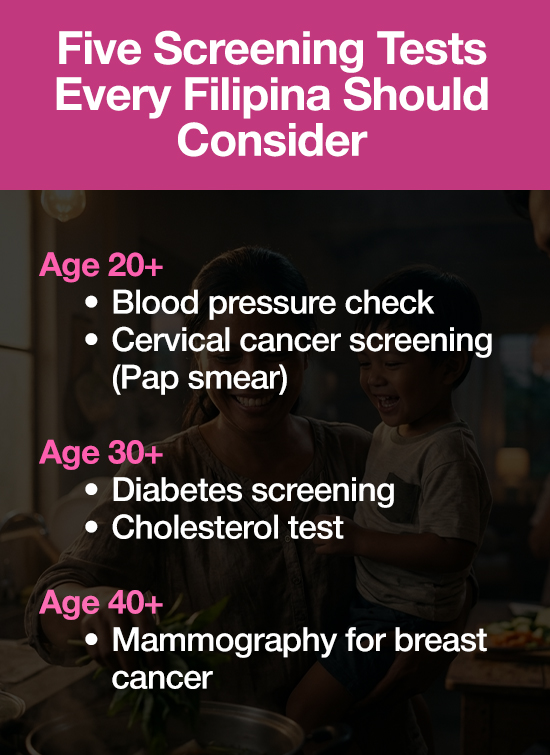
- Regular blood pressure screening
- Maintaining healthy body weight
- Physical activity (150 minutes weekly)
- Smoking cessation
- Reduced salt and sugar intake
- Cholesterol and diabetes control
“Heart disease is still the leading killer of Filipinas—but it is also among the most preventable.”
2. Cancer: A Growing Threat to Women’s Health
Cancer is the second leading cause of death in the Philippines.
For Filipina women, the most significant cancers include:
- Breast cancer
- Cervical cancer
- Lung cancer
- Colorectal cancer
- Ovarian cancer
Breast Cancer
Breast cancer is the most common cancer among Filipino women, with more than 27,000 cases diagnosed in recent years.
The Philippines has one of the highest breast cancer incidence rates in Asia.
Risk factors
- Increasing age
- Family history
- Obesity
- Alcohol consumption
- Hormonal exposure
Detection
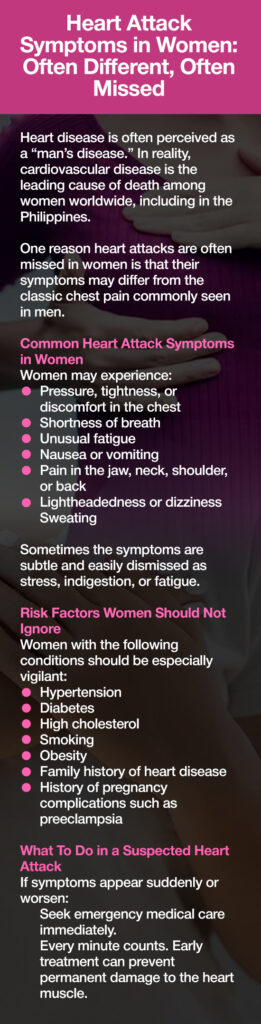
- Monthly breast self-examination
- Clinical breast exam
- Mammography beginning around age 40 or earlier for high-risk women
Early detection dramatically improves survival.
Cervical Cancer
Cervical cancer remains a major public health concern in developing countries.
Cause
Persistent infection with human papillomavirus (HPV).
Prevention
- HPV vaccination
- Regular Pap smear or HPV screening
The tragedy of cervical cancer is that it is one of the most preventable cancers in medicine.
“Many cancers that kill Filipina women today are detectable years before they become life-threatening.”
3. Stroke: A Devastating but Preventable Disease
Stroke is the third leading cause of death in the Philippines, largely driven by uncontrolled hypertension.
For women, stroke risk increases after menopause and during pregnancy complications such as pre-eclampsia.
Warning signs: Remember FAST
- Face drooping
- Arm weakness
- Speech difficulty
- Time to call emergency services
Immediate treatment can reduce long-term disability.
Prevention
- Control blood pressure
- Manage diabetes
- Avoid smoking
- Maintain healthy weight
- Exercise regularly
4. Diabetes and Metabolic Disease
Diabetes is rapidly rising across Southeast Asia and is now among the top causes of mortality in the Philippines.
Women face additional risks during pregnancy through gestational diabetes, which increases future risk of type 2 diabetes.
Risk factors
- Obesity
- Physical inactivity
- Family history
- Poor diet
- Previous gestational diabetes
Warning signs
- Frequent urination
- Excessive thirst
- Fatigue
- Blurred vision
Unfortunately, many patients remain undiagnosed for years.
Prevention
Lifestyle interventions can reduce diabetes risk by up to 50 percent in high-risk individuals.
5. Pneumonia and Infectious Diseases
Although chronic diseases dominate mortality statistics, infectious diseases such as pneumonia remain major causes of hospitalization and death, especially among elderly women.
Prevention
- Vaccination (pneumococcal and influenza)
- Smoking cessation
- Good nutrition
- Early medical consultation
6. Maternal Health Risks
Despite progress in modern obstetrics, pregnancy remains risky in many developing countries.

The Philippines still records about 84 maternal deaths per 100,000 live births due to pregnancy-related complications.
Common causes
- Postpartum hemorrhage
- Hypertensive disorders
- Infection
- Unsafe abortion
- Complications during delivery
Prevention
- Skilled birth attendance
- Prenatal care
- Emergency obstetric services
- Family planning
Maternal health is often described as a “barometer of a nation’s health system.”
“When mothers survive and thrive, families—and entire communities—become healthier.”
The Social Determinants of Women’s Health
Health outcomes are not determined by biology alone.
Filipina women face multiple social pressures that influence disease risk:
- Caregiving responsibilities
- Workplace stress
- Limited access to preventive care
- Cultural reluctance to seek medical help
- Financial barriers to screening
In many families, women prioritize the health of others before their own.
Public health experts increasingly emphasize that improving women’s health requires empowering women socially and economically.
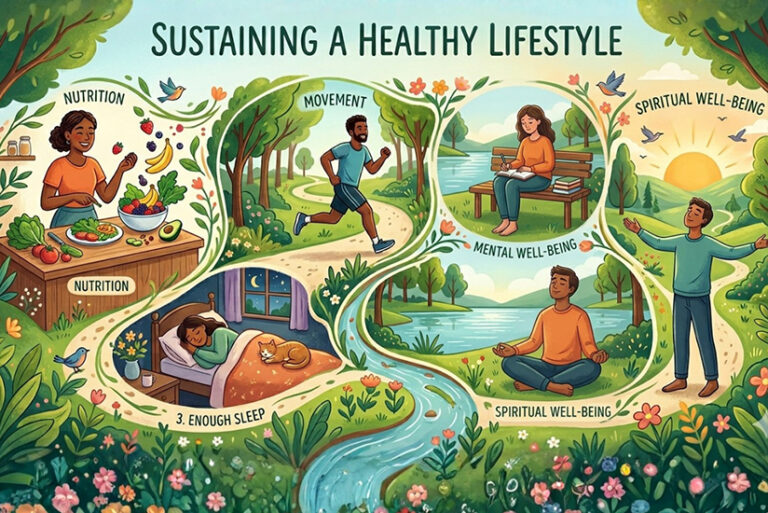
The Power of Prevention
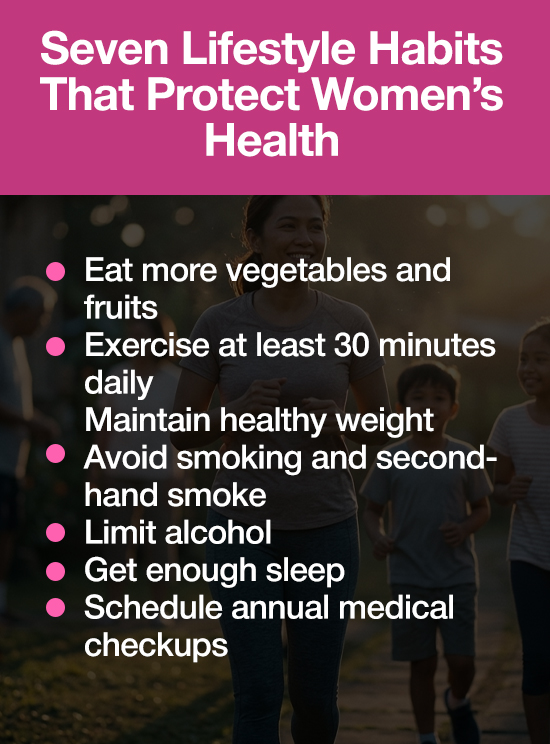
Most major causes of death among Filipina women share the same underlying risk factors.
Public health experts often summarize them as the “Big Five Preventable Risks”:
- Smoking
- Unhealthy diet
- Physical inactivity
- Excess alcohol
- Poor control of blood pressure and diabetes
Addressing these risk factors could prevent millions of premature deaths worldwide.
A Women’s Month Reminder
Women’s Month is often marked by tributes to leadership, empowerment, and equality. Yet one of the most powerful forms of empowerment may simply be knowledge.
Every Filipina deserves access to:
- preventive screening
- accurate health information
- early diagnosis
- affordable treatment
Because when women stay healthy, families stay strong.
And when families stay strong, nations thrive.
References
- Philippine Statistics Authority. Leading Causes of Death in the Philippines.
- World Health Organization. Global Health Estimates and Mortality Database.
- Philippine Statistics Authority mortality reports summarized in national data.
- World Heart Federation. Cardiovascular Disease Statistics in the Philippines.
- Philippine Health Alliance. Non-Communicable Disease Burden in the Philippines.
- PSA and national health statistics summaries on leading causes of death.
- Breast cancer statistics in the Philippines.
- Global and Philippine maternal mortality statistics.
- WHO global mortality fact sheets on major diseases.
- Philippine health system reports on disease burden and mortality trends.