

By Henrylito D. Tacio

In 100 Love Sonnets, Pablo Neruda wrote: “I love you without knowing how, or when, or from where. I love you simply, without problems or pride: I love you in this way because I do not know any other way of loving but this, in which there is no I or you, so intimate that your hand upon my chest is my hand, so intimate that when I fall asleep your eyes close.”
Ah, love. It defies definition. The ancient Greeks, for instance, had anywhere between four and eight different words for love (depending on the source). These are: storge(affection), philia or phileo (friendship), eros (sexual, erotic), agape (unconditional, divine, selfless), ludus (flirtatious, playful, casual, uncommitted), pragma (committed, long-standing), philautia (self-love), and mania (obsessive, possessive, addictive, dependent).
In one way or another, we experience some of those kinds of love. But the English language has only one word for it: love. However, there are other words that may imply love such as affection, friendship, attraction, etc.
But until now, no one really can give a comprehensible definition of love. After all, love is and always is a complex concept. “Is it an emotion, a state of being, a choice, an ability, a gift, a force, or all of the above?” asked Kristi Walker, author of Convinced: Applying Biblical Principles to Life’s Choices.
“People say love is pure, painful, sweet, and dreadful – all at once,” pointed out Lifehack’s Lisa Smith. “The truth is, love is a basic necessity in everyone’s life. Everyone needs to be loved to live a proper and healthy life.”
Red roses, tender songs, pink missives, romantic day-dramas, pedestalled Aphrodites and Adonises, young and old thoughts of companionship, love-aches or heartaches – all these manifest that nobody is incapable of loving as of being loved.
Hollywood movies with love in their titles abound: Love Story, Love in the Afternoon, Love Letters, When a Man Loves a Woman, Women in Love, and Love is a Many-Splendored Thing. The Tagalog term for love is “pag-ibig.” So much that it is common to find the word in movie titles, too: All You Need is Pag-ibig, Ikaw ang Pag-ibig, Nakaw na Pag-ibig, Palimos ng Pag-ibig, and Saan Nagtatago ang Pag-Ibig?
So, what is this elusive and ephemeral chemical experience that all humans want and crave? Let’s go down in history and read some explanations from the rich, famous, and mighty.
“Love has nothing to do with what you are expecting to get – only with what you are expecting to give – which is everything,” said four-time Oscar winner Katharine Hepburn, who had an “affair” with her famous leading man, Spencer Tracy, whom she never married.
Another award-winning actress, Joan Crawford, compared love to a fire. “But whether it is going to warm your heart or burn down your house, you can never tell,” said the actress who starred in Whatever Happened to Baby Jane?
“Where there is love, there is life,” commented Indian political ethicist Mahatma Gandhi. “The greatest happiness of life is the conviction that we are loved; loved for ourselves, or rather, loved in spite of ourselves,” French novelist Victor Hugo said.
“There is always some madness in love,” said German philosopher Friedrich Nietzsche. “But there is always some reason for madness.” French writer Antoine de Saint-Exupery wrote: “Love does not consist in gazing at each other, but in looking outward together in the same direction.”
To a psychiatrist, love is nothing but a neurosis. Dr. Reich Fromm, a noted American psychoanalyst, explains: “Love is an active power in man; a power which breaks through the walls which separate man from his fellow man, which unites him with others; love makes him overcome the sense of isolation and separateness, yet, it permits him to be himself, to retain his integrity. In love, the paradox occurs that two human beings become one and yet remain two.”
Those are serious points of views about love. But there are some famous people who have been poking at the subject. “Love is like the measles, all the worse when it comes late in life,” English writer Douglas Jerrod says. French novelist and philosopher Remy de Gourmont contends: “Man begins by loving love and ends by loving a woman; woman begins by loving a man and ends by loving love.”
American satirist H.L. Mencken points out: “Love is like war: easy to begin but very hard to stop.” Canadian humorist Stephen Leacock has this idea: “Many a man in love with a dimple makes the mistake of marrying the whole girl.” American columnist Helen Rowland outdid both when she once wrote: “Love is woman’s eternal spring and man’s eternal fall.”
Despite all these, love is immortal. It lives forever. Read what Eben Eugene Rexford wrote in his Silver Threads Among the Gold: “Love can never grow old, locks may lose their brown and gold, cheeks may fade and hollow grow; but hearts that love will know. Never winter’s frost and chill, summer’s warmth is still in them.”
In recent years, American researchers have been taking a close look at the pathology of love. Their findings reveal that what most of us regard as a mysterious, ethereal force has certain definable psychological and physiological components. By understanding these components, we can form better love relationships and, equally important, recover faster from those that fail.
“Falling in love,” explains John Money, professor of medical psychology at the Johns Hopkins Medical School, “resembles what social scientists call ‘imprinting.’ That is to say, there already exist within each of us certain standards that reflect our family life, background and, in some cases, ethnic or racial heritage. Thus, when you encounter a particular type of perceptual stimulus – someone who fits these preconceived notions of what you need in a wife or husband – there’s a good chance you’ll fall in love.”
The late Bob Garon, former priest-turned columnist, seemed to agree. “One sure sign of deep love between two persons is the sensitivity to each other’s needs,” he wrote in his column. “When two people fall in love, there is a desire to please that is born. The man perceives his beloved as very precious, somebody to cherish. So, he wants to do everything to keep his new-found love…
“When this sensitiveness is reciprocal, it is one of the driving forces that causes people to treasure each other,” Garon continued. “Perhaps, it is because we all feel so important, so loved when another seems to be so in tune with us that he/she is aware of what we are thinking and feeling even if we never express our thoughts and sentiments.”
E. Merrill Root puts this in another way: “So far as I am concerned, I would never choose a woman unless I were sure she had also chosen me. I could not love a woman unless I felt in the depths of my being that she also loved me; I would wish her to seek me even as I sought her; were she not mad to have me I would be tepid to have her.”
The Holy Bible gives us the real meaning of love in I Corinthians 13. Love, it says, is patient, kind, not jealous, not conceited, not proud, not ill mannered, not selfish, and not irritable. It does not keep a record of wrongs. It is not happy with evil but is happy with the truth. Above all, love never gives up.
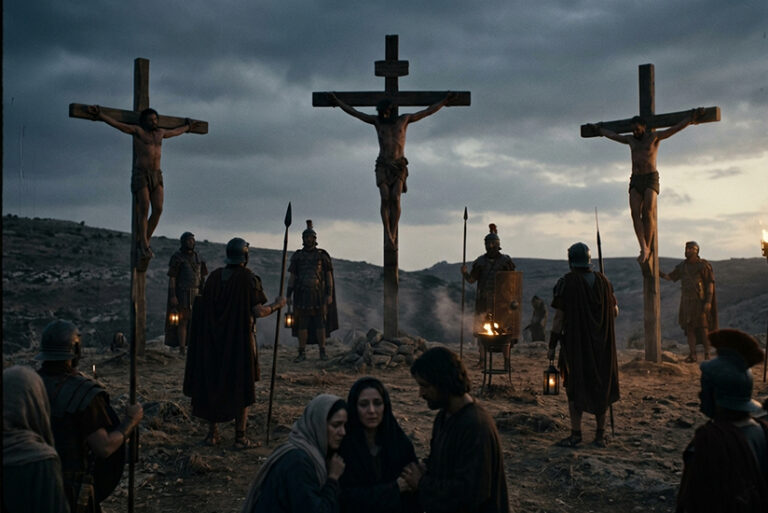
This is what God’s love is all about. “God proved His love on the Cross,” wrote American preacher Billy Graham. “When Christ hung, and bled, and died, it was God saying to the world, ‘I love you.’”
Genuine love is neither nonce-sense nor non-sense. It is a disciplined commitment to all that is good and true. It is willing to undergo some troubles in response to the spoken or unspoken needs of the other. As Og Mandino, author of the best-selling The Greatest Salesman in the World, aptly puts it:
“I will love the kings for they are but human; I will love the meek for they are divine. I will love the rich for they are yet lonely; I will love the poor for they are so many. I will love the young for the faith they hold; I will love the old for the wisdom they share. I will love the beautiful for their eyes of sadness; I will love the ugly for their souls of peace.”
Ah, love!