

By Reuben Ricallo
For smokers and former smokers, the lungs often carry a hidden burden—reduced elasticity, impaired airway clearance, and chronic low-grade inflammation. While smoking cessation remains the single most important step toward lung recovery, targeted breathing exercises can meaningfully improve lung function, oxygenation, and symptom control.
These techniques are not merely “wellness trends.” They are grounded in respiratory physiology and widely used in pulmonary rehabilitation programs for patients with chronic lung disease.
Why Breathing Exercises Matter
Cigarette smoking disrupts normal breathing mechanics. Over time, it leads to:
- Shallow, inefficient breathing patterns
- Air trapping and reduced exhalation efficiency
- Weakening of the diaphragm, the primary muscle of respiration
- Poor clearance of mucus and toxins
Breathing exercises help reverse some of these effects by:
- Improving ventilation efficiency
- Enhancing oxygen–carbon dioxide exchange
- Strengthening respiratory muscles
- Promoting relaxation and autonomic balance
The 4–7–8 Breathing Technique: A Simple but Powerful Tool
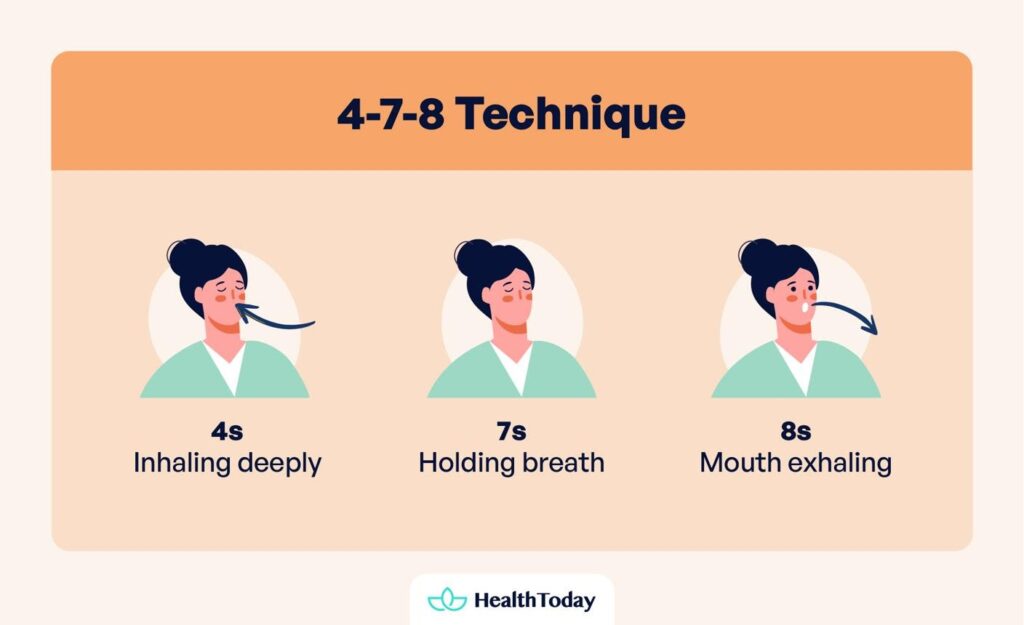
Among the most accessible techniques is the 4–7–8 breathing exercise, originally popularized in clinical relaxation training.
How It Works
- Inhale quietly through the nose for 4 seconds
- Hold the breath for 7 seconds
- Exhale slowly through the mouth for 8 seconds
Repeat for 4 cycles initially, gradually increasing as tolerated.
Why It Helps (Physiologic Basis)
The 4–7–8 method is more than a timing exercise:
- Prolonged exhalation (8 seconds) helps empty the lungs more completely—important for smokers who tend to retain stale air
- Breath-holding (7 seconds) allows better oxygen diffusion into the bloodstream
- It activates the parasympathetic nervous system, reducing stress-related airway constriction
- Encourages slower, deeper breathing patterns, counteracting the rapid, shallow breathing often seen in smokers
Clinically, slow breathing techniques have been associated with improved heart rate variability, reduced anxiety, and better perceived breath control—factors that indirectly support lung function.
Other Evidence-Based Breathing Exercises
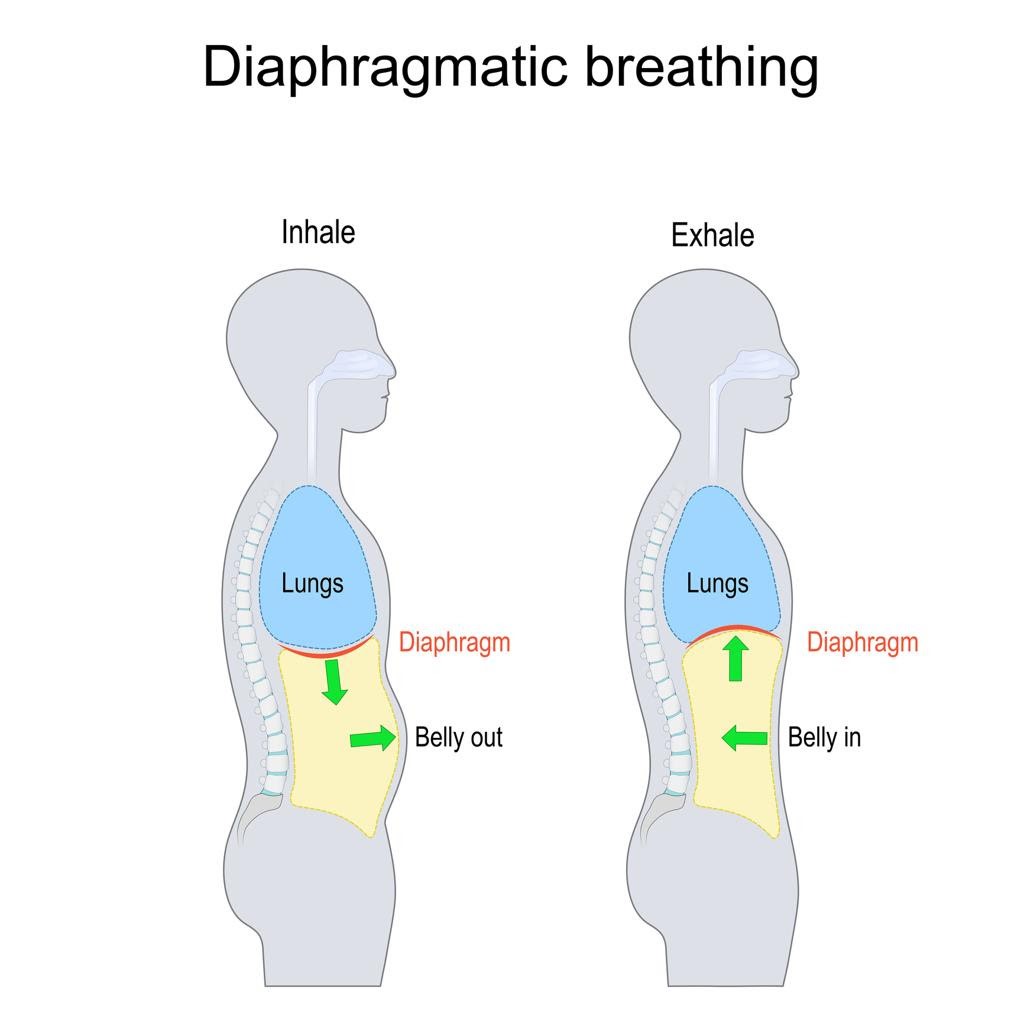
1. Diaphragmatic (Belly) Breathing
- Focuses on engaging the diaphragm rather than chest muscles
- Improves lung expansion and reduces work of breathing
- Commonly used in chronic obstructive pulmonary disease (COPD)
How to do it:
Place one hand on the chest and one on the abdomen. Inhale so the abdomen rises, not the chest.
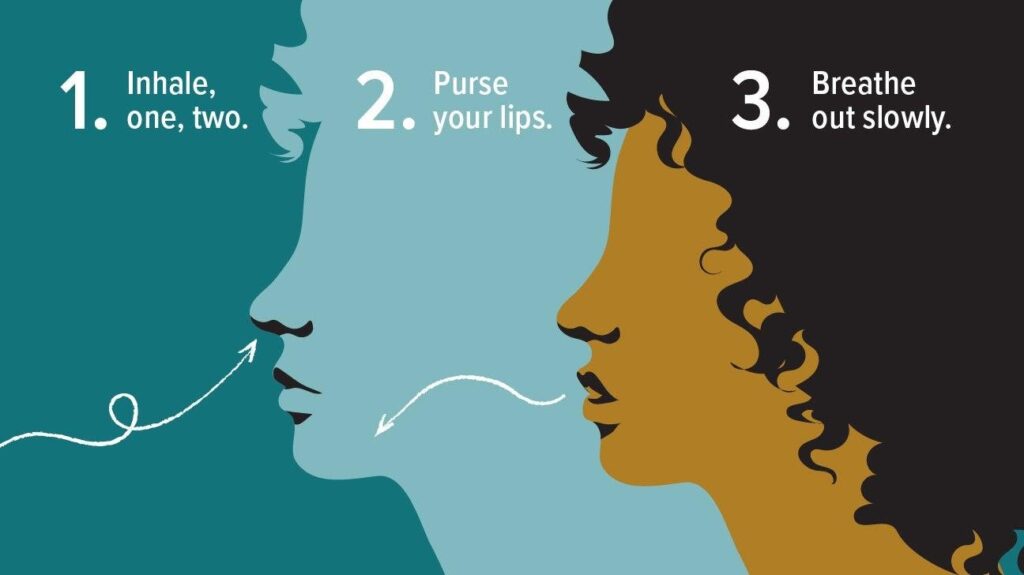
2. Pursed-Lip Breathing
- Particularly beneficial for smokers with airflow limitation
- Helps keep airways open longer during exhalation
- Reduces shortness of breath
How to do it:
Inhale through the nose, then exhale slowly through pursed lips (like blowing out a candle).
3. Controlled Coughing
- Helps clear mucus from the airways
- Supports lung hygiene, especially during early smoking cessation
What Improvement Can You Expect?
With consistent practice, individuals—especially those who have quit or are trying to quit smoking—may notice:
- Easier breathing and less chest tightness
- Reduced episodes of breathlessness
- Better exercise tolerance
- Enhanced relaxation and sleep quality
Importantly, these exercises complement—but do not replace—medical care, especially in individuals with established lung disease.
A Practical Starting Routine
A simple daily plan:
- Morning: 5 minutes of diaphragmatic breathing
- Midday: 4–7–8 breathing (4–6 cycles)
- Evening: Pursed-lip breathing + relaxation
Even 10–15 minutes a day can produce measurable benefits over time.
A Final Word
Breathing is the most fundamental act of life—yet often the most neglected.
For smokers, every breath can either reflect damage—or signal recovery. The lungs may have been exposed to years of insult, but they remain remarkably responsive to care.
And sometimes, the path to healing begins not with something complex—but with something as simple, and as powerful, as learning to breathe again.