

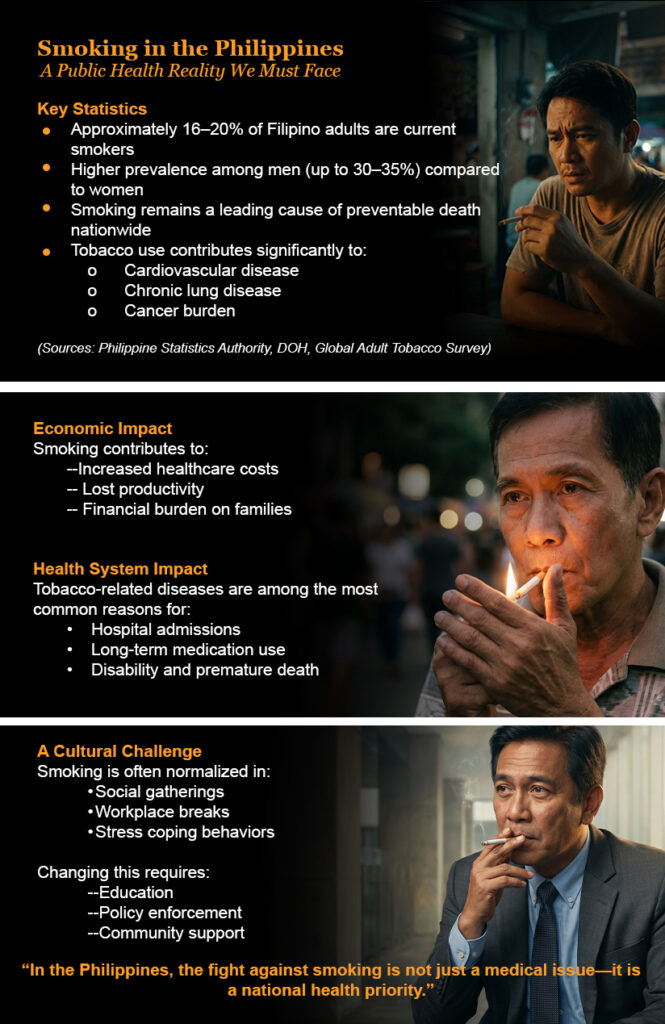
In medicine, we often confront diseases at their most advanced stages—when breath is already short, arteries are already blocked, or a mass is already visible on imaging. In many of these cases, one factor appears again and again: cigarette smoking.
What makes smoking uniquely dangerous is not just its toxicity, but its subtlety. The damage it causes is gradual, often unnoticed, and easily normalized. A morning cough becomes “part of life.” Shortness of breath becomes “signs of aging.” Fatigue becomes “just stress.”
But the body is already signaling distress.
Smoking is not a single-organ disease. It is a systemic process that injures blood vessels, inflames tissues, disrupts immune defenses, and alters cellular function across the body. Over time, these effects converge into the conditions we see every day—heart disease, stroke, lung disease, cancer.
And yet, despite this, there remains one powerful truth that we must emphasize to every patient:
It is never too late to quit.
Within days of stopping, the body begins to recover. Circulation improves. Carbon monoxide levels normalize. Over time, the risks of heart disease, stroke, and cancer decline significantly. While not all damage is reversible, the trajectory can still be changed.
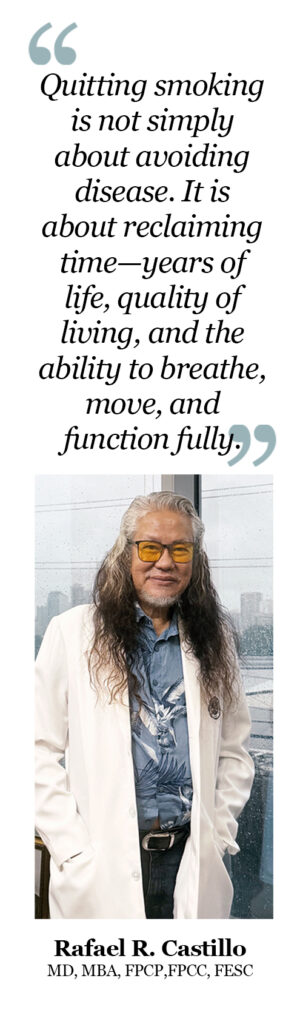
Quitting smoking is not simply about avoiding disease. It is about reclaiming time—years of life, quality of living, and the ability to breathe, move, and function fully.
As physicians, our role is not only to treat disease, but to prevent it. And in the case of smoking, prevention begins with one decision—repeated daily.
To stop.