
Waiting is often the most difficult space to live in—between prayer and answer, effort and outcome. But this Sabbath story reminds us that waiting is not empty time. It is where trust quietly takes root.
By Raffy Castillo
For a long time, Samuel believed that waiting meant delay. A pause in progress. A gap between effort and reward. An uncomfortable space where nothing seemed to move.
He tolerated waiting—but he never trusted it.
When prayers were unanswered, he assumed something was wrong. When plans stalled, he felt behind. When outcomes remained uncertain, he grew restless.
Waiting, to him, felt like wasted time.
The Restlessness Beneath Stillness
Samuel stayed busy to avoid that feeling. He filled his days with tasks, his mind with plans, his time with movement. Productivity gave him the illusion of control. But beneath the motion, there was always tension— a quiet urgency to move life forward.
Even on the Sabbath, that tension lingered. He rested outwardly, but inwardly he was still waiting for something to shift.
The Sabbath Interruption
On the last Sabbath of March, something unusual happened. Samuel ran out of things to do. No urgent tasks. No immediate decisions. No pressing demands.
Just time.
At first, it unsettled him. He reached for his phone, then paused. He considered planning ahead, then stopped.
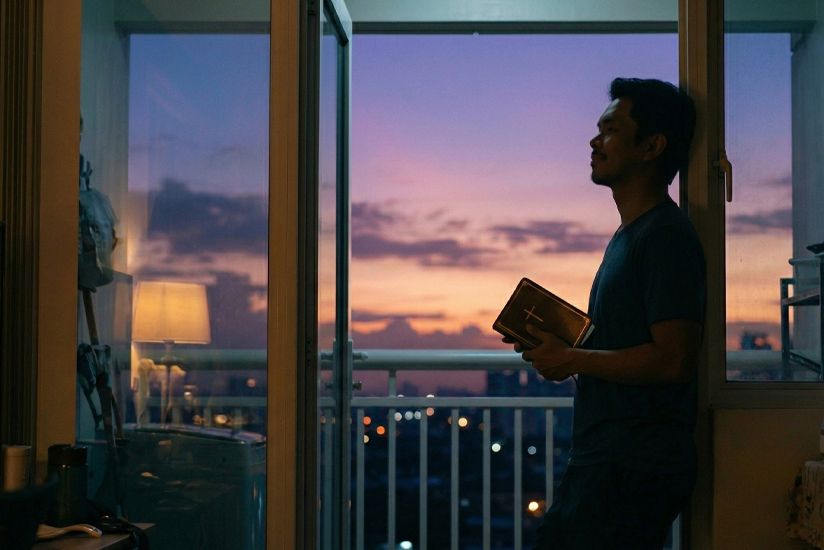
Instead, he sat quietly. And for the first time, he stayed in the waiting—without trying to escape it.
What Waiting Actually Holds
As the silence settled, Samuel noticed something he had long overlooked: Waiting was not empty. His breath slowed. His thoughts softened. His awareness deepened. He began to sense that something was happening—not around him, but within him.
Patience was forming. Trust was deepening. Peace was emerging.
God was not absent in the waiting. God was present in it.
The Shift He Didn’t Expect
Samuel realized that his discomfort with waiting had never been about time. It had been about trust. He feared that if nothing was happening, nothing would happen. But the Sabbath revealed a different truth: God often works in ways we cannot see, in seasons we cannot measure.
Waiting was not wasted. It was being used.
What He Learned Before Sunset
By late afternoon, Samuel no longer felt the need to escape the stillness. He sat with it. He rested inside it. And for the first time, waiting felt like peace—not pressure.
Before sunset, he wrote: “Today, I discovered that waiting is not where God is absent—it is where He often begins.”
Sabbath Reflection
The Sabbath invites us to stop resisting the spaces we cannot control. It teaches us that waiting is not interruption—it is preparation. Not emptiness—but quiet formation.
This Saturday, March 28, may you release your fear of unfinished timelines.
May you rest even when answers are still forming.
May you trust that God is working—especially when you cannot see it.
And may the Sabbath gently remind you that waiting is not lost time— it is sacred time.
“He stopped fearing the silence—and discovered that God was already at work within it.”