


By Henrylito D. Tacio
“A true leader has the confidence to stand alone, the courage to make tough decisions, and the compassion to listen to the needs of others.”—Douglas MacArthur
***
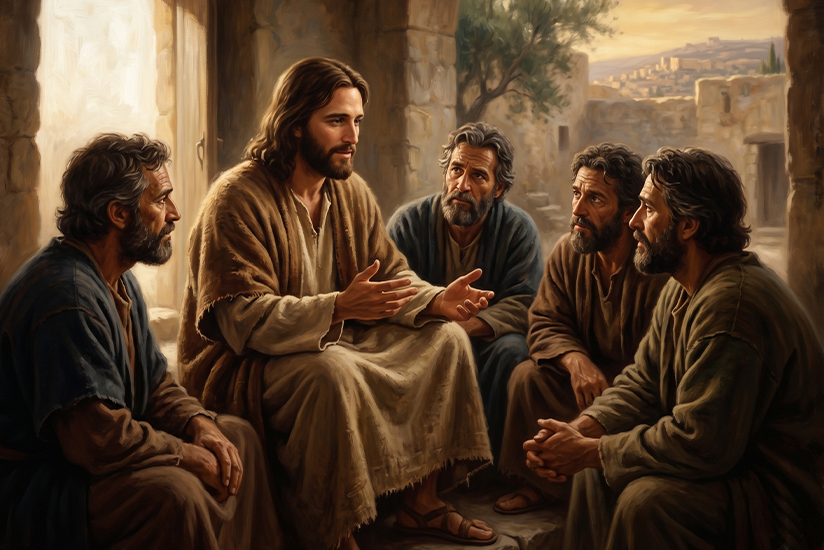
As a footnote to Deuteronomy 34:9, someone wrote: “Moses trained Joshua to take his place, so that Moses might become dispensable. So did Jesus train His disciples before His ascension. So should all leaders train others to take their place. Success without a successor is failure.”
In their book, Leaders: Strategies for Taking Charge, Warren Bennis and Burt Nanus found out over 850 different definitions of leadership. “Leadership is one of the most observed and least understood phenomena on earth,” asserts book author James MacGregor Burns.
“Leadership is the process of persuasion or example by which an individual (or leadership team) induces a group to pursue objectives held by a leader or shared by the leader and his or her followers,” writes John W. Gardner, author of On Leadership. “Leadership is influence, the ability of one person to influence others,” Oswald Sanders, another book author.
“One of the most common failures of leaders is that they spend little time or effort preparing their organization for their departure,” noted Henry and Richard Blackaby in their book, Spiritual Leadership. “Many leaders work extremely hard at their jobs and they may enjoy remarkable success during their term as leader. But one test of great leaders is how well their organizations do after they leave.”
When Franklin Roosevelt secured his fourth term as President of the United States in 1944, there was widespread speculation regarding his ability to complete the term, leading many to believe that the presidency would soon pass to Vice President Harry S. Truman. It was anticipated that Roosevelt would take the opportunity to provide Truman with a thorough briefing.
However, this did not occur. In reality, Roosevelt engaged in only two brief meetings with Truman during the 86 days of his vice presidency. Consequently, upon Roosevelt’s death, an unprepared Truman ascended to the presidency. One commentator said, “Roosevelt failed to develop his successor and, in this respect, he failed as a leader.”
It has been asserted that Napoleon Bonaparte’s most significant shortcoming at the Battle of Waterloo was his failure to cultivate independent thinking among his generals. As the outcome of the battle teetered on a knife’s edge, Napoleon relied on General Grouchy, who commanded 34,000 troops and 108 artillery pieces, to confront the opposing forces. However, Grouchy chose to remain inactive.
“Lacking initiative, authority and energy,” wrote Felix Markham, Napoleon’s biographer, “Grouchy took refuge in a literal obedience to orders. But the orders he received from Napoleon were lacking in precision and too late.”
Markham suggested, “Napoleon frequently criticized his Generals’ mistakes, but he never made any systematic attempt to teach them his methods. He relied entirely on himself.”
Samuel’s life, as depicted in the Bible, is noteworthy. He stands out as one of the most righteous leaders in the history of Israel. Upon his departure from leadership, those who had served alongside him found no shortcomings in his conduct (I Samuel 12:1-5). But despite his commendable qualities, he ultimately fell short in his role as a leader due to his failure to designate a successor.
A Chinese proverb says, “If you are planning for one year, grow rice. If you are planning for twenty years, grow trees. If you are planning for centuries, grow men.” Or women.
In one of her best-selling books, author Laurie Beth Jones shared this story: “Florence Littauer is an amazing woman who has written over thirteen books, one of which, Personality Plus, has sold over 300,000 copies. I attended one of her seminars and was surprised when she came on stage with about twenty-six other authors – each of whom she had helped to write their own books.
“She stood there with all those authors and said, ‘If you think I am proudest of my books, you are wrong. I am most proud of the people I have helped to become writers themselves.’ She didn’t define her success in terms of her products, but in terms of the people she had trained. Had she been an insecure author, she might have tried to lessen the competition. But in fact, she was busy training her replacements.”
Speaking of writing and training, I was reminded of a piece written by Howard Hendricks with Chip MacGregor. It goes this way:
In 1919, a man recuperating from injuries sustained during the Great War in Europe took a small apartment in Chicago. He selected this location due to its closeness to the residence of the renowned author Sherwood Anderson, known for his work, Winesburg, Ohio.
The two individuals quickly developed a strong friendship, spending nearly every day together for a span of two years. They shared meals, enjoyed long walks, and engaged in extensive discussions about the art of writing well into the night. The younger man frequently presented samples of his writing to Anderson, who provided candid and forthright critiques. Nevertheless, the aspiring writer remained undeterred.
Each time, he attentively listened, took detailed notes, and subsequently returned to his typewriter to refine his work. He refrained from defending his writing, later stating, “I didn’t know how to write until I met Sherwood Anderson.”
One of the most significant contributions Anderson made to his young protégé was facilitating his introduction to a network of contacts within the publishing industry. Before long, the younger individual began to write independently. In 1926, he released his debut novel, which garnered widespread critical praise. The title of this work was The Sun Also Rises, and the author was none other than Ernest Hemingway.
Nevertheless, the narrative does not conclude there. Following Hemingway’s departure from Chicago, Anderson relocated to New Orleans. In this new city, he encountered another aspiring writer, a poet with an unquenchable desire to hone his craft. Anderson guided him through the same rigorous process he had employed with Hemingway—engaging in writing, providing critiques, fostering discussions, offering encouragement, and, above all, promoting continuous writing.
A year later, Anderson assisted this individual in publishing his inaugural novel, Soldier Pay. Three years thereafter, this promising talent, William Faulkner, released The Sound and the Fury, which swiftly ascended to the status of an American classic.
During his time in California, Anderson collaborated for several years with playwright Thomas Wolfe and a young individual named John Steinbeck, among others. In total, three of Anderson’s mentees received Nobel Prizes, while four were awarded Pulitzer Prizes in literature.
The renowned literary critic Malcolm Cowley remarked that Anderson was “the only writer of his generation to leave his mark on the style and vision of the next generation.”
Now, the question is: Have you ever mentored someone to follow in your footsteps?
-
A fantastic read on why the best leaders actively try to make themselves dispensable through mentorship. Highly recommend!











Leave a Reply