

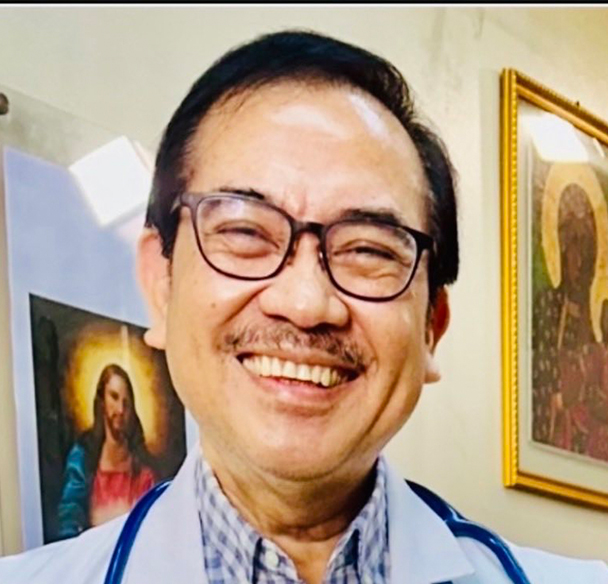
By Dr. Tony Leachon
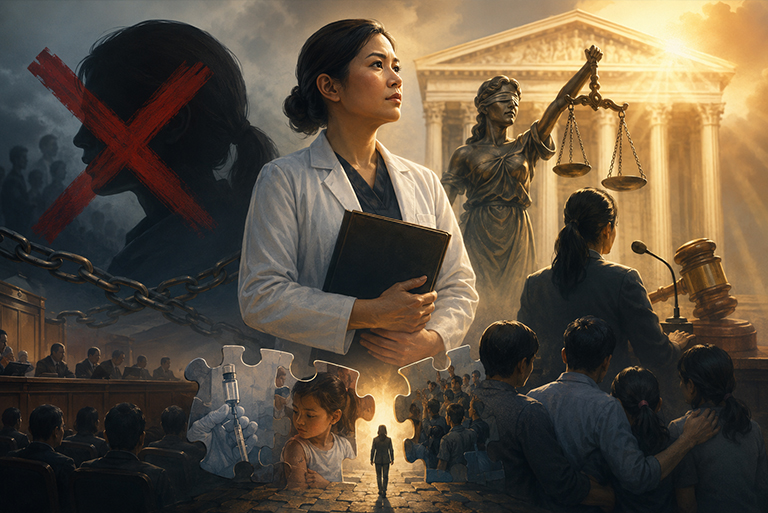
We filed a Petition for Certiorari with an application for a Temporary Restraining Order and Writ of Preliminary Injunction before the Regional Trial Court to stop the implementation of my six-month suspension imposed by the Philippine College of Physicians.
This legal action is not merely about a professional sanction. It is about the far more serious consequence of allowing the credibility of a vital witness to be impaired in cases of national importance, including the Dengvaxia controversy and other high-profile matters where public accountability depends on the integrity, independence, and courage of those who come forward to testify.
In proceedings that involve public health, government accountability, and the lives of Filipino families, the credibility of a witness is not a personal asset alone. It is part of the evidentiary foundation upon which truth-seeking depends. When a key witness is discredited without a clear finding of falsehood, misrepresentation, or bad faith, the damage does not stop with the individual. It affects the cases in which that witness has participated, the families seeking answers, and the public’s confidence that accountability can still be pursued without fear of retaliation.
The Dengvaxia controversy remains one of the most consequential public health issues in recent Philippine history. Families affected by it have long sought answers, accountability, and transparency. In that context, testimony from medical professionals and public health advocates has played a vital role in helping the public, Congress, the Senate, investigative bodies, and other institutions understand the issues involved. The families have been suffering for ten long years.
That is why the suspension raises concerns far beyond professional discipline. A sanction that publicly damages the reputation of a physician who served as a vital witness in the Dengvaxia case can be used to weaken, question, or diminish the value of that witness’s prior and future testimony. It can cast doubt not only on one person, but on the pursuit of accountability itself.
The concern is especially grave because the decision imposing the suspension reportedly failed to make the very findings that would justify such reputational harm. It did not establish that false information was disseminated. It did not establish misrepresentation as an expert witness. It did not establish bad faith.
Yet the punishment was imposed, and its public effect is unmistakable: a witness who stood in matters of high public consequence is placed under a cloud. That cloud can be invoked in courtrooms, legislative hearings, media discussions, and public debate to undermine credibility where credibility is essential.
This is why the issue cannot be reduced to one physician’s personal grievance. It is a due process issue. It is a witness credibility issue. It is a public accountability issue. It is a warning to professionals who may be called to testify in controversial cases: speaking on matters of public concern may carry professional consequences even when falsity, misrepresentation, and bad faith are not clearly established.
If expert witnesses, physicians, and public health advocates become afraid to speak because professional sanctions may later be used to discredit them, then the loss is not theirs alone.
Families seeking justice lose. Courts and investigative bodies lose. Public health loses. The Filipino people lose.
The filing before the court therefore seeks more than relief from a six-month suspension. It seeks protection against the unjust impairment of credibility in cases where the truth matters deeply to the public. It seeks to preserve the principle that professional discipline must be grounded in fairness, proof, and due process, especially when its effect is to damage the credibility of a witness in proceedings of national importance.
No institution should be allowed, through an unfair process, to place a vital witness under a reputational cloud that may prejudice ongoing or future efforts to seek truth and accountability. And no professional should be made to choose between silence and the risk of being discredited for participating in matters of public concern.
This case is therefore about safeguarding the integrity of testimony in the Dengvaxia case and other high-profile matters. It is about ensuring that witnesses are judged by evidence, not by institutional retaliation. It is about protecting the public’s right to hear from those with knowledge, expertise, and the courage to speak when public health and human lives are at stake.
Faith is now placed in the courts to examine whether the process and sanction were consistent with fairness, due process, and the broader public interest. The truth-seeking function of our institutions must not be weakened by the unjust discrediting of those who testify in cases that matter to the nation.
DR. ANTHONY C. LEACHON
Past President, Philippine College of Physicians
Public Health Advocate








Leave a Reply