

Dementia: The Coming Philippine Brain Health Crisis
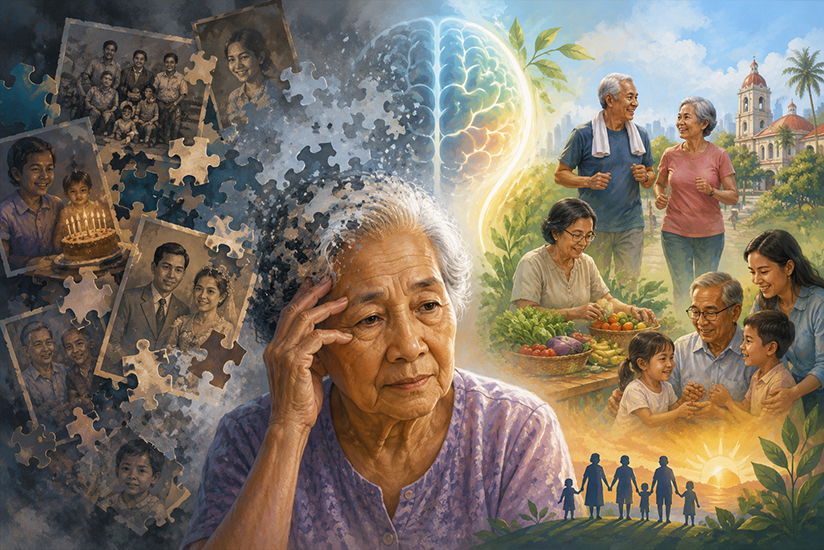
Every Filipino family treasures memories—the stories told at reunions, the birthdays remembered, the faces of loved ones recognized across generations. Yet for a growing number of older adults, those precious memories gradually begin to fade. Dementia is emerging as one of the most important health challenges of the 21st century, fueled by longer life expectancy and an aging population. Far from being a normal part of aging, dementia is a disease that can rob individuals of memory, judgment, independence, and identity itself. The good news is that science now tells us that many cases may be delayed, and some risks reduced, through healthier lifestyles and better control of vascular diseases. As the Philippines grows older, understanding dementia has never been more important.
By Rafael R. Castillo, MD
The Day Lola Forgot Her Way Home
At first, the family laughed about it.
Lola, once known for remembering every birthday and every relative’s nickname, began misplacing her eyeglasses. She repeated stories she had already told earlier in the day. Sometimes she forgot appointments.
“Matanda na kasi (She’s already old),” everyone said.
Then one afternoon, she failed to return home after walking to a nearby sari-sari store she had visited for years.
Neighbors eventually found her wandering several blocks away, confused and frightened. That was the moment the family realized this was not normal aging. It was dementia.
Across the Philippines, thousands of families are experiencing similar stories.
What Is Dementia?
Dementia is not a single disease.
Rather, it is a syndrome—a collection of symptoms caused by disorders affecting the brain.
These symptoms may include:
• Memory loss
• Difficulty thinking or reasoning
• Problems with language
• Impaired judgment
• Changes in personality or behavior
• Difficulty performing everyday activities
Importantly, dementia is severe enough to interfere with daily life and independence.
“Growing older may slow the body. Dementia steals something deeper—the ability to remember, reason, and remain connected to the people we love.”
Why Dementia Matters in the Philippines
The Philippines is experiencing a demographic transition.
Filipinos are living longer than previous generations. According to demographic projections, the number of older adults in the country will continue to rise substantially over the coming decades.
This is good news.
However, longer life expectancy also means more age-related diseases, including dementia.
Experts estimate that millions of people across Southeast Asia already live with dementia, and these numbers are expected to increase dramatically in coming years.
The implications extend beyond medicine.
Dementia affects:
- Families
- Caregivers
- Healthcare systems
- Productivity
- National healthcare expenditures
The Most Common Types of Dementia
Alzheimer’s Disease
Alzheimer’s disease accounts for approximately 60-70% of dementia cases worldwide.
It is characterized by abnormal accumulation of proteins in the brain that gradually damage nerve cells.
Typical early symptoms include:
- Forgetfulness
- Repeating questions
- Difficulty recalling recent events
As the disease progresses, language, reasoning, and self-care become increasingly impaired.
Vascular Dementia
Particularly relevant in the Philippines, vascular dementia results from impaired blood flow to the brain.
Risk factors include:
- Hypertension
- Diabetes
- High cholesterol
- Smoking
- Stroke
Given the high prevalence of cardiovascular disease among Filipinos, vascular dementia represents a major public health concern.
Mixed Dementia
Many older adults have a combination of Alzheimer’s disease and vascular dementia.
Lewy Body Dementia and Frontotemporal Dementia
These less common forms may present with hallucinations, movement problems, or marked personality changes.
What Causes Dementia?
Scientists continue to investigate the exact causes. Several mechanisms appear important:
1. Protein Accumulation
Abnormal proteins such as beta-amyloid and tau may accumulate within the brain.
2. Vascular Injury
Years of uncontrolled hypertension and diabetes damage blood vessels supplying the brain.
3. Chronic Inflammation
Inflammatory processes may contribute to neurodegeneration.
4. Genetic Factors
Certain inherited genes increase risk, although most cases are not directly inherited.
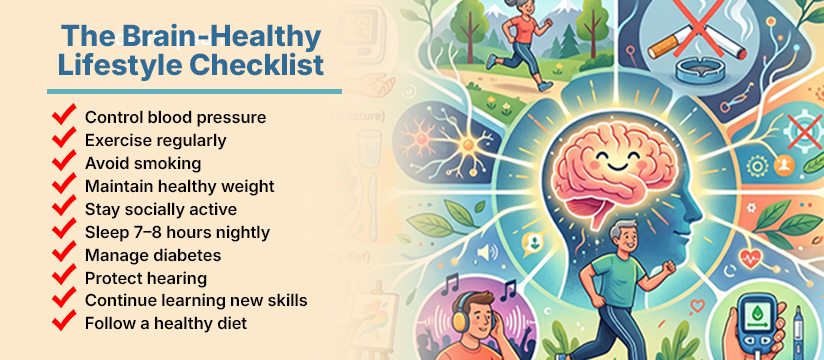
Risk Factors Filipinos Can Influence
Some risk factors cannot be changed:
- Age
- Family history
- Genetics
However, many important risk factors are modifiable.
1. Hypertension
Often called the “silent killer,” high blood pressure damages both the heart and brain.
2. Diabetes
Poorly controlled diabetes significantly increases dementia risk.
3. Smoking
Smoking accelerates vascular injury and brain aging.
4. Obesity
Particularly central obesity is linked to increased dementia risk.
5. Physical Inactivity
Regular exercise appears protective.
6. Hearing Loss
Emerging research suggests untreated hearing loss may increase cognitive decline.
7. Social Isolation
Loneliness and lack of mental engagement may contribute to dementia risk.
“What is good for the heart is often good for the brain. Protecting memory begins decades before symptoms appear.”
Recognizing Early Warning Signs
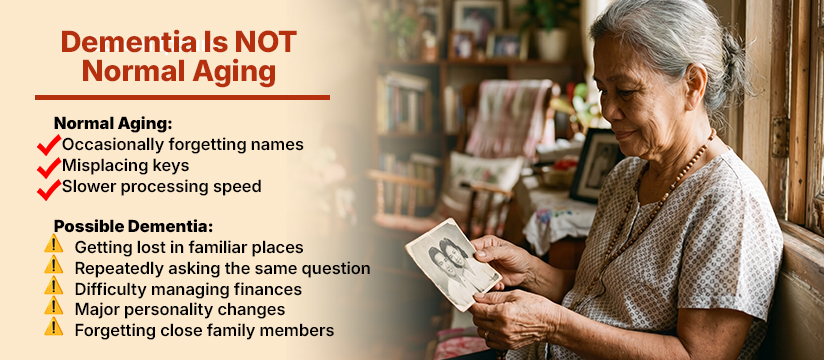
Families should watch for:
- Increasing forgetfulness
- Difficulty following conversations
- Problems managing finances
- Getting lost
- Repeating stories
- Misplacing items repeatedly
- Mood or personality changes
- Difficulty performing familiar tasks
Early recognition can lead to earlier intervention and planning.
How Is Dementia Diagnosed?
Diagnosis begins with a thorough medical evaluation.
1. Clinical Assessment
Physicians evaluate memory, attention, language, and problem-solving abilities.
2. Cognitive Testing
Standardized screening tools may help identify impairment.
3. Laboratory Tests
Used to exclude reversible causes such as:
- Thyroid disease
- Vitamin B12 deficiency
- Infections
4. Brain Imaging
CT scans or MRI scans may identify:
- Strokes
- Tumors
- Structural abnormalities
Can Dementia Be Treated?
Currently, no cure exists for most forms of dementia.
However, treatment can improve symptoms and quality of life.
Approaches include:
Medications
Several drugs may temporarily improve cognitive function or slow symptom progression in selected patients.
Management of Risk Factors
Aggressive control of:
- Blood pressure
- Diabetes
- Cholesterol
may slow vascular injury.
Physical Activity
Exercise improves blood flow and overall brain health.
Cognitive Engagement
Reading, learning, puzzles, music, and social interaction may help maintain cognitive reserve.
The Caregiver’s Journey
Perhaps the most overlooked victims of dementia are caregivers.
Family members often experience:
• Emotional stress
• Financial strain
• Sleep deprivation
• Depression
In the Philippines, caregiving remains largely family-based.
Supporting caregivers must become part of dementia care itself.
A National Challenge
The Philippines has invested heavily in combating infectious diseases, cardiovascular disease, and cancer.
The coming decades may require similar attention toward brain health.
Priorities should include:
• Public awareness
• Earlier diagnosis
• Expanded geriatric services
• Caregiver support programs
• Dementia-friendly communities
The goal is not merely longer lives.
It is healthier brains throughout those years.
Final Reflection
Dementia is among the most feared diseases because it threatens something profoundly human.
It affects not merely memory but identity.
It can gradually erase names, faces, stories, and experiences accumulated over a lifetime.
Yet there is reason for hope.
Science increasingly shows that brain health is influenced by the choices we make long before symptoms appear. Controlling blood pressure, staying physically active, remaining socially connected, continuing to learn, and protecting cardiovascular health may help preserve cognitive function well into old age.
As Filipinos live longer, we must begin viewing brain health the same way we view heart health—not as a concern for the future, but as a responsibility that begins today.
Because memories are among life’s greatest treasures.
And protecting them may be one of the most important investments we ever make.
References
- World Health Organization. Dementia Fact Sheet. Updated 2025.
- Alzheimer’s Disease International. World Alzheimer Report 2024.
- Livingston G, et al. Dementia prevention, intervention, and care: 2024 update of the Lancet Commission. Lancet. 2024.
- National Institute on Aging. What Is Dementia? Updated 2025.
- Alzheimer’s Association. 2025 Alzheimer’s Disease Facts and Figures.
- World Health Organization. Risk Reduction of Cognitive Decline and Dementia: WHO Guidelines.
- American Heart Association. Cardiovascular Risk Factors and Cognitive Decline. 2024.
- Prince M, Wimo A, Guerchet M, et al. World Alzheimer Report. Alzheimer’s Disease International.
- Philippine Statistics Authority. Population Aging Reports and Demographic Projections.
- Petersen RC, et al. Mild Cognitive Impairment and Dementia: Clinical Practice Guidelines. Neurology. 2023.
- Livingston G, Huntley J, Sommerlad A, et al. Dementia prevention, intervention, and care. Lancet. 2020;396:413–446.
- World Health Organization Global Action Plan on the Public Health Response to Dementia 2017–2025.
LIFE HACKS
15 Daily Habits for a Brain-Healthy Life
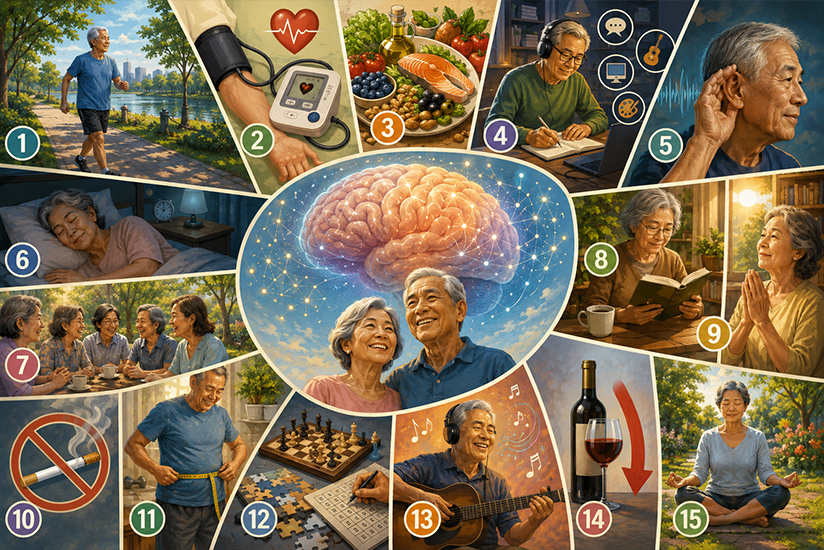
1. Walk Every Day
Aim for at least 30 minutes of brisk walking.
2. Control Blood Pressure
What’s good for the heart is good for the brain.
3. Follow a Mediterranean-Style Diet
Eat more:
✔ fish
✔ vegetables
✔ fruits
✔ nuts
✔ olive oil
4. Keep Learning
Learn:
- a language
- musical instrument
- computer skill
- hobby
5. Protect Your Hearing
Untreated hearing loss is increasingly linked to dementia risk.
6. Prioritize Sleep
Target 7–8 hours nightly.
7. Stay Socially Connected
Isolation accelerates cognitive decline.
8. Read Daily
Books, newspapers, and thoughtful articles stimulate the brain.
9. Practice Faith and Spiritual Reflection
Many studies associate spiritual engagement with emotional resilience and healthy aging.
10. Never Smoke
11. Maintain a Healthy Waistline
12. Play Brain-Challenging Games
Chess, puzzles, word games, strategy games.
13. Listen to and Learn Music
14. Limit Alcohol
15. Manage Stress
Chronic stress may negatively affect cognition.
PHILIPPINE DEMENTIA FACTS

By the H&L Editorial team
Brain Health by the Numbers
Key Facts
- Dementia affects an estimated 55 million people worldwide, with nearly 10 million new cases annually.
- Alzheimer’s disease accounts for approximately 60–70% of cases.
- Population aging is expected to substantially increase dementia cases throughout Asia, including the Philippines.
- Stroke, hypertension, diabetes, obesity, and smoking remain major contributors to vascular dementia.
- Women account for a higher proportion of dementia cases because they generally live longer.
Why Filipinos Should Care
The Philippines is aging rapidly.
More grandparents are living into their 70s, 80s, and 90s than ever before.
This is a triumph of public health—but it also means dementia will become an increasingly important national health issue.
CAREGIVER SURVIVAL GUIDE

When a Loved One Has Dementia
Dementia affects entire families.
Remember These Principles:
1. Don’t Argue About Memory
Correcting every forgotten detail often creates frustration.
2. Enter Their Reality
Respond gently rather than confrontationally.
3. Maintain Routines
Predictability reduces anxiety.
4. Simplify Communication
Use short, clear sentences.
5. Prioritize Safety
Prevent wandering, falls, and medication errors.
6. Accept Help
Caregiver burnout is real.
7. Take Care of Yourself
You cannot pour from an empty cup.
Caregiver Warning Signs
Seek support if you experience:
⚠ chronic fatigue
⚠ depression
⚠ irritability
⚠ sleep deprivation
⚠ social withdrawal
CME BRIEF
Dementia Recognition in Primary Care
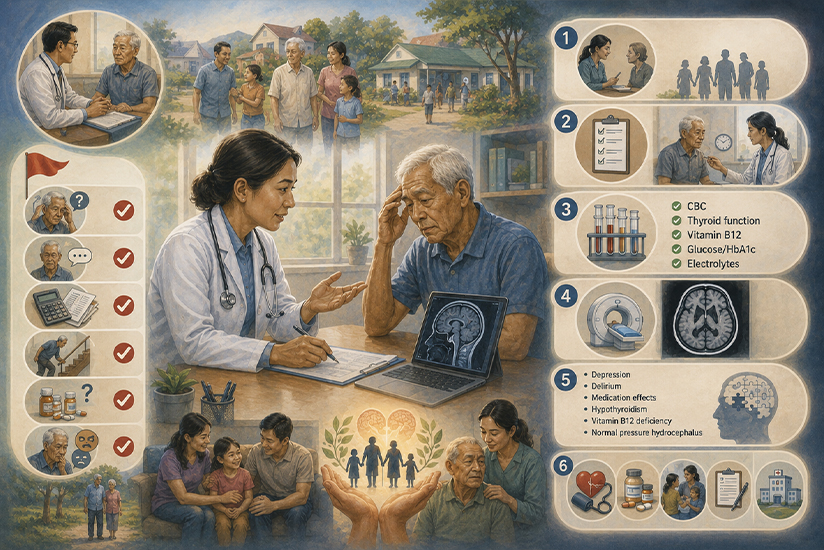
Why Primary Care Matters
Most dementia begins in the community—not in neurology clinics.
Primary care physicians are often the first to identify symptoms.
Red Flags
✔ Progressive memory impairment
✔ Repetition of questions
✔ Difficulty managing finances
✔ Functional decline
✔ Medication non-adherence
✔ Personality changes
Initial Work-Up
1. History
Include family interview whenever possible.
2. Cognitive Testing
Examples:
- MMSE
- MoCA
3. Laboratory Evaluation
✔ CBC
✔ Thyroid function
✔ Vitamin B12
✔ Glucose/HbA1c
✔ Electrolytes
4. Imaging
CT or MRI when indicated.
5. Important Differential Diagnoses
- Depression
- Delirium
- Medication effects
- Hypothyroidism
- Vitamin B12 deficiency
- Normal pressure hydrocephalus
6. Management Priorities
✔ Risk factor control
✔ Medication review
✔ Caregiver support
✔ Advance care planning
✔ Referral when necessary
PATIENT HANDOUT

1. Is It Normal Aging or Dementia?
Usually Normal Aging
✔ Occasionally forgetting names
✔ Misplacing keys
✔ Taking longer to learn new technology
✔ Forgetting why you entered a room
2. Possible Warning Signs of Dementia
⚠ Repeatedly asking the same questions
⚠ Getting lost in familiar places
⚠ Difficulty handling money
⚠ Significant personality changes
⚠ Difficulty following conversations
⚠ Forgetting close family members
⚠ Difficulty performing familiar tasks
3. When Should You See a Doctor?
Consult a physician if memory problems:
✔ interfere with daily activities
✔ are worsening over time
✔ concern family members
✔ affect safety or independence
FINAL THOUGHT
The goal is not merely to live longer.
The goal is to live longer with memory, purpose, independence, dignity, and connection to those we love.
As our population ages, dementia may become one of the defining health challenges of the coming decades.
But unlike many people believe, brain health is not determined by age alone.
The choices we make today—how we eat, move, learn, connect, sleep, and care for our hearts—may help determine how clearly we remember tomorrow.
And perhaps that is the most encouraging lesson of all.










Leave a Reply