


In medicine, we are trained to act—to diagnose, to treat, to prescribe. Every symptom calls for a response, every abnormal result invites intervention. And yet, over time, something subtle can happen.
The list grows.
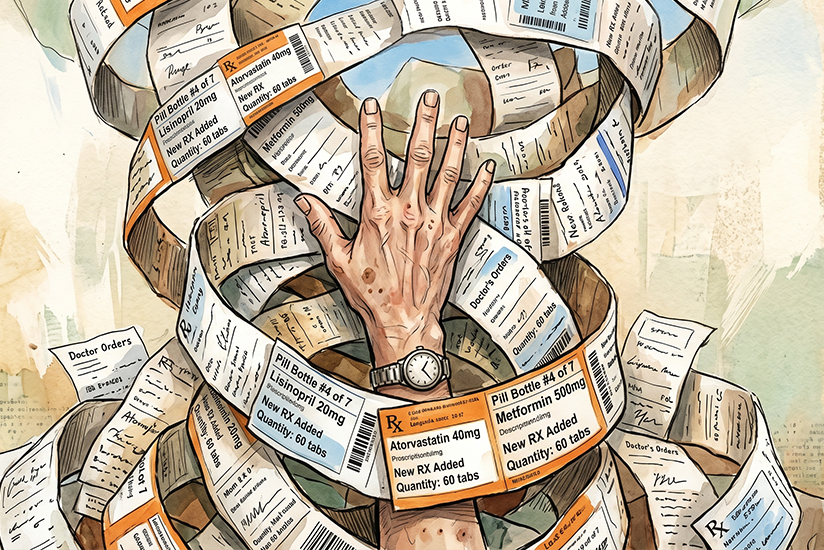
One medicine becomes two. Two becomes five. Five becomes a daily ritual of pills—taken faithfully, often unquestioned.
Then the patient returns.
“Doc, nahihilo po ako.” (I feel dizzy.)
“Parang nanghihina ako.” (I feel weak.)
“Hindi na ako makatulog.” (I have difficulty sleeping.)
We begin to search for a new diagnosis. But sometimes, the answer is already in front of us.
It is in the medicines themselves.
Polypharmacy is not always the result of error. More often, it is the unintended consequence of good intentions—multiple doctors trying to help, guidelines trying to optimize care, patients trying to follow instructions. But when these efforts are not integrated, the result can be excess.
And excess, in medicine, can harm.
The challenge for us as physicians is to remember that prescribing is only half of our responsibility. The other half is reassessing—asking whether a medication is still necessary, still beneficial, still aligned with the patient’s goals.
Deprescribing is not withdrawal of care. It is refinement of care.
For patients and families, the message is equally important: do not hesitate to ask questions. Medicines are not meant to be carried indefinitely without purpose. They should serve you—not burden you.
The goal of treatment is not the longest list of prescriptions.
It is the simplest path to better health.
And sometimes, that path begins with the courage to remove what is no longer needed.