

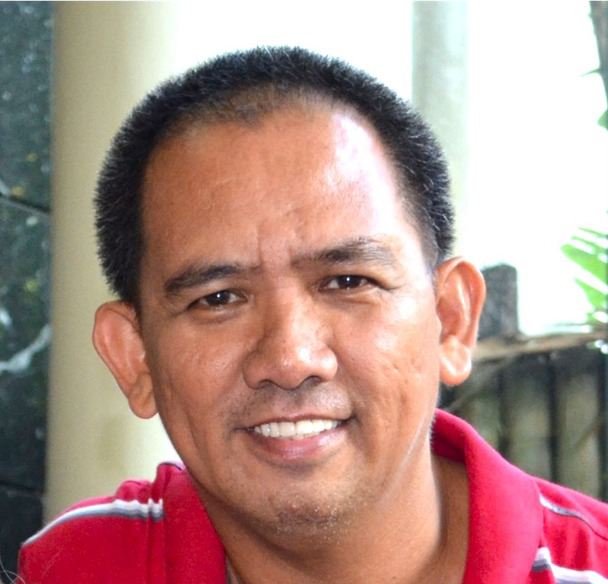
By Henrylito D. Tacio

“Service is what prayer looks like when it gets up off its knees and walks around in the world.”— Michael J. Graham, S.J.
***
Today’s generation may not be familiar with Richard M. Nixon, who served as the 37th president of the United States from 1969 to 1974. He holds the distinction of being the only American president to have resigned from office, a decision prompted by the Watergate scandal.
Prior to his resignation, Nixon compiled a list of individuals he considered adversaries, including the renowned Hollywood actor Paul Newman. Newman was quoted as saying, “Being on President Nixon’s enemies list was the highest single honor I’ve ever received. Who knows who’s listening to me now and what government list I’m on?”
Newman may have not appeared in All The President’s Men, a 1976 political thriller depicting the Watergate investigation by journalists Bob Woodward and Carl Bernstein, but he won an Oscar for Best Actor for his performance in The Color of Money.
The blue-eyed actor never became a Congressman or a Senator but he knew what serving others was about. There were several stories about his kindness and how he helped those who were less privileged.
I learned of a story that took place on Christmas Eve in 1983. Newman entered a shelter in Manhattan dressed in a simple navy sweater and carrying two wooden crates. Outside, the snow was falling heavily. Inside, the volunteers were already in a state of panic. They lacked sufficient food to serve the long queue of individuals waiting at the entrance. The pots were nearly empty, the trays of bread were depleting, and the atmosphere was thick with the weight of failure.
Newman placed the crates down silently. Within them were vegetables, jars, and flour sourced from his farm in Connecticut. “Where is the kitchen?” he inquired, rolling up his sleeves. A few individuals froze upon realizing his identity, but Newman did not pause for their acknowledgment. He proceeded directly to the stove, ignited the burners, and began chopping onions as if he had been a member of the team from the very beginning.
Within an hour, the room was transformed. The aroma of garlic and olive oil permeated the air. Bread was rising in the oven. A large pot of tomato soup simmered on the stove. Newman worked diligently, perspiring through his sweater, never pausing.
A young volunteer named Clara recalled him leaning in close while she peeled carrots. “If we make it filling enough,” Newman remarked, “nobody goes hungry tonight.”
As the doors opened, individuals shuffled in wearing thin coats and displaying weary expressions. The famous actor personally carried bowls to the tables. “Merry Christmas,” he greeted each guest as he placed warm bread rolls down. Some recognized him immediately, their eyes widening. Others may not have known his name, but they sensed his compassion.
Throughout the night, Newman navigated between the stove and the dining area. He reportedly stirred the soup, baked additional bread, served meals, and continually checked on the diners. The shelter was warm, filled with voices and laughter, a stark contrast to the storm raging outside. By midnight, over two hundred individuals had been served, many of them receiving two meals.
When it finally ended, Newman chose not to depart. He remained to clean the floor, arrange the chairs, and wash the dishes. It was only after completing these tasks that he donned his coat. Before stepping out into the snow, he turned to Clara and quietly remarked, “The food matters. But being here with them matters more.”
We enter this world for a singular purpose – to serve humanity and our fellow beings.
“The best way to find yourself is to lose yourself in the service of others,” said Mahatma Gandhi, the preeminent leader of Indian nationalism in British-ruled India. “The successful man doesn’t use others, other people use the successful man, for above all the success is of service,” noted American writer Mark Caine.
The word “service” is derived from the Latin word servitium, which means “slavery” or “servitude,” as well as servus, meaning “slave.” Initially, it referred to the act of serving a master, but over time, it has evolved from denoting menial tasks to encompassing a broader, contemporary understanding of providing value, assistance, or labor for others in both professional and personal settings.
“Help others and give something back,” urged Hollywood actor Arnold Schwarzenegger. “I guarantee you will discover that while public service improves the lives and the world around you, its greatest reward is the enrichment and new meaning it will bring to your own life.”
Kallam Anji Reddy also points out: “Everyone has a purpose in life and a unique talent to give to others. And when we blend this unique talent with service to others, we experience the ecstasy and exultation of our spirit, which is the ultimate goal of all goals.”
“The purpose of human life is to serve, and to show compassion and the will to help others,” said Albert Schweitzer. British actress Audrey Hepburn agreed. “You have two hands,” she said, “One to help yourself, and the second to help others.”
In 1908, Eugene V. Debs delivered one of the most eloquent speeches ever written. “Now, my friends,” he said, “I am opposed to the system of society in which we live today, not because I lack the natural equipment to do for myself but because I am not satisfied to make myself comfortable knowing that there are thousands of my fellow men who suffer for the barest necessities of life.
“We were taught under the old ethic that man’s business on this earth was to look out for himself,” he continued. “That was the ethic of the jungle, the ethic of the wild beast. Take care of yourself, no matter what may become of your fellow men.
“Thousands of years ago the question was asked: ‘Am I my brother’s keeper?’ That question has never yet been answered in a way that is satisfactory to civilized society.”
The American union leader, one of the founding members of the Industrial Workers of the World, continued his speech: “Yes, I am my brother’s keeper. I am under a moral obligation to him that is inspired, not by any maudlin sentimentality but by the higher duty I owe myself. What would you think if I were capable of seating myself at a table and gorging myself with food and saw about me the children of my fellow beings starving to death.”
“Giving kids clothes and food is one thing but it’s much more important to teach them that other people besides themselves are important, and that the best thing they can do with their lives is to use them in the service of other people,” said Dolore Huerta, another labor leader and civil rights activist.
No matter how small your service is to others, it matters. As Howard Zinn puts it: “Small acts, when multiplied by millions of people, can transform the world.” Desmond Tutu also said, “Do your little bit of good where you are: it’s those little bits of good put together that overwhelm the world.”
“I am only one, but I am one,” Edward Everett Hale contends. “I cannot do everything, but I can do something. And I will not let what I cannot do interfere with what I can do.”
When it comes to serving others, it doesn’t matter what your status in life is. “As far as service goes, it can take the form of a million things,” said Elisabeth Kubler-Ross. “To do service, you don’t have to be a doctor working in the slums for free or become a social worker. Your position in life and what you do doesn’t matter as much as you do what you do.”
In the Holy Bible, service involves ministering to others out of love for God, addressing both spiritual and physical needs. It is not simply optional or charitable work but rather a manifestation of God’s love in the life of the believer.
Christian service is frequently equated with ministry, underscoring the believer’s role as a servant acting on behalf of the Lord (1 Corinthians 3:9) and executing God’s will on earth (Romans 5:5).
The Old Testament highlights the importance of caring for the vulnerable, including foreigners, orphans, and widows (Deuteronomy 10:18-19), whereas the New Testament emphasizes sacrificial service exemplified by Jesus (John 13:14-15).
Martin Luther King, Jr., the American civil rights activist, summarized everything in these words: “Everybody can be great… because anybody can serve. You don’t have to have a college degree to serve.”










Leave a Reply