

Understanding the risks, myths, warning signs, and modern treatment of one of the most common cancers in men

Many Filipino men can discuss politics, basketball, business, and even heart disease openly—but conversations about prostate health often remain wrapped in silence, embarrassment, or denial. Yet prostate cancer is now among the most common cancers affecting Filipino males, particularly as life expectancy increases. The good news is that many cases grow slowly and are highly treatable when detected early. The challenge is that too many men seek consultation only when symptoms become severe. Understanding prostate cancer—its risk factors, myths, prevention, screening, and treatment—is no longer optional. It is part of healthy aging and responsible manhood.
By Rafael R. Castillo, MD
The Quiet Symptoms Men Ignore
It often begins subtly. A man in his late 50s notices he urinates more frequently at night. He blames coffee. Or age. Later, the urine stream weakens. Sometimes there is urgency. Occasionally, difficulty starting urination.
Still, many men delay consultation.
“Normal lang siguro pagtanda.” (It’s part of aging)
“Nakakahiya magpa-check.” (I’m ashamed to have a check-up)
“Basta wala namang sakit.” (I feel no pain)
Months or years pass. Sometimes the problem is simply benign prostate enlargement. But in other cases, it may already be prostate cancer quietly growing inside the gland. And like many cancers, prostate cancer is often easier to treat before symptoms become advanced.
What Is the Prostate?
The prostate is a small gland found only in men.
Located below the bladder and surrounding part of the urethra, it helps produce seminal fluid.
As men age, the prostate commonly enlarges. This enlargement may be:
- benign (non-cancerous)
- inflammatory
- or cancerous
Prostate cancer develops when abnormal prostate cells grow uncontrollably.
“The greatest danger of prostate cancer is not always aggressiveness—it is delayed detection caused by silence, fear, and avoidance.”
Why Prostate Cancer Matters in the Philippines
Prostate cancer is among the leading cancers affecting Filipino men. As the Philippine population ages and access to diagnostics improves, more cases are being identified.
Several factors contribute:
- Increasing life expectancy
- Westernized dietary patterns
- Sedentary lifestyles
- Improved screening awareness
Importantly, many Filipino men still avoid preventive consultation until symptoms interfere with daily life.
What Causes Prostate Cancer?
There is no single cause.
Instead, several risk factors interact over time.
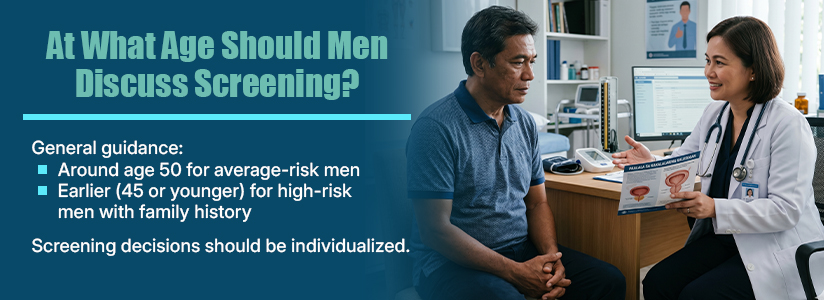
Age
The strongest risk factor.
Risk rises significantly after age 50.
Family History
Men with:
- a father
- brother
- or close relative
with prostate cancer have higher risk.
Diet and Lifestyle
Possible contributing factors include:
- high-fat diets
- obesity
- processed meats
- physical inactivity
Hormonal and Genetic Factors
Male hormones (androgens), especially testosterone-related pathways, influence prostate cell growth. Certain genetic mutations may increase susceptibility.
Myths Filipino Men Still Believe
Myth 1:
“Kapag mahina ang ihi, cancer agad.” (If urine flow slows down, it’s cancer.)
Not always.
Benign prostate enlargement is far more common.
Myth 2:
“Walang symptoms, walang problema.” (If there are no symptoms, there’s no problem.)
False.
Early prostate cancer may have no symptoms.
Myth 3:
“Pag naoperahan, mawawala pagkalalaki.” (After surgery, one’s ‘manhood’ also disappears.)
Modern treatment aims to preserve both survival and quality of life whenever possible.
Myth 4:
“Ang prostate exam nakakahiya.” (I’m ashamed to have a prostate exam.)
Embarrassment has delayed diagnosis in many men.
Health is more important than temporary discomfort.
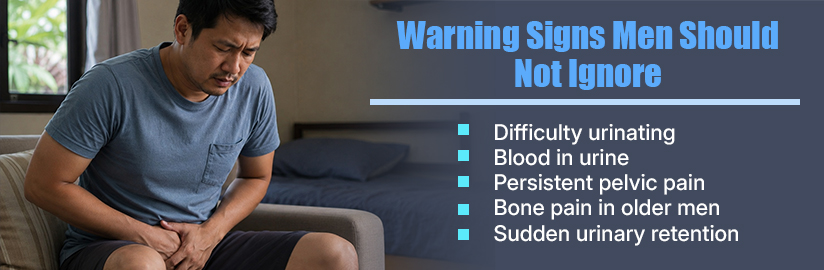
What Are the Symptoms?
Early prostate cancer may be silent.
Possible symptoms include:
- Frequent urination
- Nocturia (nighttime urination)
- Weak urine stream
- Difficulty urinating
- Blood in urine or semen
- Pelvic discomfort
Advanced disease may cause:
- Bone pain
- Weight loss
- Fatigue
How Is Prostate Cancer Detected?
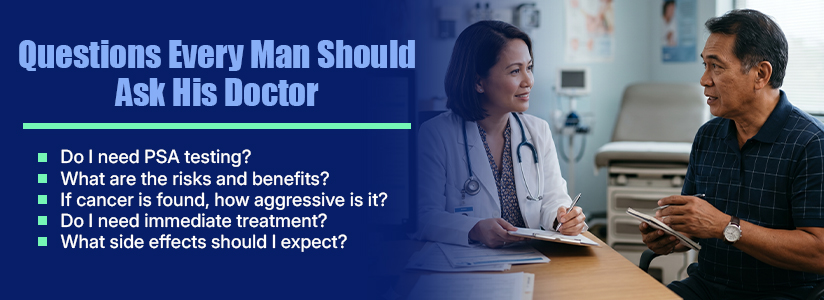
PSA Blood Test
PSA (Prostate-Specific Antigen) is a blood marker produced by the prostate.
Elevated PSA does not automatically mean cancer.
It may also rise due to:
- benign enlargement
- infection
- inflammation
Digital Rectal Examination (DRE)
A physician assesses the prostate for:
- enlargement
- hardness
- irregularity
Though many men fear this exam, it is brief and clinically valuable.
Imaging and Biopsy
If suspicion remains high:
- multi-parametric prostate MRI
- MRI/Ultrasound-guided biopsy may be recommended.
Can Prostate Cancer Be Prevented?
No guaranteed prevention exists.
But healthy habits may help reduce risk:
- Maintain healthy weight
- Exercise regularly
- Eat more fruits and vegetables
- Reduce processed meats and excessive saturated fats
- Avoid smoking
Cardiovascular health and prostate health often overlap.
The Lifestyle Connection
Interestingly, many lifestyle measures that protect the heart may also benefit the prostate:
- healthy diet
- exercise
- weight control
- smoking cessation
In many ways, chronic diseases travel together.
Modern Treatment: Much More Hopeful Than Before
Treatment depends on:
- cancer stage
- aggressiveness
- age
- overall health
Active Surveillance
Some slow-growing cancers may simply be monitored carefully.
Not every case needs immediate aggressive treatment.
Surgery
Radical prostatectomy removes the prostate gland.
Radiation Therapy
Often effective for localized disease.
Hormonal Therapy
Blocks testosterone-driven growth.
Advanced Therapies
Targeted agents and newer therapies continue improving survival.
Balancing Survival and Quality of Life
Modern prostate cancer care increasingly focuses on:
- preserving urinary control
- preserving sexual function when possible
- minimizing treatment side effects
This is why individualized care matters.
The Filipino Reality: Masculinity and Delay
One of the biggest barriers is cultural.
Many Filipino men:
- avoid check-ups
- downplay symptoms
- equate consultation with weakness
Unfortunately, silence does not protect health. Awareness does. Responsible manhood includes preventive care.
Final Reflection
Prostate cancer is not merely a medical issue. It is also a lesson about aging, vulnerability, and courage.
The courage to seek consultation. The courage to ask uncomfortable questions. The courage to prioritize health before crisis arrives.
The encouraging truth is this: Many men with prostate cancer live long, productive, meaningful lives—especially when the disease is detected early and managed properly.
And perhaps that is the deeper message: Growing older should not mean surrendering health in silence. It should mean becoming wiser about protecting it.
References
- American Cancer Society. Prostate Cancer Facts & Figures. 2025.
- National Comprehensive Cancer Network (NCCN). Prostate Cancer Guidelines. Version 2025.
- European Association of Urology. EAU Guidelines on Prostate Cancer. 2025.
- National Cancer Institute. Prostate Cancer Treatment Overview.
- Rawla P. Epidemiology of prostate cancer. World J Oncol. 2019;10(2):63–89.
- Philippine Society of Medical Oncology educational materials.
- Globocan 2024: Philippines Cancer Statistics. International Agency for Research on Cancer.
- Mottet N, et al. Management of prostate cancer. Eur Urol. 2024.
- Centers for Disease Control and Prevention (CDC). Prostate cancer basics and screening information.
- World Health Organization. Cancer fact sheets and men’s health initiatives.










Leave a Reply