


By Dr. Tony Leachon
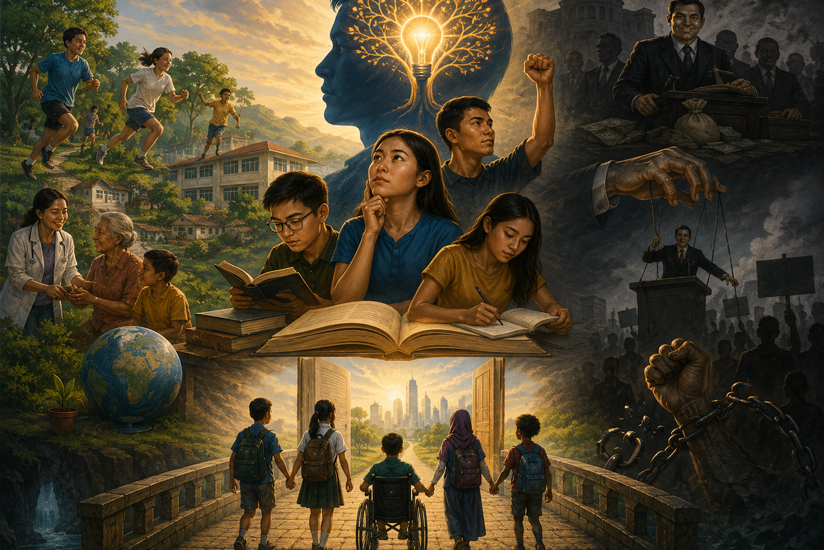
Albert Einstein once said, “The value of a college education is not the learning of many facts but the training of the mind to think.” This insight captures the essence of why education matters—not as a mere accumulation of information, but as the cultivation of wisdom, discernment, and the ability to think critically in a complex world.
For a nation, the most important investment is not in monuments or fleeting projects, but in human capital. A healthy and educated population is the foundation of progress. When citizens are strong in body and mind, they become capable of shaping their own destiny, resisting manipulation, and demanding accountability from those in power.
In countries riddled with corruption and incompetence, the people often find themselves abandoned by leaders who prioritize self-interest over public service. In such circumstances, the responsibility falls on ordinary citizens to rise above the failures of governance. Education becomes the weapon of the powerless, the shield against deception, and the bridge toward equality.
We are, in many ways, on our own. That is why we strive to educate the people—not only to produce professionals, but to nurture good leaders and responsible citizens. Education teaches values as much as it teaches skills. It instills discipline, empathy, and moral courage—the qualities that corrupt systems cannot suppress.
History has shown that societies which invest in education and health create opportunities for social mobility. They empower the poor to dream, the marginalized to speak, and the young to lead. Education is the greatest equalizer, breaking down barriers of privilege and giving every child, regardless of origin, a fighting chance to succeed.
In the end, the measure of a nation is not in its wealth or its rulers, but in the dignity of its people. And dignity is born when citizens are healthy, educated, and free to think for themselves. That is the true legacy of education: not just knowledge, but the power to transform society.
#RelentlessForChange










Leave a Reply