

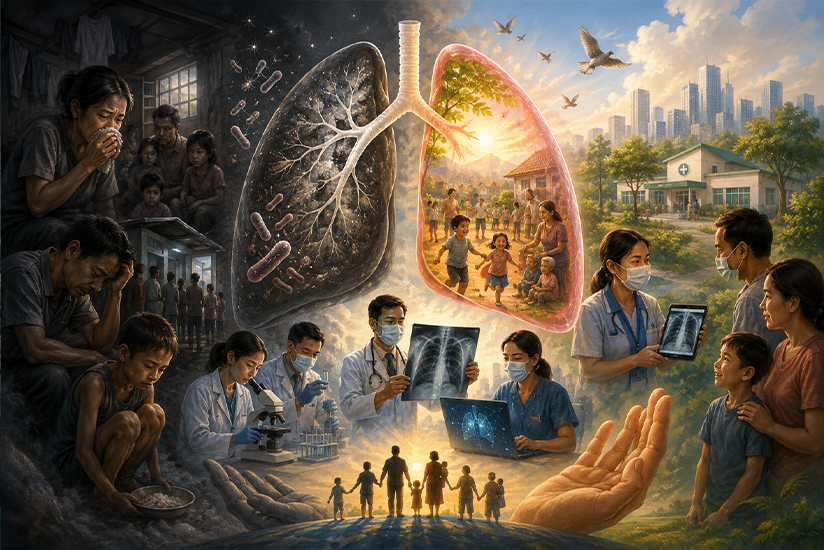
Tuberculosis is one of the oldest diseases known to humanity, yet it remains one of the most revealing. It tells us not only about bacteria and lungs, but also about the kind of society we have built.
For generations, tuberculosis was called the “white plague,” claiming millions of lives before effective medicines were discovered. Today, we possess sophisticated molecular diagnostics, highly effective antibiotics, shorter treatment regimens, and promising new technologies such as artificial intelligence-assisted screening. From a scientific standpoint, we know far more about tuberculosis than ever before.
Yet the disease continues to affect millions of people worldwide, including hundreds of thousands of Filipinos each year.
Why?
The answer lies beyond medicine.
Tuberculosis flourishes where poverty persists, where families live in overcrowded homes, where nutrition is inadequate, where healthcare remains difficult to access, and where patients delay consultation because they fear losing a day’s wage or facing social stigma. The bacterium causes the disease, but social conditions determine how successfully it spreads.
This is why tuberculosis remains one of the clearest examples of the intimate relationship between medicine and society.
As physicians, we naturally focus on diagnosis and treatment. Every patient deserves timely recognition of symptoms, accurate laboratory confirmation, and completion of the full course of therapy. These remain the cornerstones of successful clinical care.
But ending tuberculosis requires us to think beyond individual patients.
It calls for healthier homes with better ventilation, stronger primary healthcare systems, improved nutrition, universal access to quality diagnostics, and sustained public health investment. It also demands compassion. Tuberculosis is an infection—not a moral failing. Every patient deserves understanding, dignity, and support throughout treatment.
The encouraging news is that the future is brighter than ever before. Rapid molecular tests, AI-assisted chest X-ray interpretation, newer medicines, and advances in vaccine research are transforming tuberculosis care around the world. These innovations offer genuine hope that future generations may know tuberculosis only as a chapter in history rather than a daily reality.
But science alone cannot achieve that vision.
The greatest challenge is ensuring that the benefits of modern medicine reach every Filipino, regardless of geography, income, or social circumstance.
Tuberculosis reminds us that the health of a nation is measured not only by the sophistication of its hospitals, but also by the well-being of its most vulnerable communities.
As healthcare professionals, policymakers, educators, and citizens, we all have a role to play in ending this ancient disease. Every early diagnosis, every completed treatment, every child protected from infection, and every family lifted out of poverty brings us one step closer to that goal.
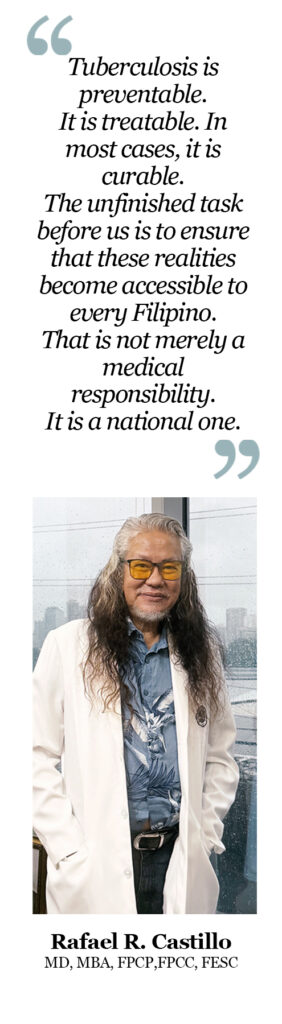
Tuberculosis is preventable. It is treatable. In most cases, it is curable.
The unfinished task before us is to ensure that these realities become accessible to every Filipino.
That is not merely a medical responsibility.
It is a national one.





Leave a Reply