


here are moments in clinical practice that remind us medicine is not purely mechanical. A woman loses her husband and arrives in the emergency room with crushing chest pain. An elderly man hears devastating news and collapses. A grandmother overwhelmed with joy at a wedding feels sudden breathlessness and tightness in her chest.
The tests suggest a heart attack. Yet the arteries are clean.
Takotsubo cardiomyopathy — often called “broken heart syndrome” — is one of the most humbling conditions we encounter. It challenges the old belief that the heart responds only to cholesterol, blood pressure, and plaque. Instead, it teaches us that the heart is deeply responsive to emotion, stress, and the neurohormonal storm that accompanies intense experiences.
In this condition, a surge of stress hormones — particularly catecholamines — temporarily stuns the heart muscle. The left ventricle weakens. The symptoms mirror a classic myocardial infarction. But the injury is functional and usually reversible.
As physicians, we must approach these patients with both scientific rigor and emotional sensitivity. They are not “imagining” their pain. Their suffering is physiologically real. Yet what triggered it may have been grief, shock, or overwhelming stress.
This reality carries two lessons.
First, chest pain — regardless of its emotional context — must always be evaluated urgently. Broken heart syndrome is diagnosed only after ruling out obstructive coronary disease. Delay can be dangerous.
Second, healing must go beyond medications. Beta-blockers and ACE inhibitors may stabilize cardiac function. But long-term recovery often requires something less prescriptive: reassurance, counseling, stress reduction, and sometimes spiritual or psychological support.
The boundary between mental and physical health is artificial. Takotsubo cardiomyopathy erases it.
In a society that values stoicism and emotional endurance, many people internalize distress. They minimize grief. They suppress anxiety. They tell themselves to “be strong.” Yet the body sometimes absorbs what the mind refuses to process.
As clinicians, we should ask not only about chest pain, but about recent stressors. We should not dismiss emotional trauma as irrelevant. The heart remembers.
Broken heart syndrome is rarely fatal and most patients recover fully. But it leaves us with a powerful reminder: protecting the heart includes protecting emotional well-being.
Sometimes the best cardiac care begins with compassion.
Love and the Healing Heart
Since, we’re in the month of hearts, it’s forgivable to have a longer editorial talking about what it meaningfully symbolizes for humanity.
As physicians, we are trained to measure blood pressure, cholesterol, glucose levels, and cardiac enzymes. Yet one of the most powerful determinants of heart health is not easily quantified: love.
Research consistently shows that strong emotional bonds are associated with lower rates of cardiovascular disease, improved recovery after heart attacks, and even longer survival. Social isolation, on the other hand, is linked to higher mortality, increased inflammation, and elevated stress hormone levels.
The heart responds not only to plaque and pressure, but to connection and belonging.
We see it in our patients. Those surrounded by supportive spouses, attentive children, loyal friends, or even devoted pets often demonstrate remarkable resilience during illness. They adhere better to treatment. They recover faster. They cope more effectively.
Conversely, chronic loneliness exerts physiologic strain. It activates stress pathways, increases cortisol, and sustains sympathetic nervous system arousal — mechanisms that can damage blood vessels and destabilize heart rhythms over time.
Love, in contrast, moderates stress.
Simple acts — holding a hand, listening without judgment, expressing gratitude — calm the autonomic nervous system. They lower heart rate. They reduce blood pressure. They foster psychological stability.
In medical consultations, we rarely ask, “Who supports you?” Yet that question may be as important as asking about medications.
As clinicians, we should recognize that promoting heart health includes:
• Encouraging healthy relationships
• Addressing social isolation
• Supporting mental health
• Recognizing caregiver stress
The prescription for a healthy heart includes lifestyle modification, yes — but also meaningful connection.
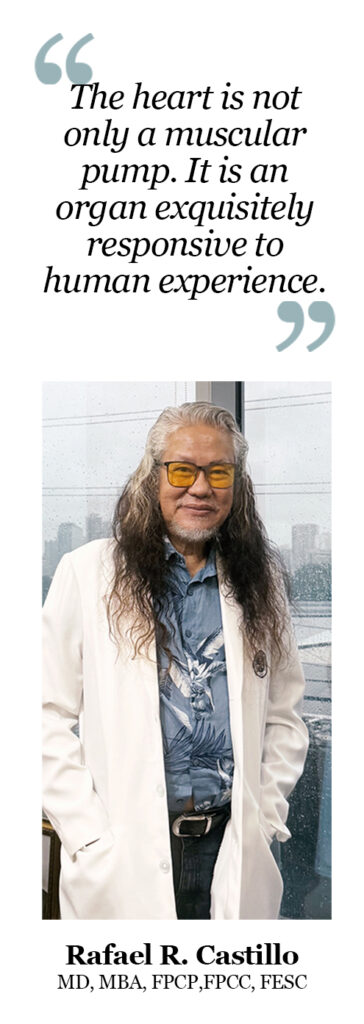
The heart is not only a muscular pump. It is an organ exquisitely responsive to human experience.
Love cannot replace medicine. But medicine is incomplete without love.