
By Marth Mora
In a world that glorifies busyness, I used to think slowing down was a weakness. But somewhere between deadlines and daily noise, I realized my heart wasn’t built for constant sprinting. Learning to pause, really pause, taught me more about heart care than any wellness plan or fitness tracker ever could.
“Your heart doesn’t just need movement, it needs moments of stillness too.”
For years, I thought I was taking care of my heart. I exercised when I could, drank water, avoided greasy food, and tried to live healthy. But even with all that effort, I often felt tense and tired, like my body was moving but my heart was dragging behind. My smartwatch said I was fine, yet inside, I felt anything but.
One morning, I caught myself answering emails before even brushing my teeth. My chest felt tight, not from illness, but from constant urgency. That was the first time I admitted to myself that something was off. I was doing all the right things for my body, but I was forgetting the emotional weight my heart carried every day.
What I Learned About Real Heart Care
We tend to think heart health is about numbers, pulse rate, blood pressure, cholesterol. But the truth is, my heart’s biggest stress didn’t come from what I ate or how I moved. It came from how I lived.
I used to equate being healthy with being busy. If I was productive, I felt in control. If I rested, I felt guilty. But that version of health isn’t sustainable because your heart can’t keep up with a life that never slows down.
After a few dizzy spells and more than a few sleepless nights, I started listening to my body, my breath, and the silence I had been avoiding. What I found was simple but powerful: slowing down on purpose was the healthiest thing I could do for my heart.
Lifestyle Habits That Helped Me Reconnect With My Heart
Move joyfully, not just dutifully.
I stopped forcing myself to work out and started moving because it felt good. Walking without earphones became my small daily reset, the rhythm of my steps and my breathing reminding me that being alive is already movement.
Eat with presence.
I used to eat in front of my laptop or while scrolling my phone. Now I try to actually sit down and taste my food. Gratitude has become part of every meal, and I swear it changes the way I feel afterward.
Breathe like it matters.
Three minutes of deep breathing a day. That’s it. It’s not a trend, it’s a way to tell my heart, “I hear you.” It’s almost impossible to stay anxious when you’re fully breathing.
Rest without guilt.
Sleep used to feel optional, something to cut short when I had too much to do. But I’ve learned that a rested heart beats differently, slower, stronger, steadier. Now I protect my rest like I protect my deadlines.
Connect intentionally.
Spending time with the people I love, laughing, sharing meals, even quiet company, these moments have done more for my stress levels than any supplement or app ever could.
Spending time with the people I love, laughing, sharing meals, even quiet company — these moments have done more for my stress levels than any supplement or app ever could. Over time, I’ve realized that emotional well-being, quality sleep, and stress management aren’t extras for heart health, they’re essentials.
The Emotional Side of the Heart
Stress doesn’t just live in the mind. It shows up in the chest, tightness, short breaths, that dull pressure that comes when you’ve been on for too long. I used to brush it off as fatigue, but I know now it’s my heart’s way of speaking up.
Learning to listen changed everything. Instead of pushing through, I pause. Instead of ignoring that racing pulse, I ask what triggered it. The answers aren’t always comfortable, but they’re always honest.
Now, when my heart beats fast, not from exercise but from overload, I take it as a reminder to slow down and check in.
What My Heart Has Taught Me
Caring for my heart didn’t mean giving up ambition or drive. It meant learning rhythm, knowing when to move, when to pause, and when to simply breathe. Work will always be there. But peace, joy, and health, they need space to exist.
I’ve stopped chasing the illusion of perfect balance. These days, I just try to stay present, to my breath, my pace, and the steady rhythm that keeps me alive.
Takeaway Message
“Caring for your heart isn’t about doing more, it’s about feeling more, slowing more, and being kinder to the rhythm that keeps you alive.”
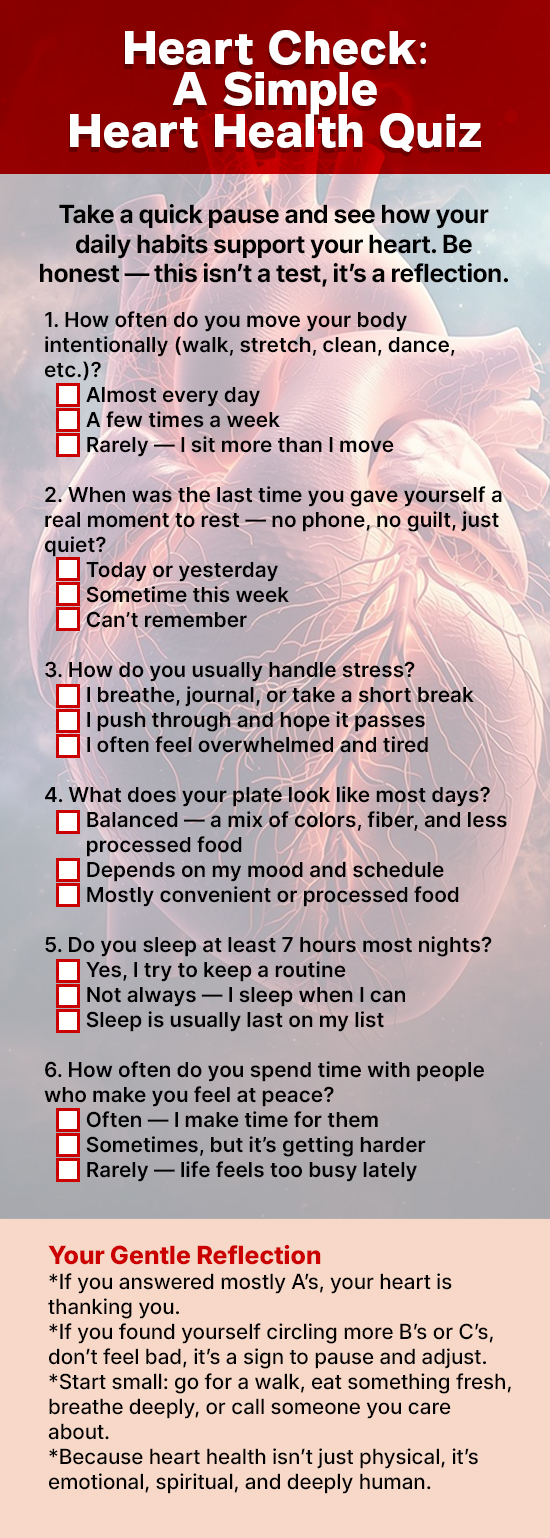
If you’re curious about where your own heart habits stand, take the Heart Health Quiz. Sometimes awareness alone can be the beginning of real care.