

For many years, climate change was viewed primarily through an environmental lens. That perspective is no longer sufficient.
The growing health consequences of climate change demand a public health response equal to the scale of the challenge.
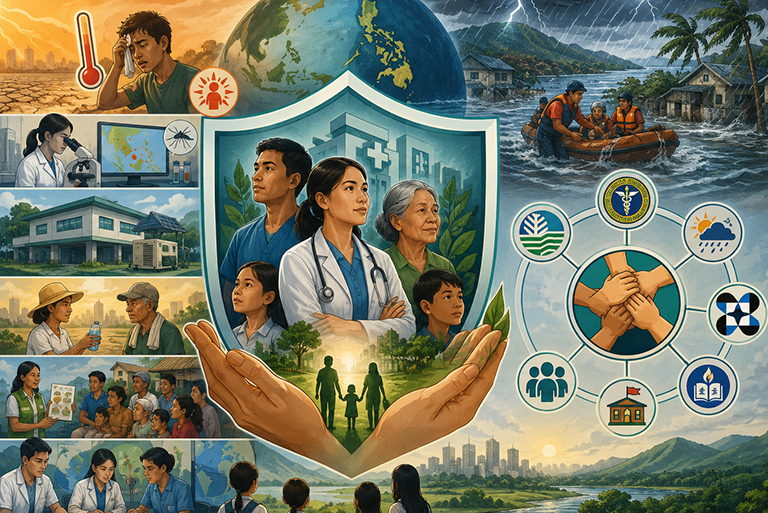
The Department of Health has already recognized climate-sensitive diseases as an emerging concern. However, future planning must go beyond disaster response and incorporate climate resilience into routine healthcare delivery.
Key priorities should include:
Strengthening Disease Surveillance
Monitoring dengue, leptospirosis, diarrheal diseases, and heat-related illnesses should become increasingly sophisticated as environmental conditions evolve.
Climate-Resilient Healthcare Facilities
Hospitals and health centers must remain operational during floods, typhoons, heat waves, and power disruptions.
Heat Action Plans
Local governments should develop protocols to protect vulnerable populations during extreme heat events.
Community-Based Preparedness
Barangay-level education can reduce preventable illness and death during disasters.
Integrating Climate Into Health Professional Education
Medical, nursing, and public health curricula should include climate-health competencies.
Strengthening Interagency Collaboration
The health impacts of climate change require cooperation among the DOH, DENR, PAGASA, DOST, DepEd, local governments, and civil society.
Climate change is no longer merely an environmental concern.
It is increasingly a determinant of health.
The sooner health systems adapt, the better prepared the Philippines will be to protect future generations.









Leave a Reply