

By Evangeline T. Capuno
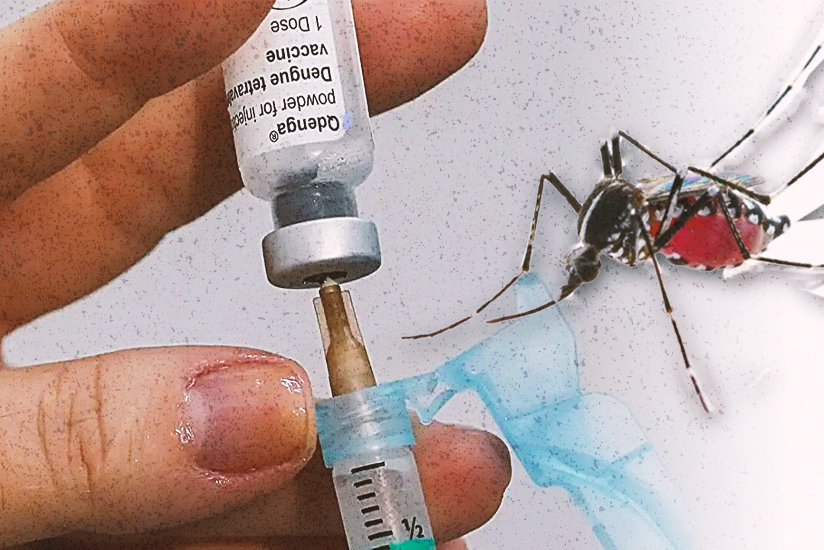
Developed by Takeda, a new vaccine for dengue received prequalification from the World Health Organization (WHO) last May 10, 2024. Prequalification of medicines is a service provided by the United Nations health agency to assess the quality, safety, and efficacy of medicinal products.
TAK-003 – or Qdenga – is a live-attenuated vaccine containing weakened versions of the four serotypes of dengue virus. The vaccine, which used the dengue virus 2 strain as the genomic backbone, is given as a 2-dose schedule with a minimum interval of three months between doses.
“The WHO prequalification of TAK-003 is an important step in the expansion of global access to dengue vaccines,” said Dr. Rogerio Gaspar, WHO director for regulation and prequalification.
According to the WHO, Qdenga should not be administered to women who are pregnant or planning to become pregnant at least a month following vaccination. It is also not recommended for women who are breastfeeding.
The WHO recommends the use of Qdenga in children aged 6-16 years in settings with high dengue transmission intensity.
Qdenga should also not be administered to people with congenital or acquired immune deficiency and people with symptomatic HIV infection or with asymptomatic HIV infection.
Based on studies, Qdenga could be administered with yellow fever and hepatitis A vaccines. Studies to assess co-administration with HPV vaccines are ongoing. HPV stands for human papillomavirus, which is spread by sexual activity, and is the culprit for cervical cancer among women.
“Vaccination against dengue should be viewed as part of an integrated strategy to control the disease, including vector control, proper case management, community education, and community engagement,” the WHO said.
TAK-003 is the second dengue vaccine to be prequalified by WHO. The UN health agency also prequalified CYD-TDV vaccine against dengue – more popularly known as Dengvaxia – developed by Sanofi-Pasteur.
The Dengvaxia is a live recombinant tetravalent dengue vaccine given as a 3-dose series with 6-month interval between doses, according to the WHO. It is given to individuals aged 9-45 years or 9-60 years living in dengue-endemic countries or areas.
“Only those who test positive (for dengue) should receive the vaccine,” the WHO said.
However, a report from the US Centers for Disease Control and Prevention (CDC) stated that Sanofi-Pasteur “will stop manufacturing its dengue vaccine for children.” The reason cited was “a lack of demand in the global market to continue production.”
According to the UN health agency, there are over 100 to 400 million cases of dengue around the world each year and 3.8 billion people living in dengue endemic countries, most of which are in Asia, Africa, and the Americas.
“Dengue cases are likely to increase and expand geographically due to climate change and urbanization,” the WHO said.
Dengue is described by CDC as “the world’s most important viral disease transmitted by mosquitoes.” Only mosquitoes carrying the four dengue distinct viruses (DEN-1, DEN-2, DEN-3 and DEN-4) can transmit the disease.
Once infected, a mosquito remains infective for life, transmitting the virus to susceptible individuals during probing and blood feeding. However, an infected person cannot transmit the dengue virus directly into another person.
When a person is bitten by an infected mosquito, the dengue virus is deposited in the person’s bloodstream.
According to health experts, the time between the bite of a dengue-carrying mosquito and the start of dengue fever symptoms averages 4 to 6 days, with a range of 3 to 14 days. An infected person cannot spread the infection to other persons but can be a source of dengue virus for mosquitoes for about 6 days.
Dengue usually starts suddenly with a high fever, rash, severe headache, pain behind the eyes, and muscle and joint pain. The severity of the joint pain has given dengue its other name. Nausea, vomiting, and loss of appetite are common.
A rash usually appears 3 to 4 days after the start of the fever. The illness can last up to 10 days, but complete recovery can take as long as a month. Older children and adults are usually sicker than young children.
Most dengue infections result in relatively mild illness, but some can progress to the deadlier dengue hemorrhagic fever (DHF). With DHF, the blood vessels start to leak and cause bleeding from the nose, mouth, and gums.
Bruising can be a sign of bleeding inside the body. Without prompt treatment, the blood vessels can collapse, causing shock. DHF is fatal in about 5% of cases, mostly among children and young adults.
“Children are much more likely to get DHF than adults,” pointed out Allan Schapira, former WHO official. “This is the reason why children are much more at risk of dying. In adults, dengue fever usually does not develop to the severe form, DHF.” – ###