


By the H&L Editorial Team
Keep your wake-up time consistent. Your morning wake time is a powerful anchor for the body’s clock.
Get daylight during the day, particularly earlier in the day.
Exercise regularly. Daytime physical activity generally supports better sleep.
Limit late caffeine. Its effects can persist for hours.
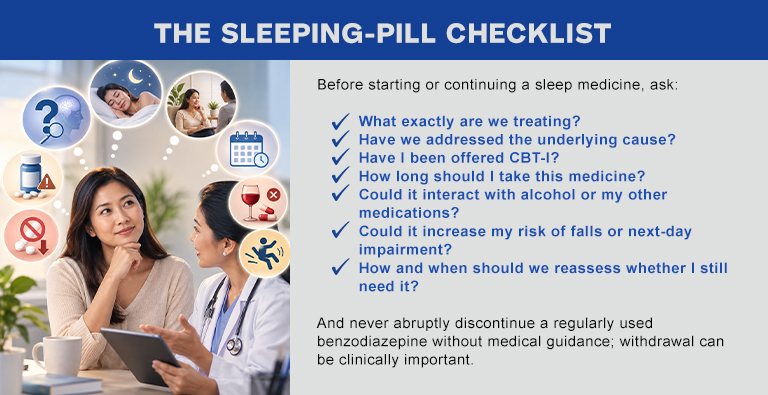
Do not use alcohol as a sleeping medicine.
Create a dark, quiet, comfortably cool bedroom.
Build a wind-down ritual. Reading, quiet music, prayer, breathing exercises or another relaxing routine can signal that the day is ending.
Move the phone away from the pillow. Bedtime should not become another work shift.
Stop fighting with sleep. If you are lying awake becoming increasingly frustrated, CBT-I stimulus-control principles favor leaving the bed temporarily for a quiet activity and returning when sleepy.
Do not watch the clock all night. Calculating how little sleep remains increases arousal.
Healthy sleep habits are useful both during treatment and in preventing recurrence.
THE INSOMNIA–HEART CONNECTION
Why cardiologists should ask, “How are you sleeping?”

Cardiology traditionally concentrates on blood pressure, cholesterol, smoking, diabetes, exercise and weight. Sleep belongs in that conversation too.
Poor sleep and insomnia frequently coexist with cardiovascular risk factors and disease. Sleep disruption can affect sympathetic activity, blood-pressure regulation, metabolic health and inflammatory pathways. Observational evidence links chronic insomnia and inadequate sleep with hypertension and cardiovascular disease, although the relationships are complex and bidirectional.
There is another reason cardiologists should ask about sleep: A patient complaining of “insomnia” may actually have obstructive sleep apnea.
Someone may report repeated awakenings without realizing those awakenings follow breathing obstruction.
The clue may be loud snoring, witnessed apneas, choking, obesity, resistant hypertension, atrial fibrillation or excessive daytime sleepiness.
Treating the right disorder matters.
A sleeping tablet does not open an obstructed airway. Sometimes the most valuable sleep prescription begins with finding out why the patient keeps waking up.
THE 3 A.M. MIND
How worrying about sleep can keep you awake

The harder you try to sleep, the harder sleep may become.
You cannot force unconsciousness through determination.
A patient begins with several bad nights during a stressful period.
Then comes anticipation: Will I sleep tonight?
The bedroom becomes a testing ground. The clock becomes a scoreboard. The bed becomes associated not with relaxation but with failure.
Soon the original stress may have disappeared—but the learned insomnia remains.
CBT-I attacks precisely this cycle. Instead of trying harder to sleep, patients relearn the conditions under which normal sleep emerges.
The goal is not to perform sleep successfully. It is to stop interfering with the biology that already knows how to sleep.
YOUR 7-DAY SLEEP DIARY

Before consulting your physician, keep a simple sleep record for at least one week; clinicians may recommend one to two weeks.
Each morning record:
Bedtime: ______
Approximate time you fell asleep: ______
Number of awakenings: ______
Approximate total time awake during night: ______
Final awakening: ______
Time out of bed: ______
Estimated total sleep: ______
Also record daytime naps, caffeine and alcohol timing, exercise, medications and how sleepy or rested you felt during the day.
Do not turn the diary into another nighttime obsession.
Fill it in approximately the following morning.
Patterns often become visible on paper that are impossible to recognize while staring at the ceiling at 2 a.m.
PHILIPPINE HEALTH POLICY










Leave a Reply