


✔ DO
Stay Hydrated
Small sips of water may help prevent dehydration if vomiting is mild.
Observe Carefully
Take note of:
- location of pain
- severity
- fever
- vomiting
- bowel movements
This information helps physicians.
Seek Evaluation Early
Particularly if symptoms worsen or persist.
Bring Medical Information
If going to the ER, bring:
- medication list
- allergies
- medical history
✖DON’T
Ignore Severe Pain
Pain is a symptom—not a diagnosis.
Use Strong Painkillers Without Advice
Pain medicines may mask important findings.
Apply Aggressive Massage
Massage may worsen certain abdominal emergencies.
Eat Heavy Meals
Particularly when surgery may be needed.
Assume It Is “Just Gas”
Especially if symptoms are worsening.
Quick Rule
If abdominal pain is worsening rather than improving, it deserves medical attention.
ER DECISION GUIDE
Should I Go to the Emergency Room?
GO TO THE ER IMMEDIATELY IF:
✔ Pain is sudden and severe
✔ Pain wakes you from sleep
✔ Fever accompanies pain
✔ Persistent vomiting occurs
✔ Blood appears in vomit
✔ Blood appears in stool
✔ Stools become black and tarry
✔ The abdomen becomes rigid
✔ You faint or feel near collapse
✔ Pregnancy is accompanied by abdominal pain
✔ Severe dehydration develops
CALL YOUR DOCTOR WITHIN 24 HOURS IF:
✔ Pain persists
✔ Symptoms are worsening
✔ Eating becomes difficult
✔ Fever develops
✔ Pain interferes with normal activities
PATIENT HANDOUT
Understanding Abdominal Pain by Location
Upper Right Abdomen
May indicate:
- gallbladder disease
- liver disease
Upper Middle Abdomen
May indicate:
- gastritis
- peptic ulcer
- pancreatitis
Lower Right Abdomen
May indicate:
- appendicitis
Lower Left Abdomen
May indicate:
- diverticulitis
Flank (Side) Pain
May indicate:
- kidney stones
- kidney infection
Diffuse Whole-Abdomen Pain
May indicate:
- gastroenteritis
- bowel obstruction
- peritonitis
Important Reminder
Location alone cannot determine diagnosis.
Persistent or severe symptoms require professional evaluation.
CME BRIEF
Recognition of Acute Abdomen in Primary Care
Key Clinical Principle
The primary goal is not immediate diagnosis.
The primary goal is identifying patients who require urgent referral.
Red Flags
History
✔ Sudden onset pain
✔ Progressive worsening
✔ Persistent vomiting
✔ Fever
✔ Syncope
✔ Gastrointestinal bleeding
Examination
✔ Guarding
✔ Rebound tenderness
✔ Rigidity
✔ Hemodynamic instability
Differential Diagnosis
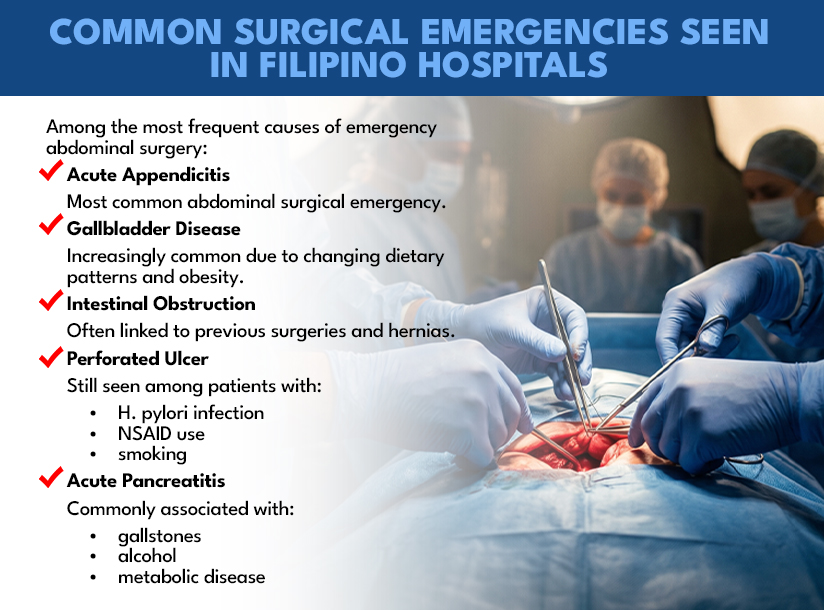
Surgical Causes
- Appendicitis
- Cholecystitis
- Bowel obstruction
- Perforated viscus
Medical Causes
- Gastroenteritis
- Diabetic ketoacidosis
- Myocardial infarction
- Pneumonia
Gynecologic Causes
- Ectopic pregnancy
- Ovarian torsion
- Pelvic inflammatory disease
Essential Investigations
✔ CBC
✔ Electrolytes
✔ Liver enzymes
✔ Lipase/amylase
✔ Urinalysis
✔ Pregnancy test when indicated
Referral Criteria
Immediate referral for:
- suspected surgical abdomen
- unstable vital signs
- severe pain
- peritoneal signs
QUICK REFERENCE BOX
Remember These Four Rules
Rule #1
Pain that worsens deserves attention.
Rule #2
Pain with fever is never “just gas.”
Rule #3
Pain with vomiting may signal obstruction or infection.
Rule #4
Pain plus fainting is an emergency until proven otherwise.
FINAL THOUGHT
One of the most dangerous myths in medicine is that severe abdominal pain should simply be endured until it passes.
Most abdominal pain will pass.
The challenge is recognizing the few cases that will not.
Those are the cases where early action saves lives.
And sometimes, the most important treatment is not a medication or an operation—
it is recognizing the warning signs soon enough to seek help before complications begin.










Leave a Reply