

“The greatest achievement of the immune system is not that it knows how to fight. It is that it knows when not to.”
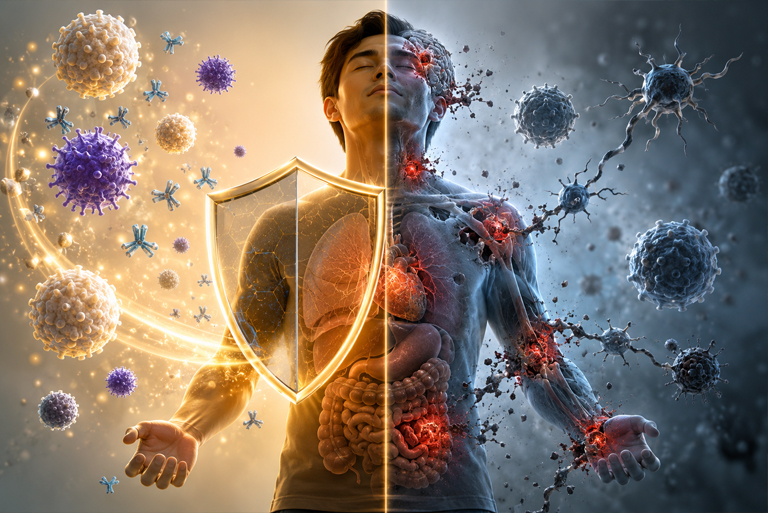
Every day, without our awareness, the human immune system performs billions of microscopic decisions. It identifies invading bacteria, viruses, fungi, and abnormal cells while carefully sparing the body’s own tissues. It is one of biology’s most extraordinary examples of precision.
Most of the time, it succeeds beautifully.
But occasionally, something changes.
The same immune system that faithfully protects us begins attacking the very organs it was designed to defend. The thyroid, joints, skin, kidneys, intestines, nerves, or even the brain may become unintended targets. The result is an autoimmune disease—a condition that is often chronic, sometimes disabling, but increasingly treatable.
As physicians, many of us have the impression that autoimmune diseases are becoming more common. Whether this reflects a true increase, improved diagnosis, greater awareness, or a combination of these factors remains an active area of scientific investigation. What is undeniable, however, is that these disorders now occupy an increasingly important place in everyday medical practice.
The past two decades have witnessed an explosion of discoveries that have fundamentally reshaped our understanding of autoimmunity. Genetics alone cannot explain why these diseases develop. Instead, researchers are uncovering a fascinating interplay among inherited susceptibility, viral infections, the gut microbiome, environmental exposures, hormonal influences, metabolism, and modern lifestyles. Each new discovery reveals just how intricate—and how delicately balanced—our immune system truly is.
Equally remarkable has been the revolution in treatment. Biologic therapies, targeted small molecules, and emerging cellular therapies have transformed diseases that once led inexorably to disability into conditions that many patients can now successfully manage for decades. The goal of treatment is evolving from broadly suppressing immunity to restoring the immune system’s capacity for tolerance.
This issue of H&L explores one of medicine’s most exciting frontiers. We examine why autoimmune diseases appear to be increasing, what current science tells us about their causes, what remains uncertain, and why there is genuine reason for optimism. Along the way, we emphasize an essential principle of evidence-based medicine: distinguishing established facts from promising hypotheses.
Perhaps the greatest lesson offered by autoimmune diseases extends beyond medicine itself.
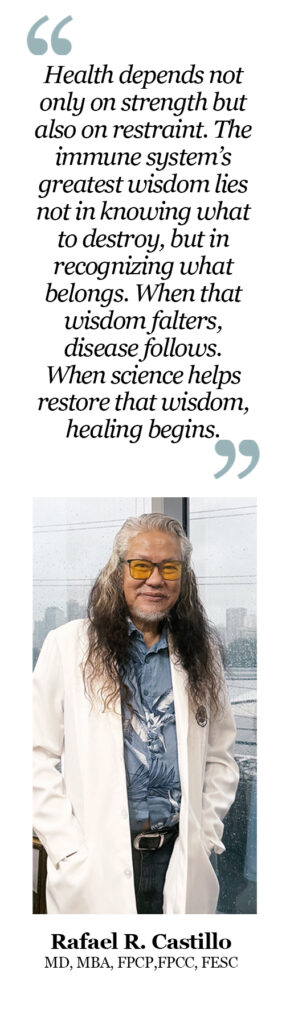
Health depends not only on strength but also on restraint. The immune system’s greatest wisdom lies not in knowing what to destroy, but in recognizing what belongs. When that wisdom falters, disease follows. When science helps restore that wisdom, healing begins.
As always, our mission at H&L is to translate complex medical science into knowledge that empowers patients, families, and healthcare professionals alike. We hope this issue deepens understanding, encourages earlier recognition, and reminds us that some of the most important discoveries in medicine are still unfolding before our eyes.










Leave a Reply