

Why Autoimmune Diseases Seem to Be Increasing Among Filipinos
An evidence-based guide to one of medicine’s fastest-growing frontier
By Rafael R. Castillo, MD
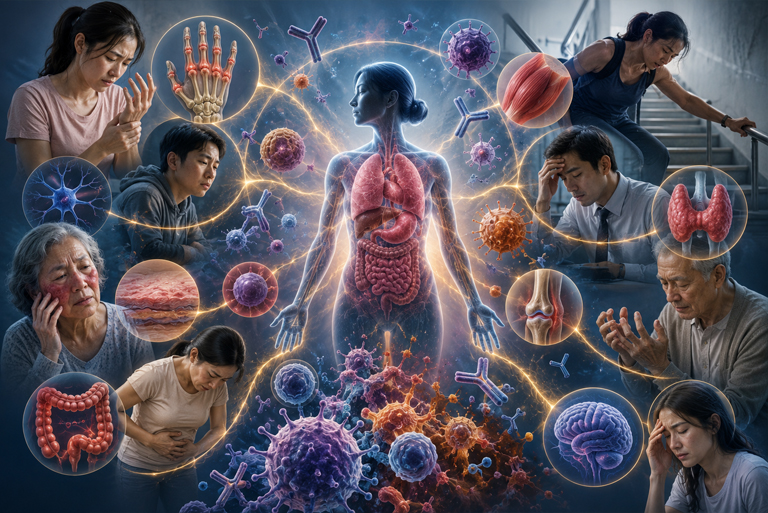
A 27-year-old mother develops painful, swollen fingers that make it difficult to button her daughter’s school uniform.
A university student suddenly notices that climbing a single flight of stairs leaves her legs strangely weak by evening.
A successful executive cannot understand why overwhelming fatigue follows him despite sleeping eight hours every night.
An elderly woman develops a persistent rash across her cheeks after spending only a few minutes in the sun.
Their illnesses appear unrelated.
Yet each has one thing in common.
The body’s most sophisticated defense system has mistaken friend for foe.
Over the past two decades, physicians around the world—including many in the Philippines—have observed what appears to be an increasing number of patients diagnosed with autoimmune diseases such as lupus, rheumatoid arthritis, autoimmune thyroid disease, psoriasis, inflammatory bowel disease, multiple sclerosis, and myasthenia gravis. Is this a true epidemic? Or are advances in medical science simply uncovering diseases that once went unrecognized?
The answer is more nuanced than headlines suggest.
Modern immunology has revealed that autoimmune diseases arise not from a weak immune system but from a misdirected one. Genetics, environmental exposures, infections, alterations in the gut microbiome, lifestyle, and hormonal influences appear to interact in remarkably complex ways. While many questions remain unanswered, one fact is increasingly clear: autoimmune diseases represent one of the most fascinating—and rapidly evolving—frontiers in medicine.
Understanding them is the first step toward earlier diagnosis, better treatment, and renewed hope.
“Autoimmune diseases are not illnesses of a weak immune system. They are illnesses of a confused immune system.”
The Body’s Extraordinary Defense System
Every second of every day, without our awareness, the immune system performs one of biology’s greatest miracles.
It distinguishes between what belongs to us and what does not.
It identifies billions of our own healthy cells while simultaneously recognizing viruses, bacteria, fungi, parasites, and even abnormal cells that could threaten our survival. Most of the time, this intricate surveillance system works with astonishing precision. It protects us from infection, repairs injured tissues, and even helps eliminate cells that could become cancerous.
Central to this remarkable process is a concept known as immune tolerance—the ability of the immune system to recognize the body’s own tissues as “self” and leave them unharmed.
Without immune tolerance, life would be impossible.
Yet this delicate balance is not infallible.
For reasons that scientists are only beginning to understand, the immune system sometimes loses its ability to distinguish friend from foe. Instead of defending the body, it mistakenly attacks healthy organs and tissues.
This phenomenon is called autoimmunity.
The consequences depend on which organs become the targets. If the thyroid gland is attacked, autoimmune thyroid disease may develop. If the joints are targeted, rheumatoid arthritis may result. When multiple organs are affected—as in systemic lupus erythematosus (SLE)—the disease can involve the skin, kidneys, heart, lungs, brain, joints, and blood vessels simultaneously.
Ironically, one of nature’s greatest protective systems becomes the source of disease itself.

One Mechanism, More Than One Hundred Diseases
Although autoimmune diseases differ widely in their symptoms, they share a common biological origin.
Today, physicians recognize more than 100 autoimmune diseases, affecting nearly every organ system.
Some are organ-specific. Type 1 diabetes primarily destroys the insulin-producing cells of the pancreas. Graves disease and Hashimoto thyroiditis affect the thyroid gland. Autoimmune hepatitis targets the liver.
Others are systemic, involving multiple organs simultaneously. Lupus, systemic sclerosis, Sjögren syndrome, and various forms of vasculitis may affect the skin, joints, kidneys, nervous system, lungs, heart, and blood vessels.
Despite their diversity, these conditions share one defining feature: the immune system has lost tolerance toward parts of the body it was designed to protect.
The result is chronic inflammation, tissue injury, and, if left untreated, permanent organ damage.
Fortunately, advances in immunology have transformed many of these diseases from relentlessly progressive illnesses into conditions that can often be effectively controlled, allowing patients to live active and productive lives.
Are Autoimmune Diseases Really Increasing?
Many physicians believe they are.
Scientific evidence suggests that this perception is not merely anecdotal.
Over recent decades, several autoimmune diseases—including type 1 diabetes, inflammatory bowel disease, multiple sclerosis, autoimmune thyroid disease, and some rheumatologic disorders—have shown increasing incidence or prevalence in many parts of the world.
However, the picture is more complex than declaring an “autoimmune epidemic.”
Part of the apparent increase reflects remarkable advances in medicine itself.
A generation ago, many patients with autoimmune diseases remained undiagnosed or were mistakenly labeled as having chronic infections, psychosomatic illness, or unexplained fatigue. Today, sophisticated laboratory testing can identify disease-specific autoantibodies with far greater sensitivity and specificity. Modern imaging detects inflammation at much earlier stages, and physicians are more familiar with subtle presentations that previously might have been overlooked.
Improved treatment has also changed the numbers.
Patients now live much longer with autoimmune diseases than they did decades ago. As survival improves, the total number of people living with these conditions—known as prevalence—naturally increases, even if the number of new cases each year rises only modestly.
This distinction is important.
Incidence refers to the number of newly diagnosed cases within a specified period.
Prevalence refers to the total number of people living with the disease at a given time.
Both measures matter, but they tell different stories.
Current evidence suggests that while improved diagnosis and longer survival account for part of the observed increase, they do not explain it entirely. Researchers increasingly believe that changes in our environment and modern lifestyles are interacting with genetic susceptibility in ways that genuinely increase the risk of some autoimmune diseases.
Why Genes Alone Cannot Explain the Trend
One of the strongest risk factors for autoimmune disease is family history.
Individuals with a parent or sibling affected by lupus, rheumatoid arthritis, autoimmune thyroid disease, or type 1 diabetes have a higher risk of developing an autoimmune condition themselves, although not necessarily the same one.
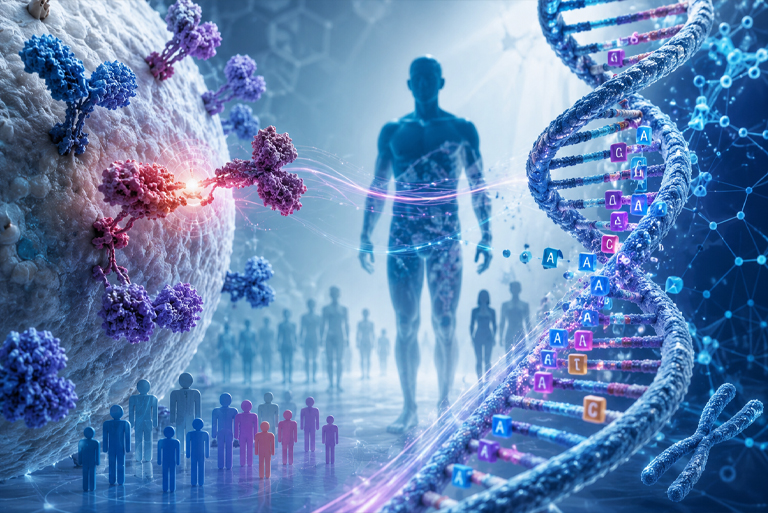
Scientists have identified hundreds of genetic variants associated with immune regulation, particularly within the human leukocyte antigen (HLA) system, which plays a critical role in distinguishing self from non-self.
Yet genes cannot explain everything.
Human genetics changes very slowly over thousands of years.
The apparent increase in autoimmune diseases has occurred within only a few decades—far too rapidly to be explained by genetic evolution alone.
This realization has shifted scientific attention toward environmental and lifestyle factors that may interact with inherited susceptibility.
The question is no longer simply “Who has the genes?”
It is increasingly “What has changed in the world around us?”
“Genes may load the gun, but the environment often determines whether the trigger is pulled.”
Why Modern Life May Be Reshaping the Immune System
If there is one lesson immunologists have learned over the past several decades, it is this:
Autoimmune diseases rarely result from a single cause.
Instead, they arise from a complex interplay between inherited susceptibility and environmental exposures acting over many years. Physicians often summarize this concept with a memorable statement:
“Genetics loads the gun. The environment pulls the trigger.”
A person may inherit genes that increase susceptibility to autoimmune disease yet remain healthy throughout life. Another individual with similar genes may develop rheumatoid arthritis after years of cigarette smoking. A third may develop lupus following a combination of hormonal influences, environmental exposures, and infections. Others may never develop disease despite carrying the same genetic variants.
This explains why no single cause has ever been identified.
Rather than asking, “What causes autoimmune disease?” scientists now ask a more sophisticated question:
“What combinations of factors disturb immune tolerance in genetically susceptible individuals?”
The Gut Microbiome: Our Invisible Immune Partner
One of the greatest scientific discoveries of the past two decades is that the immune system does not work alone.
Living inside every healthy intestine are trillions of microorganisms—bacteria, viruses, fungi, and other microbes—collectively known as the gut microbiome.
Far from being passive passengers, these organisms perform essential functions. They help digest food, produce vitamins, strengthen the intestinal barrier, and, perhaps most remarkably, educate the immune system from infancy throughout life.
Scientists now recognize the intestine as the body’s largest immune organ.

Nearly 70 percent of immune cells are associated with the gastrointestinal tract, where they continuously interact with the microbiome. This constant dialogue teaches immune cells to distinguish harmless substances from genuine threats and helps maintain immune tolerance.
When this microbial ecosystem becomes disrupted—a condition known as dysbiosis—the consequences may extend far beyond the digestive system.
Studies have linked alterations in the gut microbiome with rheumatoid arthritis, inflammatory bowel disease, psoriasis, multiple sclerosis, systemic lupus erythematosus, and type 1 diabetes. Although researchers are still determining whether dysbiosis is a cause or consequence of these diseases, accumulating evidence suggests that it plays an important role in immune regulation.
Modern lifestyles may contribute to microbial disruption through diets low in fiber and high in ultra-processed foods, excessive antibiotic use, reduced exposure to natural environments, increasing urbanization, and other environmental changes.
The gut microbiome remains one of the most exciting frontiers in immunology—and one that may eventually transform both prevention and treatment.
Viral Infections: When Protection Leaves a Lasting Mark
For more than half a century, physicians have suspected that certain viral infections might trigger autoimmune diseases.
Among the strongest examples is Epstein-Barr virus (EBV), the virus responsible for infectious mononucleosis.
Nearly nine out of ten adults worldwide have been infected with EBV. Yet only a very small proportion develop autoimmune disease.
Large prospective studies have now demonstrated that prior EBV infection markedly increases the risk of developing multiple sclerosis, making it one of the strongest environmental associations identified for any autoimmune disease.
Scientists believe several mechanisms may be involved. Viral proteins may resemble normal human proteins closely enough that immune cells mistakenly attack both—a process known as molecular mimicry. Persistent viral infection may also keep the immune system chronically activated, increasing the likelihood that immune tolerance eventually breaks down.
Researchers continue to investigate similar mechanisms in other autoimmune disorders.
COVID-19: What Have We Learned?
The COVID-19 pandemic intensified interest in the relationship between viral infections and autoimmunity.
Some patients recovering from SARS-CoV-2 infection have developed persistent immune abnormalities, while observational studies have reported increased diagnoses of certain autoimmune diseases following COVID-19.
These findings are scientifically important but should be interpreted carefully.
Current evidence suggests that COVID-19 may increase the risk of autoimmune disease in some genetically susceptible individuals, but it has not been proven to directly cause autoimmune disease in most people. Researchers continue to investigate whether the virus triggers entirely new disease, unmasks previously silent autoimmunity, or simply leads to earlier recognition because patients undergo more extensive medical evaluation.
Fortunately, the absolute risk appears to remain low for most individuals.
As with many aspects of COVID-19, our understanding continues to evolve.
“The immune system remembers every infection. Occasionally, those memories may become part of the problem.”
The Modern Diet and Chronic Inflammation
The foods we eat nourish not only our bodies but also our immune system and the trillions of microorganisms living within us.
Traditional Filipino meals emphasized vegetables, fruits, legumes, fish, and minimally processed foods.
Over recent decades, however, dietary patterns have shifted toward greater consumption of ultra-processed foods rich in refined carbohydrates, unhealthy fats, excess salt, and added sugars.
These dietary changes have paralleled rising rates of obesity, diabetes, fatty liver disease, hypertension, and cardiovascular disease.
Could they also influence autoimmune diseases?
Scientists believe they might.
Ultra-processed diets appear capable of altering the gut microbiome, weakening the intestinal barrier, and promoting chronic low-grade inflammation. While no single food has been shown to cause autoimmune disease, dietary patterns may influence immune regulation over many years.
Conversely, dietary patterns rich in vegetables, fruits, whole grains, legumes, nuts, olive oil, and fish—typified by the Mediterranean diet—are consistently associated with lower levels of systemic inflammation and better cardiovascular health. Although evidence that they prevent autoimmune diseases remains incomplete, these eating patterns support overall health and may help reduce inflammatory burden.
Obesity: More Than Excess Weight
Obesity is increasingly recognized as an inflammatory condition.
Adipose tissue is not merely a storage depot for excess calories. It functions as an active endocrine organ, releasing hormones and inflammatory molecules that influence metabolism and immune responses.
This chronic low-grade inflammation may contribute to the development or progression of certain autoimmune diseases in genetically susceptible individuals.
Maintaining a healthy weight therefore benefits far more than the heart. It may also help preserve healthier immune regulation.
Stress, Sleep, and the Immune System
Modern life has introduced another challenge.
Many people live in a state of persistent psychological stress while sleeping fewer hours than previous generations.
Stress alone does not cause autoimmune disease.
Nevertheless, chronic activation of stress hormones influences immune function, inflammatory pathways, and disease activity. Patients with established autoimmune diseases frequently report worsening symptoms during periods of sustained emotional or physical stress.
Sleep is equally important.
During healthy sleep, the immune system undergoes essential regulatory processes that help maintain a balance between inflammatory and anti-inflammatory signals. Experimental studies demonstrate that sleep deprivation alters immune cell activity and inflammatory mediators, although its precise role in autoimmune disease development continues to be investigated.
Healthy sleep, regular physical activity, and effective stress management remain among the most practical strategies for supporting overall immune health.
Pollution, Smoking, and Other Environmental Exposures
Some environmental factors are supported by particularly strong evidence.
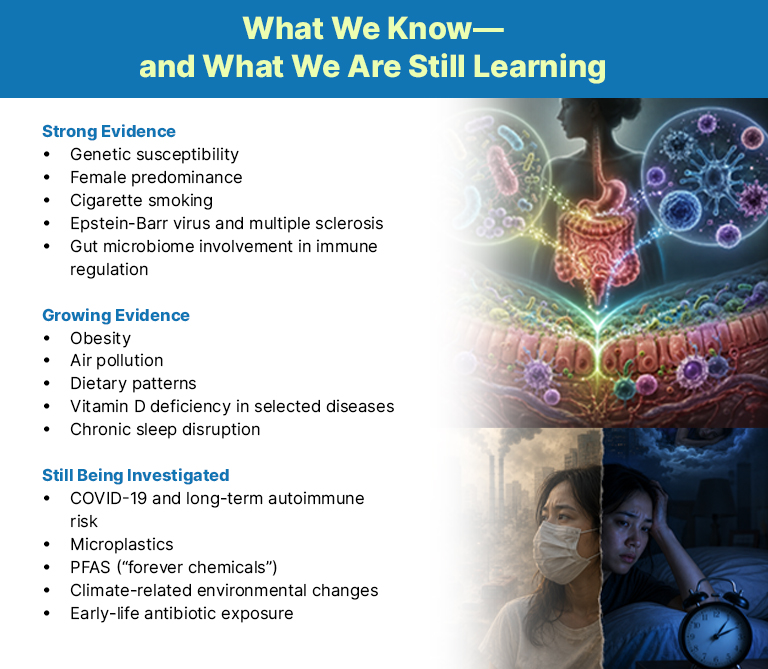
Cigarette smoking is a well-established risk factor for rheumatoid arthritis, especially among individuals carrying certain genetic variants. Smoking also worsens disease severity and reduces response to some therapies.
Air pollution has emerged as another important area of investigation. Fine particulate matter and other pollutants may promote chronic inflammation and oxidative stress, potentially contributing to autoimmune disease in susceptible individuals.
Researchers are also studying microplastics, endocrine-disrupting chemicals, pesticides, and per- and polyfluoroalkyl substances (PFAS), often called “forever chemicals.” While these exposures remain under active investigation, definitive causal relationships have not yet been established.
The lesson is one of scientific humility.
Some associations are now well supported by evidence. Others remain promising hypotheses awaiting confirmation.
Medicine advances not by certainty alone but by asking better questions.
Conclusion
Every moment of every day, our immune system performs billions of acts of discernment. It knows what belongs and what does not, what must be defended and what must be left in peace. Autoimmune diseases remind us how extraordinary—and how delicate—that wisdom truly is.
The greatest promise of modern immunology is not simply that we have learned to quiet an overactive immune response. It is that we are beginning to understand how to restore tolerance itself.
In helping the immune system remember friend from foe lies hope—not only for millions living with autoimmune diseases today, but for future generations who may one day prevent them before they begin.
References:
- Ramos PS, Shedlock AM, Langefeld CD. Genetics of autoimmune diseases: insights from population genetics. Nat Rev Genet. 2015;16(6):317–331.
- Davidson A, Diamond B. Autoimmune diseases. N Engl J Med. 2001;345(5):340–350.
- Theofilopoulos AN, Kono DH, Baccala R. The multiple pathways to autoimmunity. Nat Immunol. 2017;18(7):716–724.
- Banchereau R, Pascual V. Type I interferon in systemic lupus erythematosus and other autoimmune diseases. Immunity. 2023;56:1–16.
- Bäckhed F, et al. The gut microbiota as an environmental factor regulating fat storage and host metabolism. Proc Natl Acad Sci USA. 2004;101:15718–15723.
- Bjornevik K, et al. Longitudinal analysis reveals high prevalence of Epstein-Barr virus associated with multiple sclerosis. Science. 2022;375(6578):296–301.
- Conrad N, et al. Incidence, prevalence and co-occurrence of autoimmune diseases over time: a population-based study. Lancet. 2023.
- Nature Reviews Rheumatology. Environmental factors and autoimmunity: current concepts and future directions. Nat Rev Rheumatol. 2024.
- World Health Organization. Noncommunicable Diseases: Key Facts. Geneva: WHO; latest update.
- American College of Rheumatology. Clinical Practice Guidelines for the Management of Autoimmune Rheumatic Diseases. Latest available edition.










Leave a Reply