

Words and Photos by Henrylito D. Tacio
Filipinos grow up hearing the name Ferdinand Magellan—etched into textbooks, immortalized in monuments, and woven into the country’s origin story. His arrival in 1521 reshaped Philippine history, even though he never left Cebu alive.
Yet across the Pacific, in the vast expanse of the United States, another explorer commands the spotlight: Juan Ponce de León. His legend—half history, half myth—lingers in the warm winds of Florida, where his name graces towns, parks, and one particularly captivating coastal gem.
During a recent visit to the United States, I found myself walking along the very shores he once charted. What began as a simple family outing became a journey through time—one that connected the Philippines’ colonial past with Florida’s maritime heritage in ways I never expected.
A Tale of Two Explorers
While Magellan’s story is familiar to most Filipinos, Ponce de León’s legacy is celebrated most prominently in Florida. He first arrived in the Americas as a “gentleman volunteer” on Christopher Columbus’s second expedition in 1493. Two decades later, in 1513, he led the first documented European voyage to the region he named La Florida, inspired by its lush vegetation and the Easter season, Pascua Florida.
He landed somewhere along Florida’s eastern coast, mapping the Atlantic shoreline down to the Florida Keys and then northward along the Gulf coast. American historian John R. Swanton even suggested that he may have reached Apalachee Bay on the state’s western edge.
His imprint on Florida remains unmistakable. One town, in particular, carries his name with pride: Ponce Inlet, a serene coastal community once known as Mosquito Inlet until the Florida Legislature officially renamed it in 1926. Today, it stands as a picturesque passageway between the Mosquito Lagoon and the Halifax River, opening into the Atlantic Ocean.
A Family Journey to the Coast
My visit to Ponce Inlet was made possible by my sister Marilou and her husband, David “Dave” Eplite, who graciously drove us from their home in DeLand. My other sister, visiting from Grand Rapids, Minnesota, joined us—her first time in Florida, her excitement palpable.
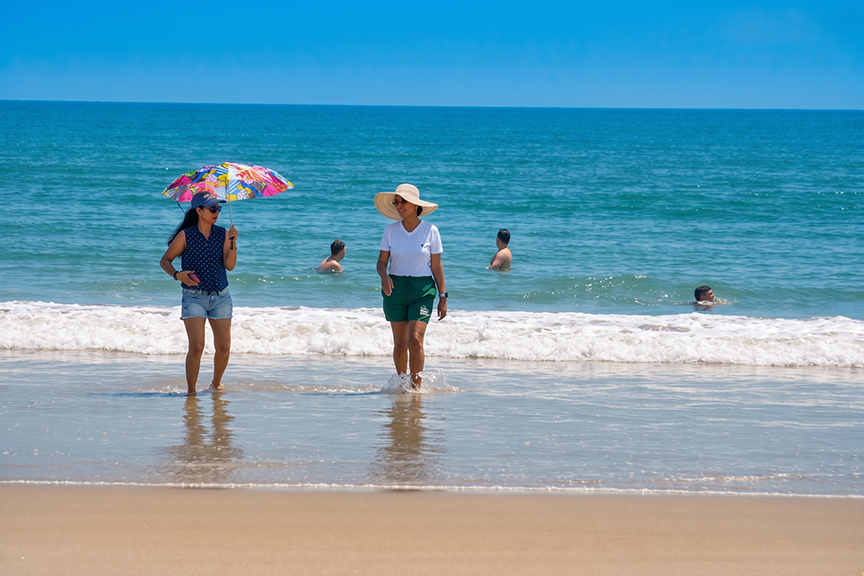
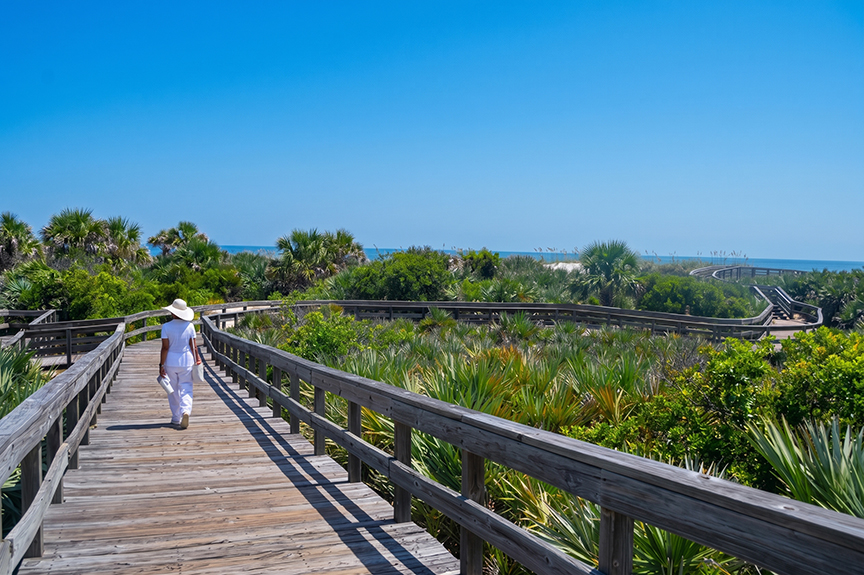
We left DeLand just before 10 a.m., passing through the quiet town center before the scenery shifted into the open, sunlit expanse of Florida’s eastern coast. The day was bright, the sky a flawless blue. After finding a parking spot, we grabbed our umbrellas—Florida’s sun can be unforgiving—and followed the wooden boardwalk toward the beach.
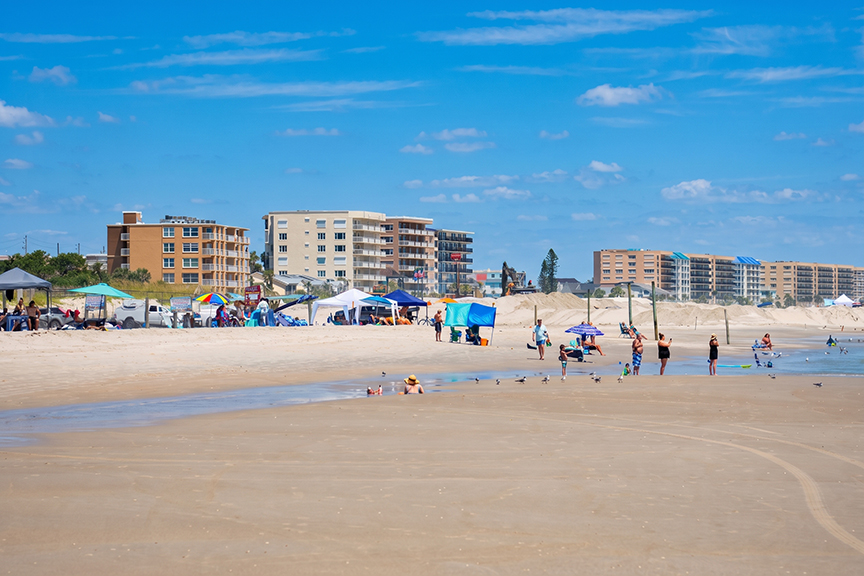
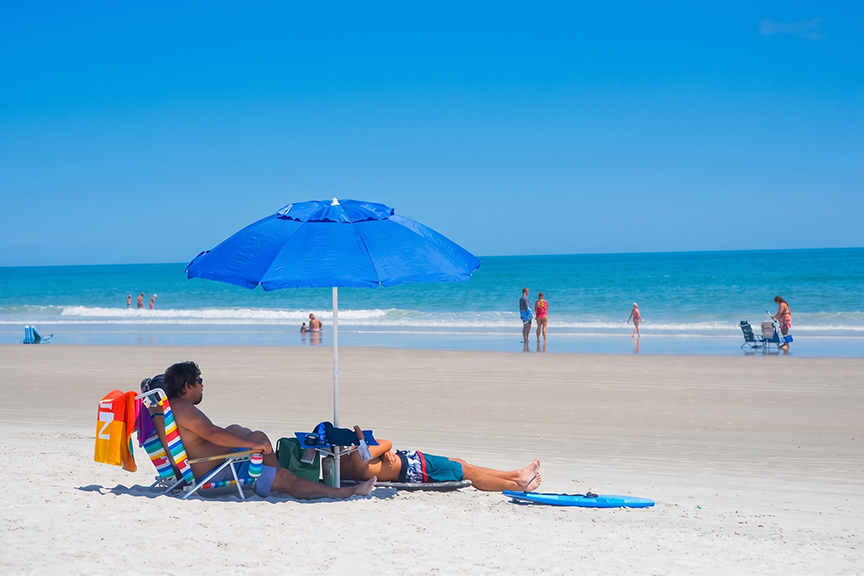
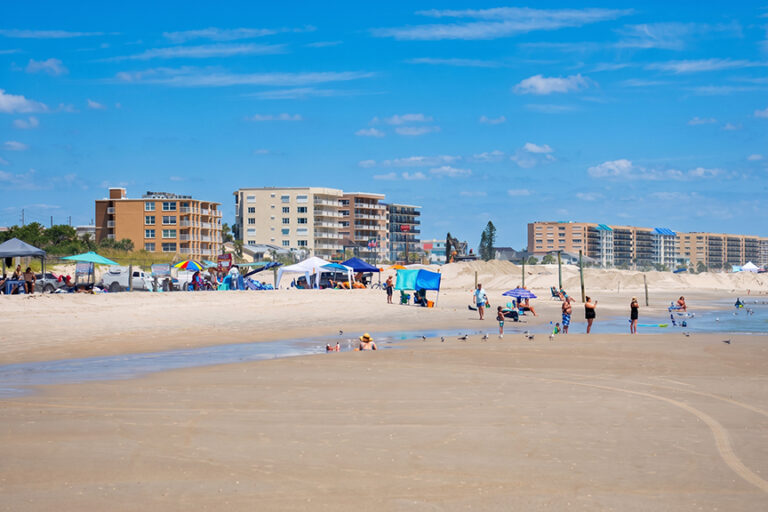
The moment our feet touched the soft sand, the world seemed to slow down. Gentle waves rolled in, brushing against our ankles. The beach stretched endlessly, inviting long walks, quiet reflection, or simple play. Families built sandcastles, couples lounged under umbrellas, and children chased the tide with carefree laughter.
Compared to other beaches in Florida, Ponce Inlet felt refreshingly uncrowded—an intimate retreat where nature still holds sway.
The Magic of the Water
Locals told us that dolphins and sea turtles often appear near the shore, especially during calm mornings. The ocean that day was inviting—its waters cool, its rhythm soothing. For those seeking adventure, swimming here is a delight, though we opted to stay on land and enjoy the scenery.
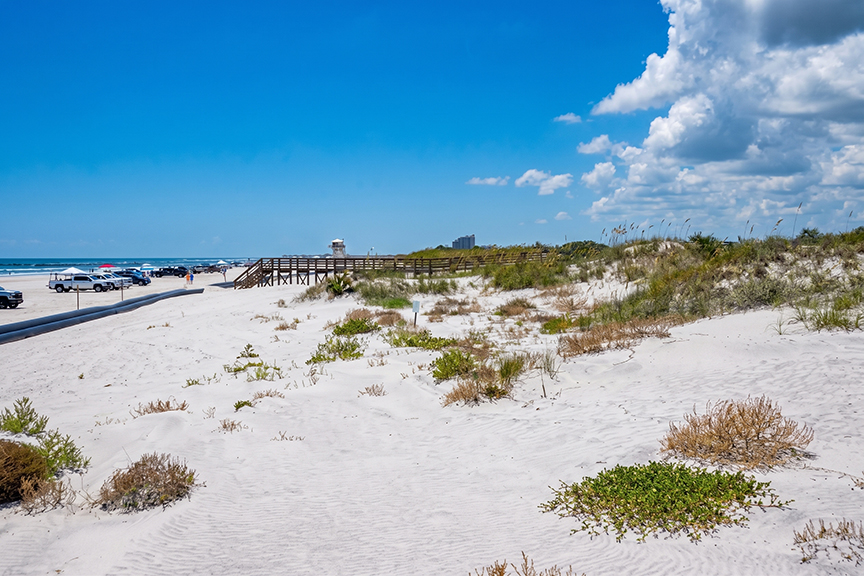
One beachgoer shared that sunset transforms Ponce Inlet into a painter’s dream. The sky bursts into shades of gold, rose, and violet, reflecting off the water in shimmering streaks. Photographers flock to the shoreline at dusk, capturing silhouettes against the glowing horizon.
We wished we could stay until evening, but our main destination awaited: the iconic Ponce Inlet Lighthouse.
The Lighthouse: Florida’s Tallest Beacon
Standing at 175 feet, the Ponce Inlet Lighthouse is the tallest in Florida – a towering sentinel of brick and light. Its striking red exterior rises dramatically against the sky, a symbol of maritime history and human perseverance.
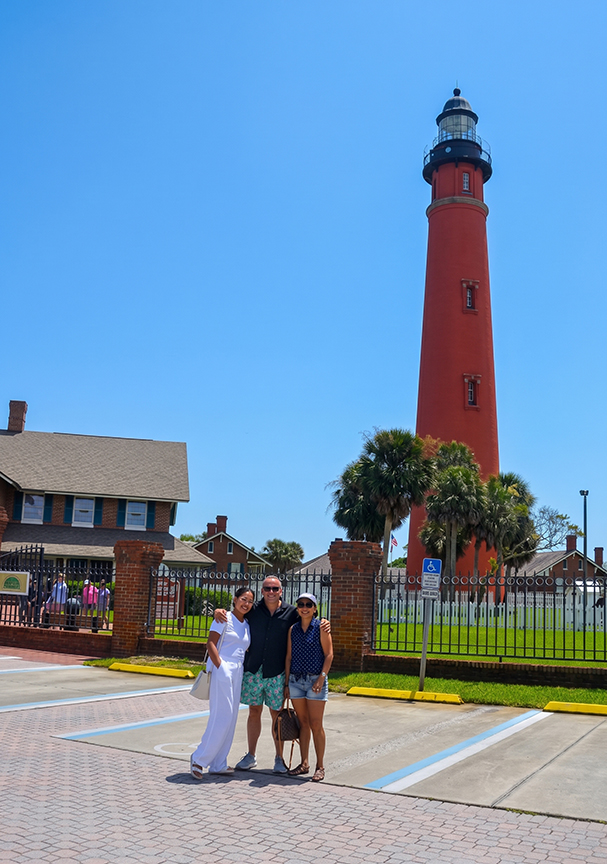
Although climbing to the top is considered a must‑do experience, I opted out due to my hypertension. The lighthouse’s 203 steps – nine of them granite – are not for the faint of heart.
My sister Marilou later confirmed my concerns. “I nearly fainted,” she admitted. “I even thought of asking Dave to call 911. I felt like I was dying. But once we reached the top and I caught my breath, everything went back to normal.”
Her story reminded me that even adventures require caution.
The lighthouse’s architecture is impressive, according to my sister Elena. Built on a 12‑foot‑deep brick foundation, it tapers from a 32‑foot diameter at the base to 12 feet beneath the lantern room. The brick walls measure eight feet thick at the bottom and two feet at the top—an engineering marvel of its time.
Originally, the lantern room housed a fixed first‑order Fresnel lens crafted in Paris by Barbier et Fenestre. Powered by a kerosene lantern with five concentric wicks, it produced a steady white light visible from 32 kilometers out at sea.
In 1993, the lighthouse was electrified, and a rotating BB&T third‑order Fresnel lens replaced the original. Its signature pattern—six flashes every thirty seconds—became a recognizable beacon for mariners.
The third‑order lens remained in service until 1970, when the Coast Guard removed it. Decades later, it was returned, restored, and reinstalled in 2004. Today, the lighthouse continues to function as a private aid to navigation and was designated a National Historic Landmark in 1998.
Exploring the Grounds
Even without climbing the tower, the lighthouse grounds offer a wealth of experiences. The gardens are beautifully maintained, providing a peaceful environment for leisurely walks. Informative exhibits detail the lighthouse’s history, its keepers, and its role in maritime navigation.
Children especially enjoy learning about the lighthouse keepers—ordinary people who performed extraordinary duties to keep the beacon alive.
Several historical buildings surround the tower. The pump house, built in 1915, once housed a gasoline-powered pump that replaced an earlier windmill. Today, an electric pump draws water from the well for irrigation.
The largest keeper dwelling, originally home to the principal keeper and his family, now contains exhibits such as the Keeper’s Office, the 1921 Bathroom Addition, Native Americans in Florida, and Lighthouses for Airplanes.
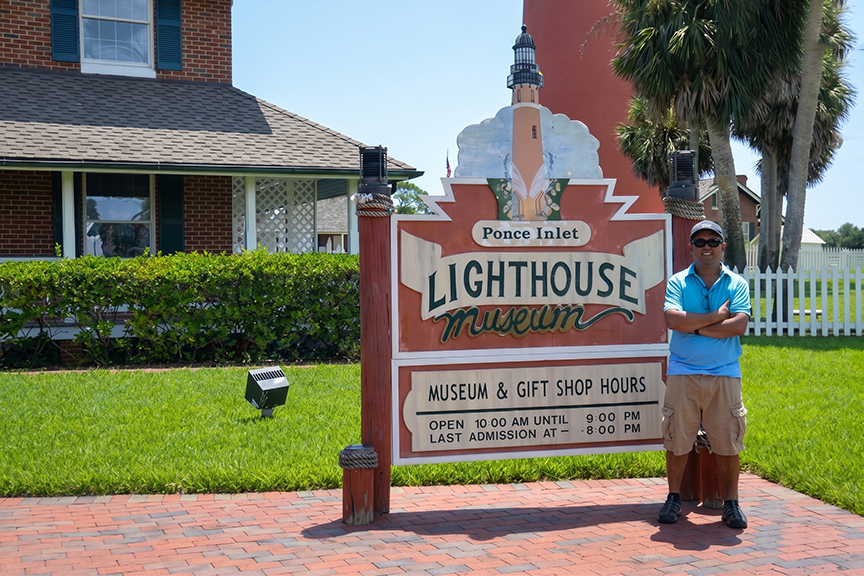
Farther from the tower stands the administration building, designed to resemble a multi-family keepers’ dwelling that was planned but never built. It now houses staff offices and maintenance facilities.
The museum grounds complete the experience, offering visitors a deeper look into the lighthouse’s past and its enduring legacy.
A Final Stop: The Gift Shop
Before leaving, we visited the main entrance building and gift shop, constructed in 1992 based on an 1883 architectural plan. Inside, visitors can purchase memorabilia, browse educational materials, and buy admission tickets. The building also contains public restrooms, a water fountain, and a conference room on the second floor.

The Ponce Inlet Lighthouse Museum welcomes visitors daily at 10:00 a.m., except on Thanksgiving and Christmas Day. Closing times vary by season, but final admission is always one hour before closing.
As we drove away from Ponce Inlet, I reflected on how history often feels distant—confined to textbooks, monuments, or old maps. Yet standing on Florida’s quiet shores, touching the bricks of its tallest lighthouse, and hearing stories of explorers whose paths shaped continents, history felt alive again.
Magellan and Ponce de León lived centuries apart, but their legacies continue to ripple across oceans. For a Filipino traveler like me, visiting Ponce Inlet was more than a sightseeing trip. It was a reminder that the world is stitched together by stories—of discovery, of courage, of people who dared to cross horizons.—###









Leave a Reply