



We sometimes wear sleeplessness as a badge of honor.
“I only need four hours.”
“I’ll sleep when I retire.”
“I can catch up this weekend.”
In a culture that celebrates productivity, sleep can begin to look like wasted time. Medicine tells us otherwise. Sleep is not the absence of life. It is part of life.
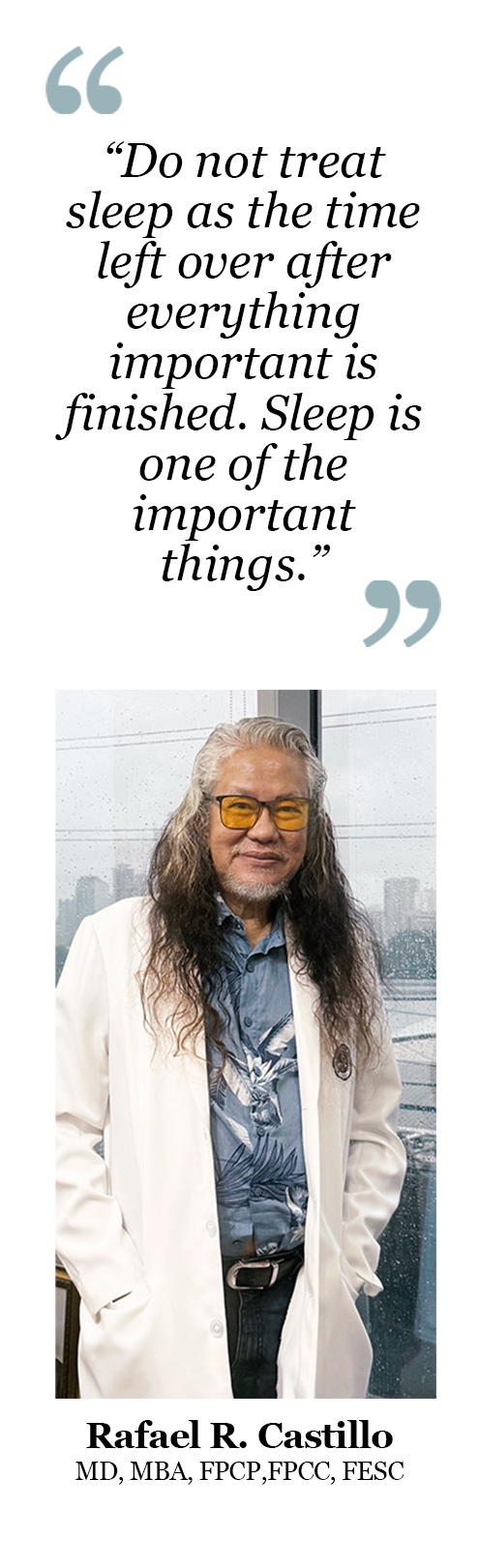
Do not treat sleep as the time left over after everything important is finished. Sleep is one of the important things.
Our brains do not simply switch off at night. Our bodies continue regulating metabolism, cardiovascular function, immunity, memory, emotion and countless other biological processes.
Yet there is another mistake we should avoid.
Once people become frightened about not sleeping, sleep itself becomes a nightly examination they feel they must pass. That fear can feed insomnia.
So the answer is not to become obsessed with achieving a perfect number of hours every night.
It is to respect sleep without fearing it.
Give it enough time. Keep a sensible rhythm. Treat the conditions that interfere with it. And when insomnia becomes chronic, recognize that there is an evidence-based treatment—CBT-I—that can help retrain the relationship between bed, wakefulness, thoughts and sleep.
Sleeping pills have a role. So may melatonin in selected circumstances. But neither should distract us from diagnosing the problem correctly.
The person who snores and stops breathing needs evaluation for sleep apnea.
The person whose legs will not remain still may need evaluation for restless legs syndrome.
The patient whose anxiety or depression keeps him awake deserves treatment for both sleep and mental health.
And the person who has spent years fighting with the pillow deserves something better than being told simply: “Relax.”
Good sleep is one of the foundations upon which good health rests. We spend roughly a third of our lives doing it. That is not wasted time. It is an investment in the other two-thirds.









Leave a Reply