

WORLD AMR AWARENESS WEEK
THE PILL THAT WON’T HELP
Flu season, the antibiotic habit, and the superbugs we are breeding in our own medicine cabinets
PLUS
- Sidebar: Drug Resistance at a Glance
- Sidebar: The Superbugs WHO Worries About Most
- Sidebar: When You Do Need Antibiotics
- Cold, Flu or Bacterial Infection? How to Tell — and Why It Matters
- “Finish Your Antibiotics”: What That Advice Really Means Today
- From Farm to Plate: Antibiotics in Our Food
- The Best Antibiotic Is the Infection You Never Get
- Commentary: It’s Time to Stop Selling Antibiotics Over the Counter
- Doctor’s Note: “Pang-Antibiotic, Doc”
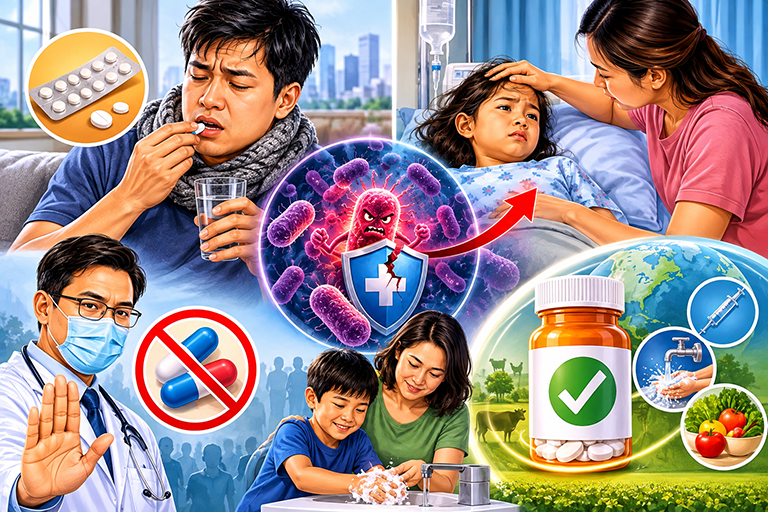
Flu season is here. The DOH logged more than 15,000 flu-like illnesses in just two weeks in October, and the numbers are climbing. For many Filipino families, that means a familiar routine: a fever, a cough, a quick trip to the botika — and a strip of amoxicillin. But antibiotics do nothing against the viruses that cause flu and colds. Used this way, they don’t cure us. They train bacteria to resist the very drugs we’ll need when a real infection strikes. As the world marks World AMR Awareness Week from November 18 to 24, here is why the pill we reach for so easily may be the one that won’t help — and what to do instead.
By Rebecca Lorenzo-Castillo, MD
Three days of amoxicillin
He was 38, a call center team leader in Quezon City, and he caught whatever was going around the office. Fever, sore throat, runny nose, body aches. On the second day, his wife bought amoxicillin at the corner botika. No prescription was needed; the pharmacy aide simply asked, “Ilang piraso po?“
He took it for three days, felt better, and stopped. The rest of the strip went into the kitchen drawer “for next time.”
Six months later, his eight-year-old daughter came down with a high fever and pain when urinating. Her mother remembered the leftover amoxicillin and gave her some. The fever didn’t break. By the time they reached the hospital, the infection had spread to her kidneys. The bacteria in her urine were resistant to amoxicillin and to two other common antibiotics. She needed intravenous treatment with a stronger drug for a week.
The details are a composite. The pattern isn’t. Every doctor in the Philippines has seen some version of it, and many of us have seen the far worse versions — the patients for whom no antibiotic works at all.
The pill that won’t help
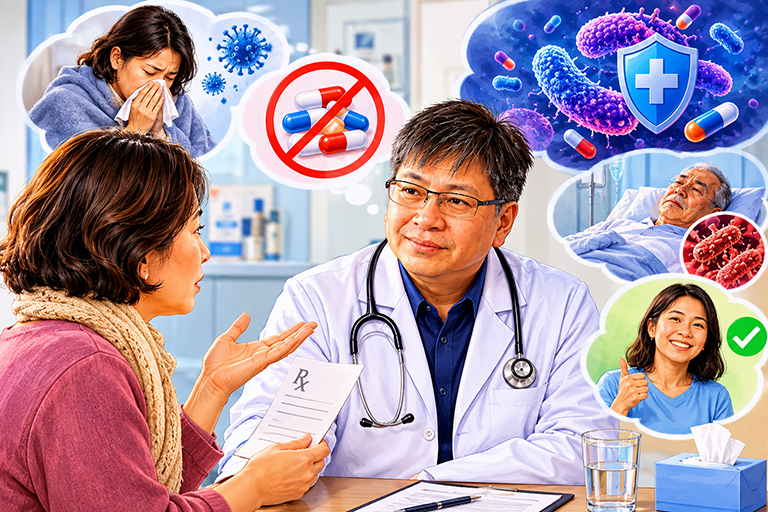
Here is the single most important fact in this issue: antibiotics kill bacteria. They do nothing to viruses.
The common cold, the flu, most sore throats, most coughs, and most cases of “trangkaso” are caused by viruses. Taking an antibiotic for them won’t make you better faster, won’t stop you from spreading the illness, and won’t prevent complications in most people. The body clears these viral infections on its own, usually within a week or two.
What antibiotics will do, every time, is expose the trillions of bacteria living in your gut, skin, nose and throat to a drug. Most of those bacteria die. But a few, by chance, are a little tougher. They survive, multiply and pass on their resistance — sometimes even to other species of bacteria.
Do this often enough, across enough people, and you get bacteria that can shrug off the antibiotics we depend on. That is antimicrobial resistance, or AMR. The bacteria that carry it are what the newspapers call “superbugs.”
This is not a future problem
For a long time, antimicrobial resistance was discussed as a looming threat. It’s here.
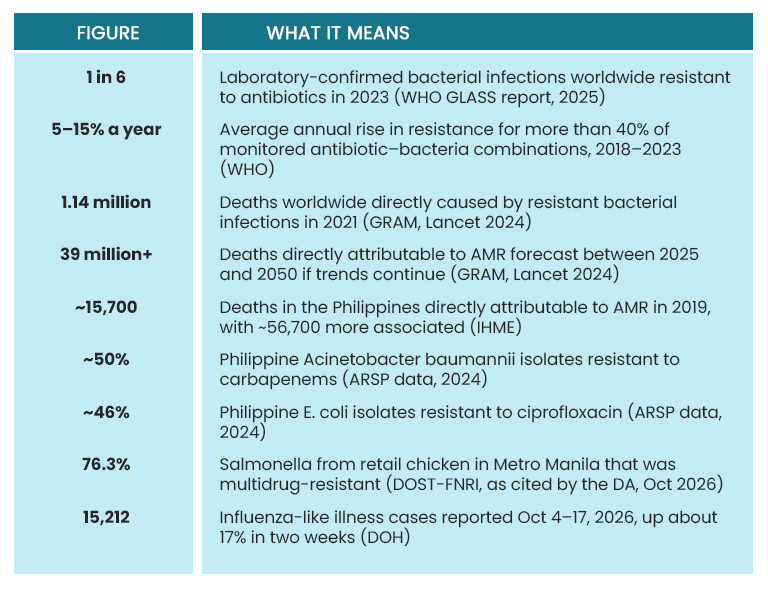
• In October 2025, the World Health Organization’s Global Antibiotic Resistance Surveillance report found that about one in six laboratory-confirmed bacterial infections worldwide was resistant to antibiotic treatment in 2023. Between 2018 and 2023, resistance rose in more than 40 percent of the antibiotic-bacteria combinations monitored, by an average of 5 to 15 percent per year. Rates were highest in South-East Asia and the Eastern Mediterranean.
• A major study in The Lancet in 2024 estimated that resistant bacterial infections directly caused 1.14 million deaths worldwide in 2021, and forecast more than 39 million deaths directly attributable to AMR between 2025 and 2050 if trends continue. Older adults are increasingly affected.
• In the Philippines, the Institute for Health Metrics and Evaluation estimated about 15,700 deaths directly attributable to AMR in 2019, and about 56,700 more associated with it.
Philippine hospital data tell the same story. According to figures from the DOH’s Antimicrobial Resistance Surveillance Program, summarized in a 2025 review:
• About half of Acinetobacter baumannii isolates — a hospital bacterium that causes pneumonia and bloodstream infections — were resistant to carbapenems, among our most powerful antibiotics.
• About four in ten Klebsiella pneumoniae isolates were resistant to third-generation cephalosporins, and about one in six to carbapenems.
• Nearly half of E. coli — the most common cause of urinary tract infections — were resistant to ciprofloxacin.
• More than one in five Enterococcus faecium isolates were resistant to vancomycin.
When the most powerful antibiotics fail, doctors are left with older, more toxic drugs, longer hospital stays — or nothing.
Why it matters to everyone, not just the sick
Antibiotics are the quiet foundation of modern medicine. They make it possible to:
• perform a cesarean section or a hip replacement safely;
• give chemotherapy to cancer patients, whose immune systems are weakened;
• care for premature babies;
• do kidney dialysis and organ transplants;
• treat pneumonia, typhoid, tuberculosis, urinary infections and infected wounds.
Without effective antibiotics, routine surgery becomes risky, and common infections become deadly again. Every antibiotic taken unnecessarily today chips away at that foundation for all of us — including our children and grandchildren.
How we got here
Resistance develops naturally over time. But human behavior has accelerated it dramatically:
• Taking antibiotics for viral infections like colds and flu.
• Buying antibiotics without a prescription. In the Philippines, antibiotics are prescription drugs by law, but they are still widely sold over the counter.
• Self-medicating with leftover pills or sharing antibiotics with family members.
• Stopping or skipping doses, or taking the wrong dose or the wrong drug.
• Pressure on doctors to prescribe “just in case.”
• Overuse in livestock and aquaculture, where antibiotics are used to prevent disease or promote growth. (See our supplemental article.)
• Poor sanitation and infection control that let resistant bacteria spread from person to person, and from hospitals and farms into rivers.
This year’s World AMR Awareness Week theme captures the scope of the problem: “One Health, one action: Prevent AMR now.” Human health, animal health and the environment are linked. Resistant bacteria don’t respect the boundaries between hospital, farm, river and kitchen.
Flu season: the perfect storm
The timing of this issue isn’t an accident.
The DOH reported 15,212 influenza-like illness cases from October 4 to 17, up from 12,929 in the previous two weeks, with localized increases in 13 provinces and highly urbanized cities, mostly in Metro Manila. Dengue cases also rose. More cases are expected through the holidays, as people gather indoors and travel.
Every flu season brings a wave of unnecessary antibiotic use. People feel terrible, they want something stronger than paracetamol, and antibiotics are easy to buy. But for the flu, the answer is rest, fluids, fever control and, for high-risk patients, antiviral medicines — not antibiotics.
There is one important exception. Sometimes, a bacterial infection develops on top of the flu, especially pneumonia in older adults, young children and people with chronic illness. That’s when antibiotics are truly needed, and that’s why anyone whose flu gets worse instead of better should see a doctor. (See our sidebar on when you do need antibiotics.)
What each of us can do
Fighting antimicrobial resistance can feel like a problem for governments and scientists. But much of it comes down to everyday choices:
• Don’t ask for antibiotics for colds, flu or most sore throats. Ask your doctor instead, “What’s causing this, and what will actually help?”
• Never buy antibiotics without a prescription.
• Take antibiotics exactly as prescribed — the right dose, at the right times, for the length of time your doctor specifies.
• Never save leftover antibiotics, and never share them with family or friends.
• Don’t pressure your doctor. If your doctor says you don’t need an antibiotic, that’s good news, not poor service.
• Prevent infections in the first place: wash your hands, get vaccinated, practice safe food handling, and stay home when you’re sick.
• Dispose of unused antibiotics properly. Ask your pharmacy or health center how; don’t flush them or throw them loose into the trash.
A final word
Antibiotics are among the greatest gifts medicine has ever given us. For most of human history, a scratch could kill, and childbirth was a mortal danger. Antibiotics changed that within a single lifetime.
We are now in danger of squandering that gift — not through malice, but through habit. A strip of amoxicillin for a cold. A leftover capsule for a child’s fever. A “just in case” prescription.
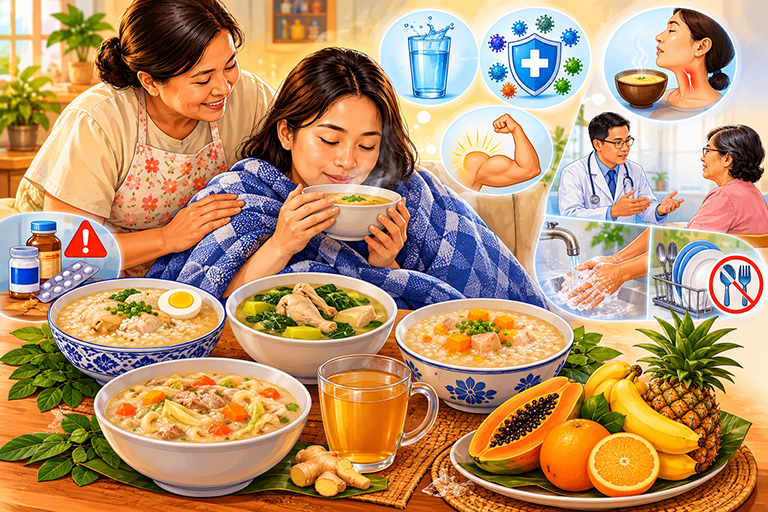
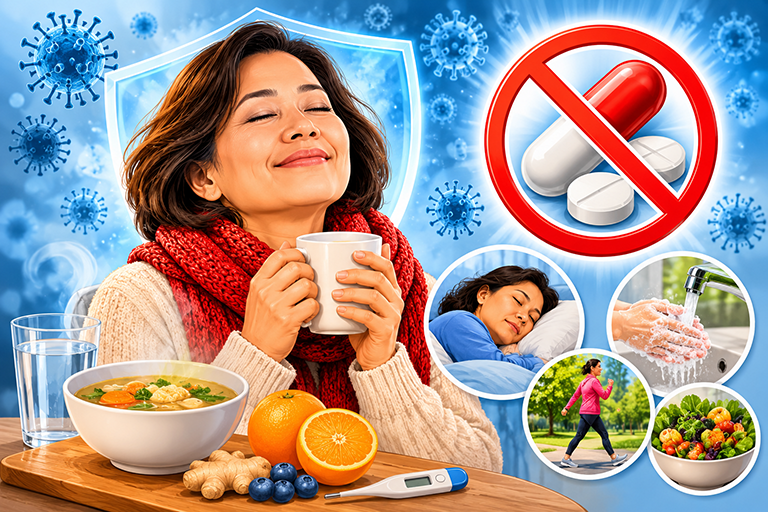
This flu season, let’s break the habit. Rest, fluids and time will heal most of what’s going around. Save antibiotics for the infections that truly need them, so they’ll still work when someone you love needs them most.
“Every antibiotic taken for a cold is a small vote for the superbugs. This flu season, let’s vote the other way.”
DRUG RESISTANCE AT A GLANCE
Sources: WHO Global Antibiotic Resistance Surveillance Report 2025; GBD 2021 Antimicrobial Resistance Collaborators, Lancet 2024; IHME 2019 estimates as reported by Down to Earth (Nov 2025); Ng et al., Frontiers in Microbiology 2025 (citing ARSP 2024 data); GMA News (Oct 28, 2026); Daily Tribune (Nov 10, 2026).
THE SUPERBUGS WHO WORRIES ABOUT MOST
The World Health Organization’s 2024 Bacterial Priority Pathogens List ranks drug-resistant bacteria by how urgently new treatments are needed.
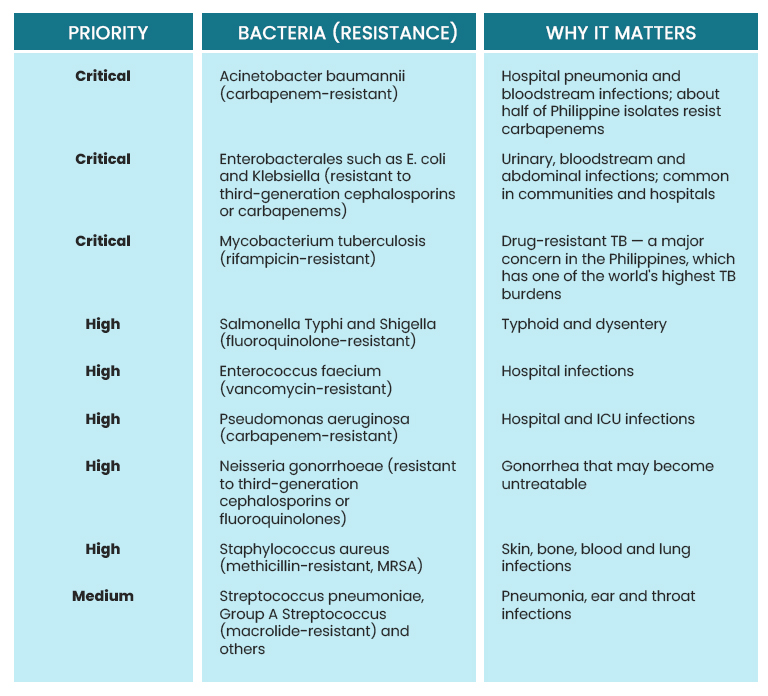
Source: WHO Bacterial Priority Pathogens List 2024. Philippine figures from ARSP data as summarized by Ng et al., 2025.
WHEN YOU DO NEED ANTIBIOTICS
Antibiotics save lives when they’re used for the right infections. See a doctor promptly — and expect that you may need an antibiotic — if you or a family member has:
• A fever with cough and difficulty breathing, chest pain, or very fast breathing — possible pneumonia.
• A flu or cold that gets better and then suddenly worse, with a new high fever.
• Pain or burning when urinating, especially with fever or back pain.
• A red, hot, swollen, spreading area of skin, or a wound that is oozing pus.
• A sore throat with high fever, no cough, swollen tender neck glands and white patches on the tonsils — possibly strep throat, which a doctor can test for.
• Severe diarrhea with blood, or high fever after eating questionable food.
• Fever lasting more than three days, or fever in a baby under three months old.
• A stiff neck, confusion or a rash that doesn’t fade when pressed, with fever — go to the emergency room immediately.
• A cough lasting more than two weeks, especially with weight loss, night sweats or blood in the sputum — get checked for tuberculosis.
Questions to ask when you’re prescribed an antibiotic: Is this infection bacterial? Which antibiotic is this, and why this one? How many times a day, and for how many days? What side effects should I watch for? What should I do if I feel better before the course is over?
KEY REFERENCES
1. World Health Organization. Global Antibiotic Resistance Surveillance Report 2025. Geneva: WHO; October 13, 2025.
2. GBD 2021 Antimicrobial Resistance Collaborators (Naghavi M, et al.). Global burden of bacterial antimicrobial resistance 1990–2021: a systematic analysis with forecasts to 2050. Lancet. 2024;404(10459):1199–1226.
3. Murray CJL, Ikuta KS, Sharara F, et al. Global burden of bacterial antimicrobial resistance in 2019: a systematic analysis. Lancet. 2022;399(10325):629–655.
4. Institute for Health Metrics and Evaluation. The burden of antimicrobial resistance in the Philippines (2019 estimates), as reported in: “WAAW 2025: Raising awareness on the Antimicrobial Resistance Surveillance Program in the Philippines.” Down to Earth, November 2025.
5. Ng C, Abrazaldo J, de Vera P, Goh SG, Tan B. Antibiotic resistance in the Philippines: environmental reservoirs, spillovers, and One-Health research gaps. Front Microbiol. 2025;16:1711400.
6. Research Institute for Tropical Medicine, Antimicrobial Resistance Surveillance Reference Laboratory. 2024 ARSP Annual Report. Department of Health.
7. World Health Organization. WHO Bacterial Priority Pathogens List 2024. Geneva: WHO; 2024.
8. World Health Organization. World AMR Awareness Week 2026: “One Health, one action: Prevent AMR now.” who.int.
9. “Flu-like illnesses rise as DOH records over 15,000 cases.” Daily Tribune, November 10, 2026.
10. “Improper antibiotic dosing linked to resistant E. coli in meat — DA.” GMA News Online, October 28, 2026.
11. Valenzuela S, Lao PE, Apostol GLC, et al. Situational analysis of antimicrobial resistance policies and program implementation in the Philippines, 2019–2023. One Health. 2025;21:101255.
12. Department of Health. Philippine National Action Plan to Combat Antimicrobial Resistance, 2024–2028 (One Health approach).
13. Republic Act No. 10918: Philippine Pharmacy Act of 2016.
14. Llewelyn MJ, Fitzpatrick JM, Darwin E, et al. The antibiotic course has had its day. BMJ. 2017;358:j3418.
15. Smith SM, Fahey T, Smucny J, Becker LA. Antibiotics for acute bronchitis. Cochrane Database Syst Rev. 2017;6:CD000245.
16. World Health Organization. Estimating the impact of vaccines in reducing antimicrobial resistance and antibiotic use. Geneva: WHO; October 2024.
17. World Health Organization. Leveraging vaccines to reduce antibiotic use and prevent antimicrobial resistance: an action framework. Geneva: WHO; 2021.
18. “DoH rolls out flu vaccines as seasonal cases rise.” Daily Tribune, October 25, 2026.
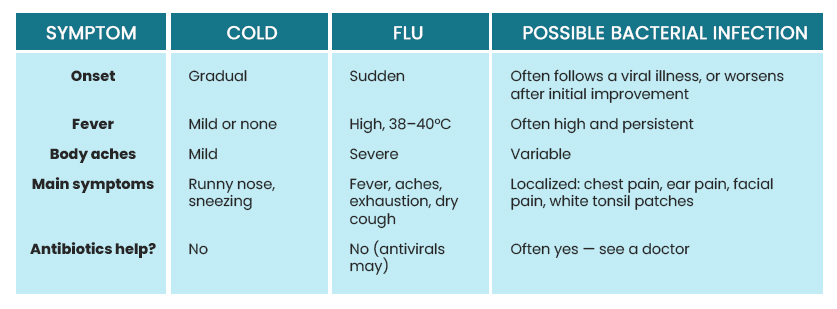
COLD, FLU OR BACTERIAL INFECTION?
How to tell them apart — and why it decides whether an antibiotic can help
By Rebecaa Lorenzo-Castillo, MD
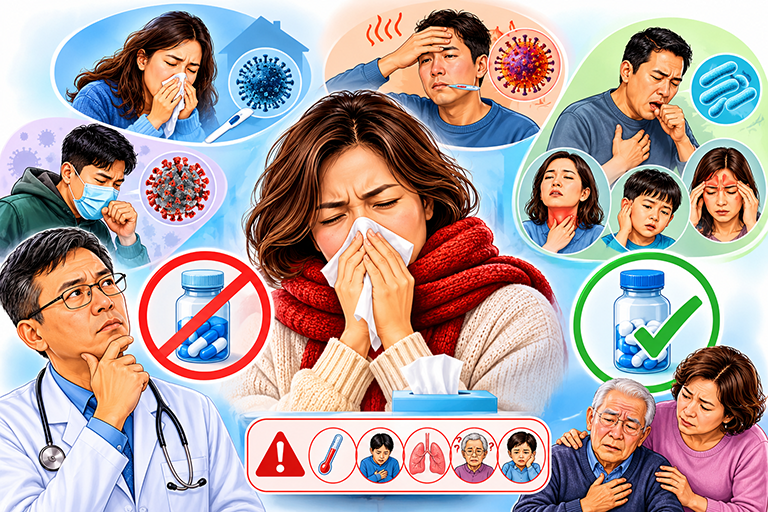
A runny nose, a scratchy throat, a fever, a cough. They feel alike, and in the first few days they often look alike, even to doctors. But what’s behind them makes all the difference — because only bacterial infections respond to antibiotics.
The common cold
Caused by viruses, most often rhinoviruses.
• Starts gradually.
• Mostly nose and throat: sneezing, runny or stuffy nose, sore throat.
• Fever is mild or absent in adults.
• You can usually keep going, though you feel under the weather.
• Lasts about 7 to 10 days. The cough may linger longer.
Antibiotics help? No.
Influenza (flu)
Caused by influenza viruses.
• Starts suddenly — people often remember the hour it hit.
• High fever, chills, severe body aches, headache, extreme tiredness.
• Dry cough and sore throat.
• You feel too sick to work.
• Most people improve within a week, though fatigue can last longer.
Antibiotics help? No. Antiviral medicines may help, especially for high-risk people, if started within the first two days. Ask your doctor.
COVID-19 and other respiratory viruses
COVID-19, RSV and others can look like a cold or the flu. Testing can help tell them apart.
Antibiotics help? No.
Bacterial infections
Some respiratory infections are bacterial, and these do need antibiotics:
• Bacterial pneumonia: fever, cough with phlegm, difficulty breathing, chest pain, fast breathing. Often more severe and more likely in older adults, young children and those with chronic illness.
• Strep throat: sudden sore throat, fever, swollen tender neck glands, white patches on the tonsils, usually without cough or runny nose. More common in children. Only a minority of sore throats in adults are caused by strep bacteria.
• Bacterial sinusitis: symptoms that last more than 10 days without improving, or that get better and then suddenly worse, or severe facial pain with high fever.
• Ear infections, especially in young children (though many clear without antibiotics).
Don’t judge by the color of your phlegm
Many people believe that yellow or green phlegm means a bacterial infection. Not necessarily. The color comes from immune cells fighting any infection, viral or bacterial. Colored phlegm alone is not a reason for antibiotics.
Warning signs that something more is going on
See a doctor if:
• Fever lasts more than three days.
• Symptoms get better, then suddenly worse.
• There is difficulty breathing, chest pain or bluish lips.
• There is confusion, extreme drowsiness or inability to keep fluids down.
• A child is unusually drowsy, irritable, not feeding or has fewer wet diapers.
• An older adult or someone with chronic illness seems to be getting worse.
“FINISH YOUR ANTIBIOTICS”
What that familiar advice really means today
By Marie Barrientos-Regala, MD
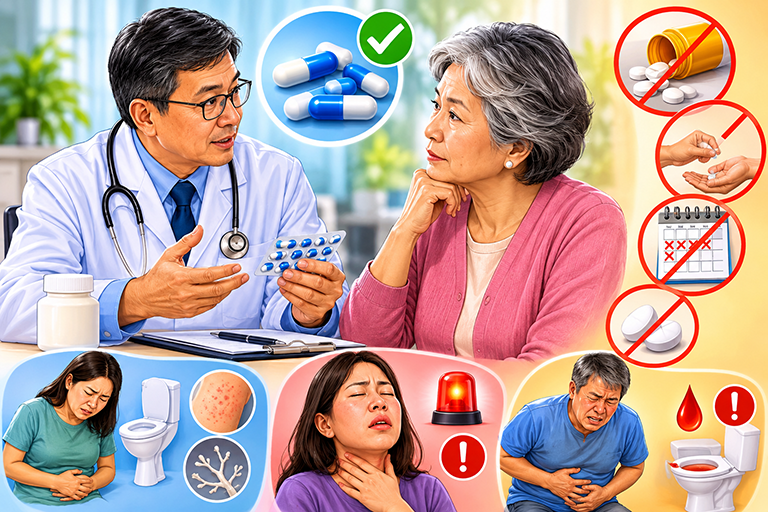
For decades, doctors and pharmacists repeated the same rule: always finish the full course of antibiotics, even if you feel better. The thinking was that stopping early would let surviving bacteria develop resistance.
In recent years, some experts have questioned whether that rule is always right. In 2017, a group of infectious disease specialists wrote in the BMJ that the idea of “completing the course” isn’t well supported by evidence, and that in some cases, taking antibiotics for longer than necessary can itself promote resistance, by exposing the body’s normal bacteria to the drug for longer.
So what should patients do?
The short answer: follow your doctor’s instructions — exactly
The modern view isn’t “stop whenever you feel better.” It’s this:
• Your doctor decides how long the course should be, based on the type of infection and the latest evidence. Many courses are now shorter than they used to be — for some common infections, five days or even less is enough.
• Take every dose your doctor prescribes, at the right times, for the number of days specified.
• Don’t stop on your own, even if you feel better. Some infections, such as strep throat, tuberculosis and certain urinary or bone infections, need the full course to prevent relapse or complications.
• Don’t extend the course on your own either, or “add a few more days to be sure.”
• If you feel better early and want to stop, or if you have side effects, call your doctor first.
What never to do
• Don’t save leftovers. If your prescription leaves extra pills, don’t keep them “for next time.” The next illness may be viral, or caused by different bacteria, or need a different drug.
• Don’t share antibiotics. What works for you may be wrong or even dangerous for someone else.
• Don’t take a half-course to “make it last.” Skipping doses or taking smaller doses gives bacteria a chance to adapt.
• Don’t double up if you miss a dose. Take it as soon as you remember, unless it’s almost time for the next one. Ask your pharmacist if unsure.
Common side effects to know about
• Diarrhea, nausea or stomach upset
• Yeast infections
• Rash
Seek help immediately for signs of a severe allergic reaction: hives, swelling of the face or lips, or difficulty breathing. And call your doctor for severe or bloody diarrhea, which may signal a C. difficile infection, a complication of antibiotic use.
The new rule of thumb: Not “always finish the course,” but “always follow the course your doctor prescribed — and talk to your doctor before you change it.”
FROM FARM TO PLATE
Antibiotics in our food, and why drug resistance doesn’t stay on the farm
By the H&L Editorial Team
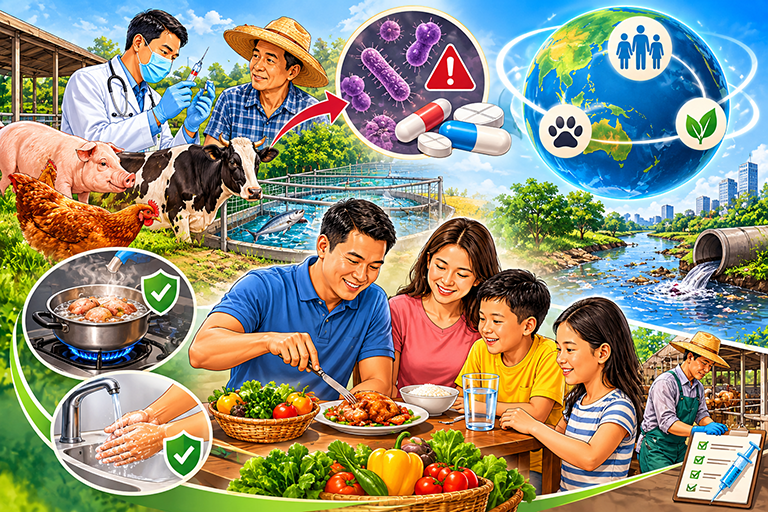
When we think of antibiotic misuse, we usually picture people taking pills for colds. But a large share of the world’s antibiotics is used in animals — pigs, chickens, cattle and farmed fish.
Antibiotics are vital for treating sick animals. The problem comes when they are used routinely to prevent disease in crowded conditions, to make animals grow faster, or in the wrong doses.
What’s happening in the Philippines
In October, Agriculture Secretary Francisco Tiu Laurel Jr. acknowledged that improper antibiotic dosing on some farms has contributed to resistant bacteria. Some farmers give antibiotics irregularly to save money, he said, which has helped produce Salmonella and E. coli that are harder to treat. “Yes, Salmonella is becoming harder to eliminate with antibiotics,” he said, adding that the Bureau of Animal Industry is monitoring farms.
The numbers are striking. A DOST-FNRI study of retail chicken in Metro Manila, cited by the DA, found that 94.7 percent of Salmonella isolates were resistant to at least one class of antibiotics, and 76.3 percent were multidrug-resistant.
A 2025 review in Frontiers in Microbiology found that farms in the Philippines commonly use antibiotics such as enrofloxacin, oxytetracycline, amoxicillin and, in some commercial farms, colistin — an antibiotic that doctors reserve as a last resort for some of the most resistant human infections. The review also found antibiotic residues and resistant bacteria in rivers, coastal waters and estuaries, including near aquaculture sites and in Manila’s estuaries.
How resistance moves from farm to people
• Through food: resistant bacteria on raw or undercooked meat, eggs and seafood.
• Through hands and kitchens: cross-contamination from raw meat to cutting boards, knives and ready-to-eat foods.
• Through water and soil: animal waste and farm runoff carry resistant bacteria and antibiotic residues into rivers and fields.
• Through farm workers and people who live near farms.
This is what the “One Health” theme of this year’s World AMR Awareness Week means: human, animal and environmental health are one system.
What consumers can do
• Cook meat, poultry and eggs thoroughly. Proper cooking kills bacteria, resistant or not.
• Keep raw and cooked foods separate. Use different cutting boards and utensils for raw meat.
• Wash hands with soap after handling raw meat, poultry or fish.
• Refrigerate leftovers promptly.
• Wash fruits and vegetables thoroughly, especially those eaten raw.
• Support responsible producers when you can — those who use antibiotics only to treat sick animals, under veterinary guidance.
What farmers can do
• Use antibiotics only when prescribed by a veterinarian, at the right dose and duration.
• Never use antibiotics for growth promotion.
• Invest in biosecurity, vaccination and good hygiene to prevent disease in the first place.
• Observe withdrawal periods before animals are slaughtered or eggs and milk are sold.
Did you know? Some antibiotics used in animals are the same as, or closely related to, those used in people. That’s why resistance in farm bacteria can make human infections harder to treat.
THE BEST ANTIBIOTIC IS THE INFECTION YOU NEVER GET
How vaccines, clean hands and clean water fight drug resistance
By the H&L Editorial Team
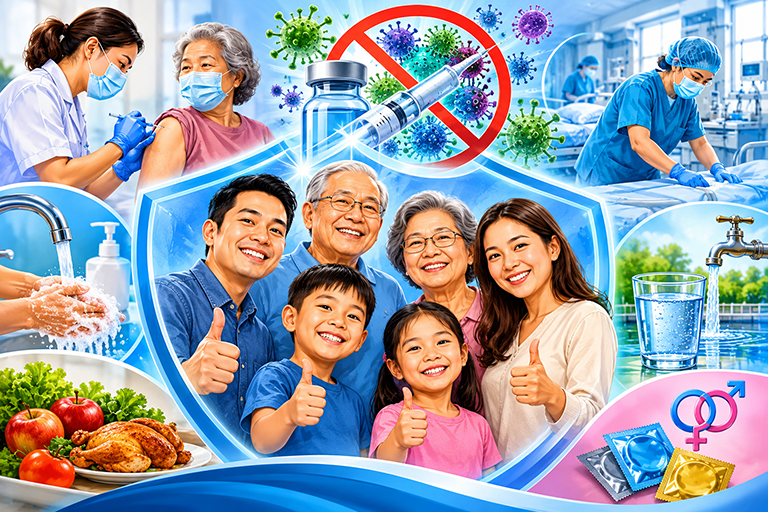
Every infection prevented is an antibiotic not needed. That simple idea makes prevention one of the most powerful tools against antimicrobial resistance.
Vaccines: a quiet weapon against superbugs
Vaccines don’t just prevent illness. They reduce the need for antibiotics, both directly and indirectly:
• Pneumococcal vaccines prevent infections caused by Streptococcus pneumoniae, a common cause of pneumonia, ear infections and meningitis — and a bacterium that has become resistant to several antibiotics.
• Flu vaccines prevent influenza, which in turn prevents the secondary bacterial pneumonias that often follow it, and the unnecessary antibiotics so often taken for flu itself.
• Typhoid vaccines help in areas where drug-resistant typhoid is a growing threat.
• Hib, measles, pertussis and other childhood vaccines prevent infections that once drove enormous antibiotic use.
In October 2024, WHO estimated that vaccines against 24 pathogens could reduce the number of antibiotics needed worldwide by 22 percent — around 2.5 billion daily doses a year — and avert hundreds of thousands of deaths associated with AMR.
The flu shot: an update
We covered the DOH’s influenza vaccination drive in our Expert’s Corner two issues ago. Since then, flu-like illnesses have continued to climb. The campaign, prioritizing senior citizens, young children and people with chronic conditions, runs through December. If you or someone in your family is in a priority group and hasn’t been vaccinated, now is the time to ask your barangay health center or doctor.
Adults 60 and older, and people with chronic heart, lung or kidney disease or diabetes, should also ask about pneumococcal vaccination, which can be given at the same visit.
Clean hands, clean water, clean hospitals
• Handwashing with soap and water is one of the most effective ways to prevent the spread of infections — in homes, schools and hospitals.
• Safe water and sanitation prevent diarrheal diseases, typhoid and other infections that would otherwise need antibiotics.
• Infection prevention in hospitals — hand hygiene, sterile procedures, isolating patients with resistant bacteria — stops superbugs from spreading between patients.
• Safe sex practices prevent gonorrhea, which is becoming harder to treat.
• Food safety prevents food-borne infections, including resistant Salmonella and E. coli.
Prevention checklist for your family: Are vaccinations up to date for every family member, including flu and pneumococcal vaccines for those who qualify? Is there soap at every sink? Is drinking water safe? Do you cook meat thoroughly and keep raw and cooked foods apart? Do sick family members stay home?
PUBLIC HEALTH COMMENTARY
IT’S TIME TO STOP SELLING ANTIBIOTICS OVER THE COUNTER
By Rafael R. Castillo, MD
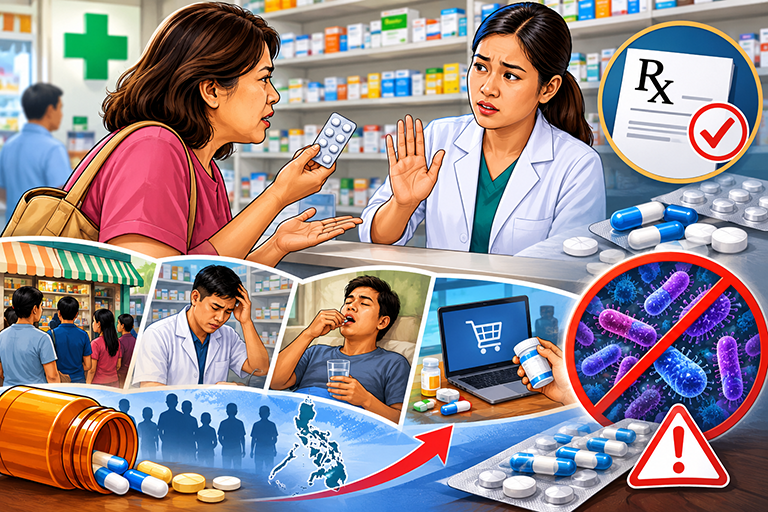
In most of the Philippines, buying antibiotics is easy. You walk into a botika, describe your symptoms or show an empty box, and walk out with a strip of amoxicillin, cephalexin or ciprofloxacin. No prescription. No questions. Sometimes, not even a pharmacist.
This is not how the law is supposed to work. Antibiotics are prescription drugs. Under the Philippine Pharmacy Act of 2016, prescription medicines should be dispensed only upon a valid prescription, by or under the supervision of a licensed pharmacist. The Food and Drug Administration has repeatedly reminded the public and drugstores of these rules.
Yet over-the-counter antibiotic sales remain common. Pharmacy aides face pressure from customers who expect to be served. Small drugstores worry about losing business to competitors who don’t ask questions. Patients who can’t afford a consultation see buying antibiotics directly as the practical choice. And online sellers have added a new channel that’s even harder to police.
The result is predictable. Antibiotics are used for viral infections, at the wrong doses, for the wrong length of time. Self-medication and unregulated access are recognized as key drivers of antimicrobial resistance in the Philippines.
Ending over-the-counter sales won’t be easy, and it can’t be done by enforcement alone. A smart approach would combine several steps:
• Consistent enforcement of the Pharmacy Act, with inspections, mystery-shopper checks and meaningful penalties for repeated violations — applied fairly to large chains, small drugstores and online sellers alike.
• A real role for pharmacists, who are trained to counsel patients, explain why an antibiotic isn’t needed, and recommend symptom relief instead.
• Affordable, accessible consultations. If we tell people they need a prescription, we must make it easy to get one. PhilHealth’s YAKAP primary care package, which covers consultations and essential medicines including several antibiotics at accredited clinics, is a step in this direction.
• Support for doctors to prescribe responsibly — including clear national guidelines, rapid diagnostic tests where useful, and protection from pressure to prescribe “just in case.”
• Public education that reaches every barangay: antibiotics don’t work on colds and flu.
• Data. Track antibiotic sales and use, so we can see whether policies are working.
Other countries have shown that change is possible. Where prescription-only rules have been enforced alongside education and better access to primary care, antibiotic misuse has fallen.
The Philippines has a National Action Plan on AMR for 2024–2028 and a strong surveillance program. What’s needed now is the will to tackle one of the most visible, everyday drivers of resistance: the antibiotic sold across the counter like candy.
Antibiotics are not ordinary consumer goods. They are a shared, finite resource. Protecting them is a responsibility we all carry — patients, pharmacists, doctors, regulators and lawmakers.



Leave a Reply