

A Medicine of Compassion: How Dr. Hilario S. Lapeña Bridges Two Worlds
By Henrylito D. Tacio
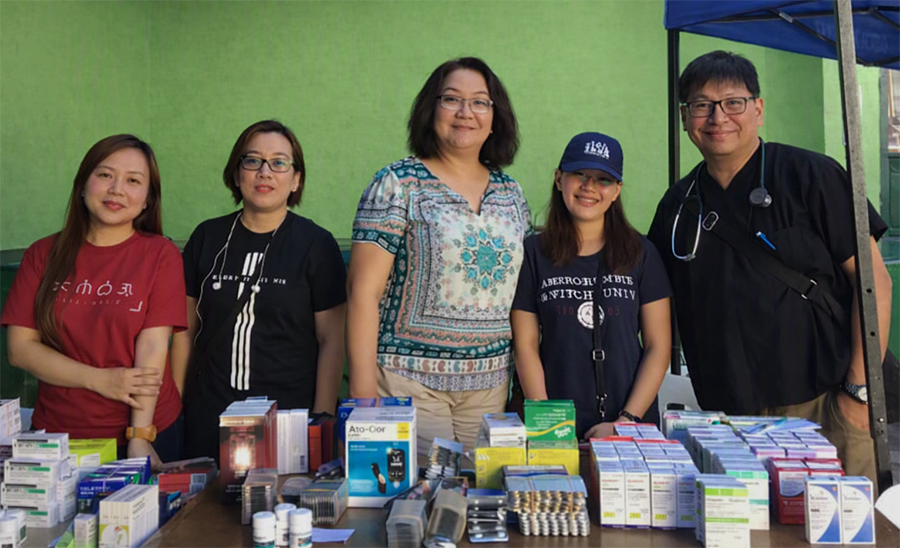
The man sat quietly on the wooden bench, his breathing shallow, his eyes tired but hopeful. He had been coughing for weeks—sometimes with streaks of blood. When Dr. Hilario S. Lapeña examined him during a medical mission in Bansalan, Davao del Sur, the diagnosis was clear: tuberculosis.
The man listened intently as the doctor explained the disease, its treatment, and the absolute importance of completing the full course of medication. Then, with gentle firmness, Dr. Lapeña handed him his first set of medicines.
It was a simple moment—one patient, one diagnosis, one act of care. But for the people gathered in Bansalan, it was a reminder of something far larger: that one of their own, now a respected physician in Canada, had never forgotten where he came from.
The medical mission, organized by the Association of Bansaleños Worldwide, was more than an outreach program. It was a homecoming of compassion—a return to the soil where a young boy’s lifelong dream first took root.
A Calling Discovered Early
Long before he became a respected physician and medical educator in Canada, Hilario Lapeña was a young boy growing up in Bansalan with a curiosity that set him apart from many children his age.
While others recoiled from injuries or avoided situations that seemed unpleasant, young Hilario moved toward them. When classmates fell and scraped their knees, he rushed to help. When animals on nearby farms were injured, he examined them with fascination rather than fear.
Looking back, those childhood moments seem almost prophetic.
People often ask whether becoming a doctor was his dream as a teenager. His answer consistently surprises them. “The dream goes back to my pre-elementary days,” he says.
Even before he understood anatomy, physiology, or disease, he felt naturally drawn to medicine. If he had not become a physician, he says, he might have pursued law, another profession built on service, responsibility, and the pursuit of truth.
But medicine possessed a powerful role model. Growing up, he observed Dr. Pablo Madulid, the husband of his cousin, Dr. Alice Navarro Madulid. In a small town where physicians commanded both trust and respect, Dr. Madulid left an enduring impression on the young Hilario.
He watched how people sought the doctor’s help not only for illnesses but also for reassurance. He witnessed how knowledge and compassion could work together to improve lives.
That example planted a seed that would eventually grow into a lifelong vocation.
The Influence of a Remarkable Mother
If medicine provided the dream, education provided the pathway. At the center of that influence was his mother, Consorcia S. Lapeña. She embodied academic excellence and discipline. By day, she served as a District School Supervisor. By night, she taught as a professor at the University of Mindanao.
Her life demonstrated the transformative power of education. “She believed in education the way some people believe in prayer,” Dr. Lapeña recalls.
Although she never pressured him into pursuing medicine, she nurtured his intellectual curiosity and encouraged him to pursue his ambitions with determination. That support would become invaluable as he embarked on the long and demanding road toward becoming a physician.
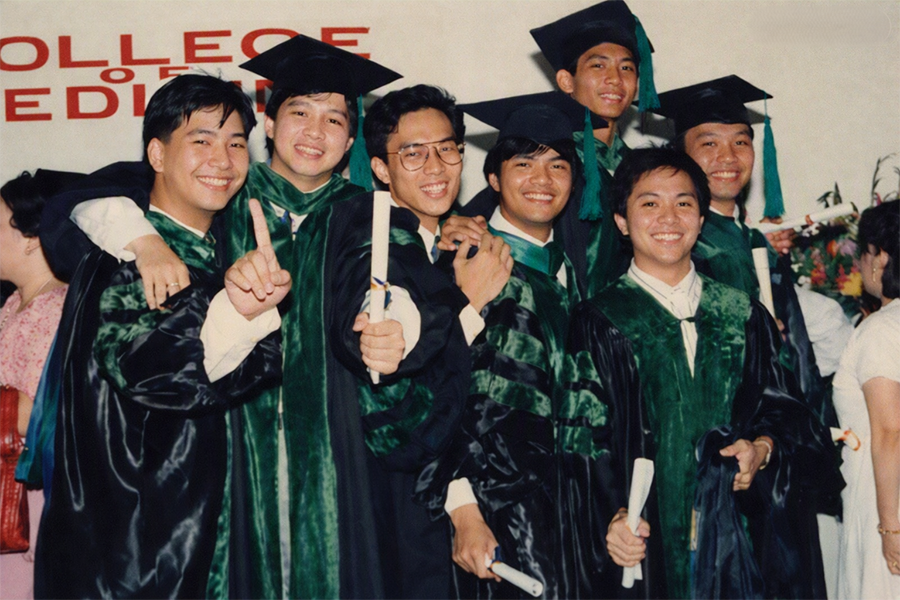
He first enrolled at the University of the Philippines Diliman, earning an AB Humanities Premed degree. He then entered the University of the East Ramon Magsaysay Memorial Medical Center (UERM), where he graduated as part of the Class of 1987.
His entire pre-medical and medical education was made possible through a National State Scholarship from the Department of Education, Culture, and Sports. For a young man from a provincial town, it was an opportunity that changed the course of his life.
The Sacrifices Behind the White Coat
Popular culture often portrays medicine as prestigious and glamorous. Dr. Lapeña knows otherwise. Medical school was a relentless test of endurance. “You have to be 100 percent sure this is the life you want,” he says.
The endless lectures, laboratory work, hospital rotations, examinations, and sleepless nights demanded complete commitment. Personal time became scarce. Celebrations were missed. Family gatherings became distant memories. Even relationships had to take a backseat. “Time is never enough,” he says.
Yet the greatest challenges he faced were not academic. While studying in Manila, he lost his father. His family, fearing the emotional impact would affect his final examinations, chose not to tell him until after he had completed them. The loss was devastating.
Years later, another painful chapter followed. As he prepared for the final licensing examinations after residency training, his mother died. Unable to leave because of his professional responsibilities, he could not attend her burial.
The experience remains one of the deepest sorrows of his life. “Heart-wrenching,” he says softly.
Such sacrifices left permanent marks. Yet they also deepened his empathy and strengthened his understanding of grief and human suffering. They helped shape not only the physician he would become but also the person.
Crossroads and New Horizons
Graduating from medical school in 1987 brought excitement and hope. Reality, however, soon intervened. As the first physician in his immediate family, Dr. Lapeña lacked the financial resources many doctors relied upon when establishing private practice. During the early 1990s, the cost of securing hospital practicing rights often reached levels that felt impossible.
“It was a major stumbling block,” he recalls.
Like many Filipino professionals seeking better opportunities, he and his wife began exploring the possibility of working overseas. Before leaving the country, however, he pursued further training.
Initially accepted into a private hospital’s General Surgery residency program, he soon discovered that the stipend was insufficient to sustain daily living expenses. He transferred to a government hospital where conditions were more manageable.
The decision proved beneficial. He eventually completed his General Surgery residency at East Avenue Medical Center and served as Chief Resident.
By all appearances, he was prepared to build a successful surgical career in the Philippines. Then a new opportunity emerged.
Starting Over in Canada
For many immigrants, moving to another country means adapting to a new culture. For physicians, it often means something even more daunting: proving themselves all over again.
When Dr. Lapeña arrived in Canada, his years of education, training, and experience did not automatically grant him the right to practice medicine.
Instead, he faced an intensely competitive process reserved for international medical graduates. To qualify, he had to pass four difficult government examinations. The challenge was made even greater by the limited opportunities available. At the time, only about 25 residency positions existed for international applicants, while approximately 2,000 candidates competed for those slots each year.
“It was not only about passing,” he explains. “You had to aim for the highest grade possible.”
Failing to secure a position often meant waiting another year and repeating the process. The journey was emotionally draining, financially costly, and mentally exhausting. “It was an arduous process not meant for the faint of heart,” he says.
What sustained him during those uncertain years was faith. “It was my faith that got me through.”
Persistence eventually paid off. He was accepted into the Family Medicine Program of Queen’s University in Kingston, Ontario, a development that would dramatically alter the trajectory of his career.
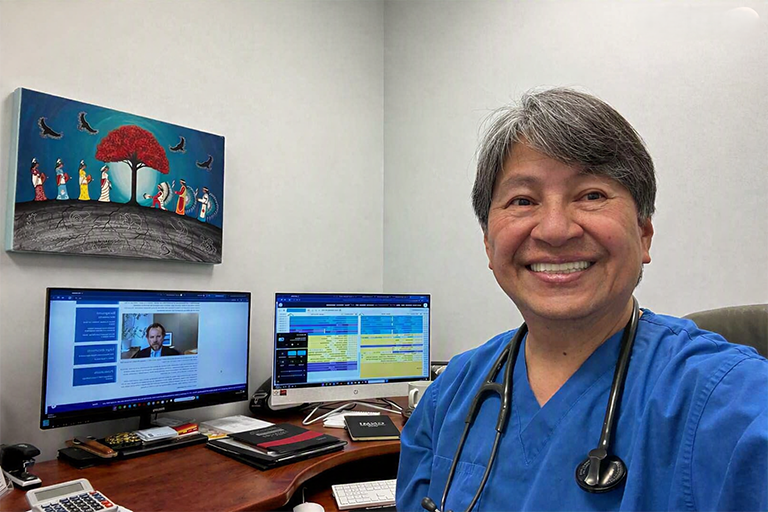
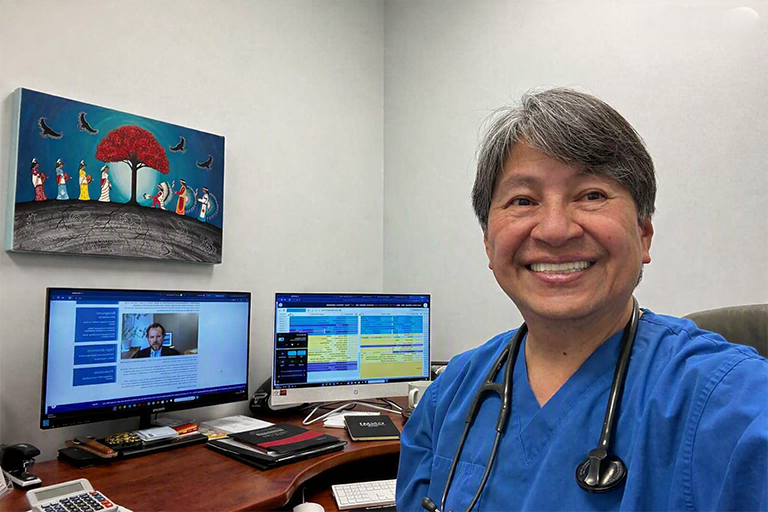
Today, he serves on staff within the same program, helping train future generations of physicians.
Healing and Teaching
More than two decades after beginning his medical career in Canada, Dr. Lapeña continues to find meaning in his work. He readily acknowledges that Canada’s healthcare system has imperfections. Emergency room waiting times can be lengthy, and administrative challenges remain.
Yet he appreciates a fundamental principle of the system: access to care. Patients receive necessary diagnostic procedures without worrying about financial ruin. Advanced imaging studies such as MRIs and CT scans are available when medically indicated. Treatment costs are largely covered through provincial healthcare programs.
Even prolonged stays in intensive care units do not result in overwhelming hospital bills. “These are the benefits Canadian citizens get from paying taxes,” he explains.
Still, when asked about his greatest accomplishment, he does not mention awards, status, or professional recognition.
His answer is simple. “Being able to help patients daily.”
Another source of pride comes from mentoring young doctors. As a Family Medicine Preceptor, he has helped train countless residents who now serve patients in communities across Canada and beyond.
For him, caring for patients and guiding future physicians represent equally meaningful forms of service.
The Pull of Home
Despite decades in Canada and the privileges that came with a successful career, Bansalan remains deeply rooted in Dr. Lapeña’s heart.
He misses family gatherings and conversations with childhood friends. He misses the familiar atmosphere of provincial life. He misses the simple pleasures that only home can provide.
There is food from local carinderias. There are the tropical fruits he grew up enjoying: durian, marang, and mangosteen. There is the relaxed pace of community life that cannot be replicated elsewhere.
His affection for home explains why returning through medical missions remains important. For him, these missions are not charity. They are expressions of gratitude. They are opportunities to give back to the town that helped shape his character, values, and aspirations.
Returning the Gift
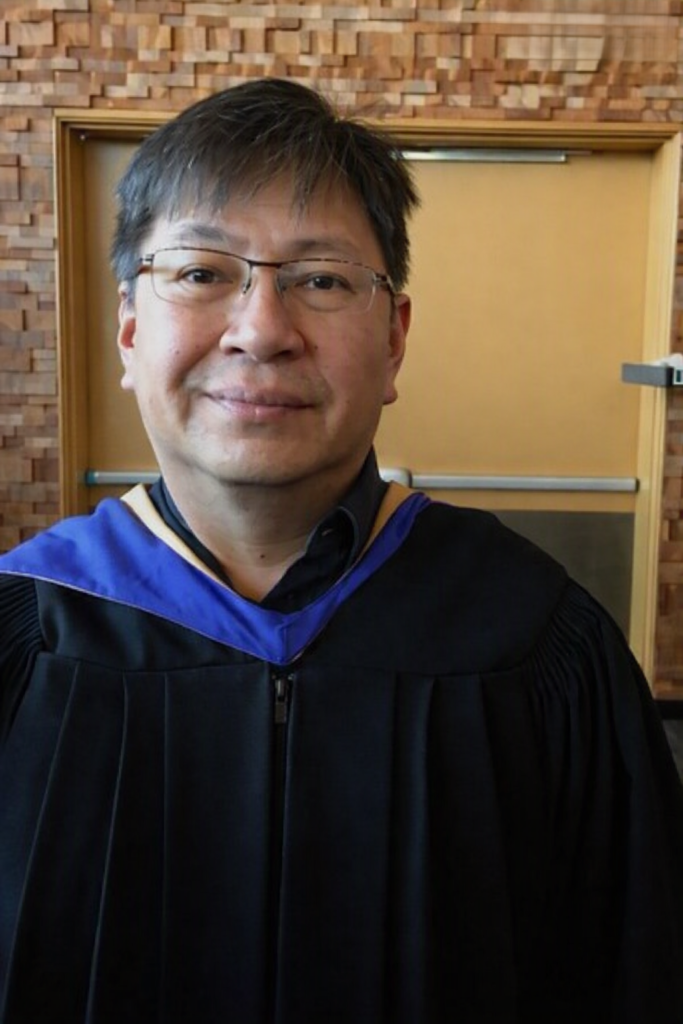
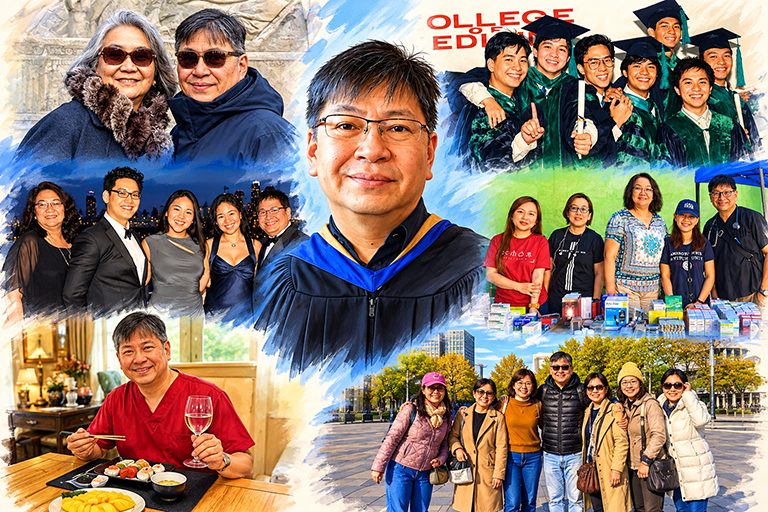
The image of Dr. Hilario S. Lapeña handing medicine to a tuberculosis patient captures the essence of his life’s journey. It is the story of a boy from Bansalan who dreamed of becoming a doctor long before he fully understood what medicine was.
It is the story of a son who endured heartbreaking losses in pursuit of his calling. It is the story of an immigrant who started over in a foreign country and succeeded against tremendous odds.
Most importantly, it is the story of a physician who never lost sight of why he chose medicine in the first place.
In an age when achievement is often measured by wealth, prestige, or professional titles, Dr. Lapeña offers a different definition of success: the ability to improve the life of another person.
His advice reflects the wisdom gathered from decades of healing others and navigating life’s challenges. “Prevention is always better than treatment. Live a healthy, active, balanced life. Stay away from negative emotions and toxic surroundings. Be happy and live life to its fullest. Carpe Diem.”—###







Leave a Reply