

YOUR LUNGS AFTER VAPING
World COPD Day is November 18. Here’s what you need to know about vapes, cigarettes and the lung disease that steals your breath.
By Marie Barrientos-Regala, MD
Q: Ano ba ang COPD?
A: COPD, or chronic obstructive pulmonary disease, is a long-term lung disease that makes it hard to breathe. It includes emphysema, in which the air sacs of the lungs are damaged, and chronic bronchitis, in which the airways are inflamed and produce too much mucus. Symptoms include breathlessness, especially with activity, a chronic cough and frequent chest infections. It usually develops slowly over many years and is often diagnosed late.
Q: What causes it?
A: Smoking is the leading cause. But in countries like the Philippines, other causes matter too: smoke from cooking with wood or charcoal in poorly ventilated homes, outdoor air pollution, occupational dust and fumes, a history of tuberculosis, and childhood lung infections.
Q: Is vaping safer than smoking?
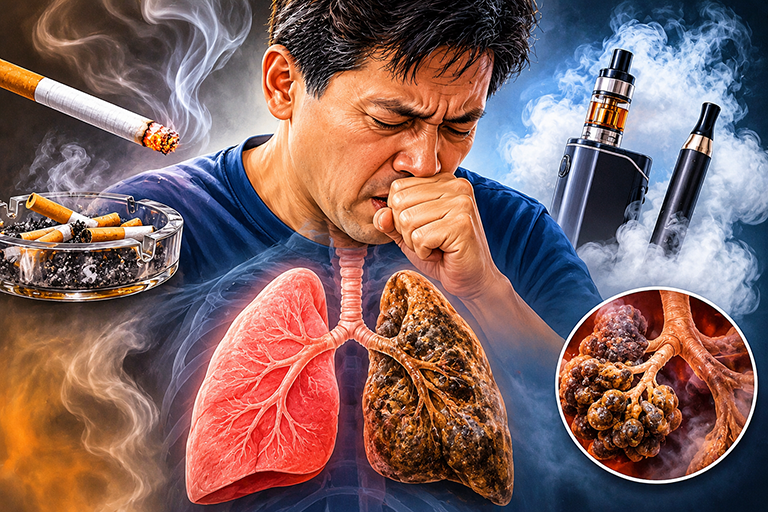
A: The DOH has said clearly that vaping is not safer than smoking. Vapes deliver nicotine, which is highly addictive and raises heart rate and blood pressure, along with other chemicals and fine particles that can irritate and inflame the airways. Studies have linked vaping to coughing, wheezing and worsened asthma, and in 2019, a wave of severe lung injuries linked to vaping products (known as EVALI) was reported in the United States. In 2024, the DOH and the Philippine General Hospital reported what they described as the country’s first death linked to vaping. Because vapes are relatively new, their long-term effects — including on COPD — are still being studied.
Q: Isn’t vaping a good way to quit smoking?
A: Some people use vapes to try to quit cigarettes, but many end up using both — “dual use” — which doesn’t reduce harm much. There are proven ways to quit, including counseling and approved stop-smoking medicines. The DOH Quitline (1558) offers free help. Talk to your doctor about the best approach for you.
Q: Why is youth vaping such a concern?
A: Young people are especially vulnerable to nicotine addiction, and nicotine can affect the developing brain. Flavors and attractive designs make vapes appealing to teenagers. The Global Youth Tobacco Survey found significant e-cigarette use among Filipino students aged 13 to 15, and teachers and parents report vaping even in schools. The law prohibits selling vapes to minors.
Q: How is COPD diagnosed?
A: With a simple breathing test called spirometry, which measures how much air you can blow out and how fast. Anyone over 40 with a history of smoking, vaping, or long exposure to smoke or dust who has breathlessness, chronic cough or frequent chest infections should ask their doctor about it.
Q: Can it be treated?
A: COPD can’t be cured, but it can be managed. Quitting smoking and vaping is the single most important step. Inhalers can open the airways and reduce flare-ups. Pulmonary rehabilitation — supervised exercise and breathing training — improves breathlessness and quality of life. Flu and pneumococcal vaccines help prevent infections that can trigger dangerous flare-ups.
Talking to your teen about vaping: Ask, don’t lecture. Share facts about nicotine addiction. Model the behavior you want to see. And let them know they can come to you for help if they want to quit.






Leave a Reply