
World Osteoporosis Day is on October 20. Here’s what every adult over 50 should know.
By Reuben Ricallo
Q: Ano ba talaga ang osteoporosis? Bakit tinatawag itong “silent disease”?
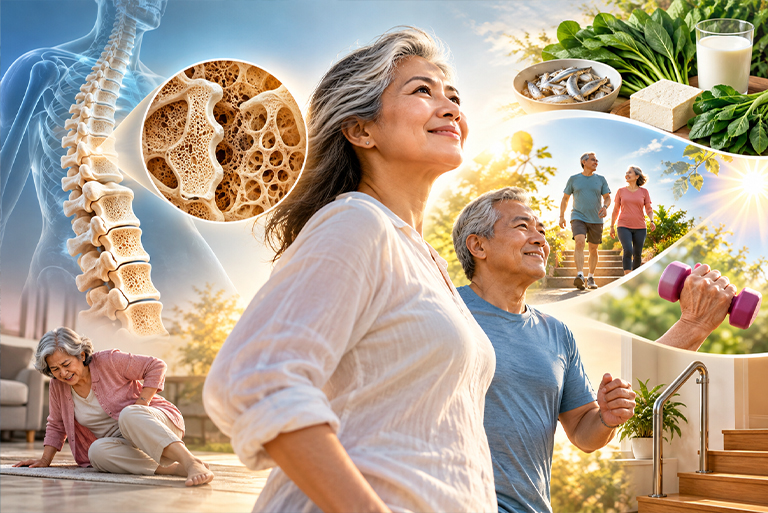
A: Osteoporosis is a condition in which bones lose density and quality, becoming thin, porous and fragile. It’s called silent because it usually causes no symptoms at all until a bone breaks. For many people, the first sign is a fracture of the wrist, spine or hip from a fall that wouldn’t have hurt a younger person — sometimes from something as minor as bending to pick up a bucket or stepping off a curb.
Q: Who is most at risk?
A: Women after menopause are at highest risk, because the drop in estrogen speeds up bone loss. But men are not exempt. The International Osteoporosis Foundation estimates that worldwide, about one in three women and one in five men over 50 will have a fracture related to osteoporosis. Other risk factors include a family history of hip fracture, a slim build, smoking, heavy drinking, long-term use of steroid medicines, early menopause, and conditions like rheumatoid arthritis and some thyroid disorders.
Q: How is it diagnosed?
A: The standard test is a bone density scan called DXA (dual-energy X-ray absorptiometry). It’s quick and painless and uses very little radiation. Many guidelines recommend screening for women 65 and older, and earlier for those with risk factors. Men with risk factors should also ask their doctor. If you have already had a fracture from a minor fall after age 50, you should be evaluated — that fracture is a warning sign.
Q: Why is a hip fracture such a big deal?
A: Because it changes lives. Many older adults never regain the independence they had before a hip fracture, and studies show that a significant proportion die within the following year, often from complications like pneumonia, blood clots and the effects of being bedridden. Preventing that first fracture, and especially the second, is one of the most valuable things we can do for our parents and grandparents.
Q: Ano ang puwedeng gawin para maiwasan ito?
A: Build and protect bone throughout life:
• Get enough calcium from food — dilis, small fish eaten with bones, tokwa, dark leafy greens like malunggay and kangkong, and milk or fortified alternatives.
• Make sure you get enough vitamin D. Sunlight helps, but many Filipinos, especially office workers and older adults who stay indoors, are still low. Ask your doctor whether you need a supplement.
• Do weight-bearing and muscle-strengthening exercise: brisk walking, climbing stairs, light resistance training.
• Don’t smoke, and limit alcohol.
• Prevent falls at home: good lighting, non-slip mats in the bathroom, grab bars, and clearing clutter from walkways.
Q: Is medication necessary?
A: For people diagnosed with osteoporosis or at high risk of fracture, effective medicines are available that slow bone loss or help build new bone. They can significantly lower the risk of fractures. Which one is right depends on your age, kidney function, other conditions and risk level, so this is a decision to make with your doctor. Don’t stop prescribed treatment on your own.
Quick self-check: Have you lost more than 3 cm (about an inch) of height? Do you have a curved upper back? Have you broken a bone from a minor fall after 50? If yes to any, ask your doctor about a bone density test.





Leave a Reply