


By Dr. Tony Leachon
Ensuring Safe Drinking Water: Lessons from WHO Guidelines
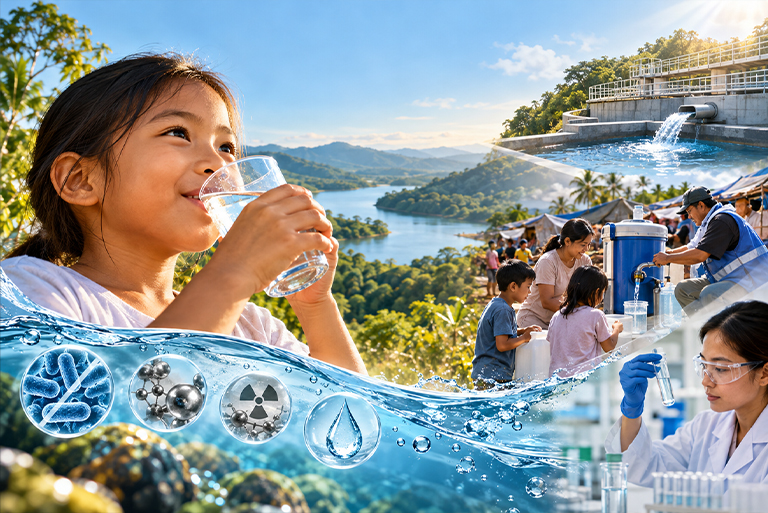
Access to clean and safe drinking water is a fundamental human right and a cornerstone of public health. The World Health Organization’s Guidelines for Drinking‑Water Quality provide a global benchmark for what constitutes safe water, emphasizing that it must be free from harmful microbes, toxic chemicals, and radiological contaminants, while remaining acceptable in taste, odor, and appearance. These standards are not merely technical—they embody the moral imperative to protect communities from preventable disease.
At the heart of WHO’s approach are three pillars: health‑based targets, water safety plans, and independent surveillance. Health‑based targets set measurable goals for microbial and chemical safety, ensuring that water supplies meet thresholds protective of human health.
Water safety plans adopt a risk‑management framework, requiring vigilance from “catchment to consumer” so that hazards are identified and controlled at every stage. Independent surveillance, meanwhile, ensures accountability, with public health authorities verifying that water systems comply with established standards.
In practical terms, WHO guidelines stress that safe water must contain no detectable E. coli in 100 mL samples, must remain below threshold values for contaminants such as arsenic, lead, and nitrates, and must avoid radiological exposure exceeding 0.1 mSv per year.
Beyond these technical measures, WHO underscores the importance of acceptability—water must be clear, palatable, and free from objectionable odor, because trust in water quality is essential for sustained use.
Emergency interventions, such as filtration kits distributed by the DSWD, can play a vital role in disaster response. These kits, when properly maintained, can meet WHO’s microbial safety standards and provide immediate relief to affected populations. Yet WHO cautions that such solutions are temporary. Long‑term safety requires systematic monitoring, filter replacement, and community education to ensure that households understand both the benefits and limitations of these technologies.
What is glaring, however, is the absence of explicit validation or endorsement from the Department of Health (DOH) and the Department of Science and Technology (DOST). These agencies are mandated to safeguard public health and ensure scientific rigor. Their silence leaves a gap in public trust, as communities deserve assurance that emergency water solutions meet international standards. Without DOH and DOST’s technical input, the public cannot be certain that these kits consistently comply with WHO’s criteria for safe drinking water.
Ultimately, the WHO guidelines remind us that water safety is not only a matter of engineering but of governance, vigilance, and equity. Safe drinking water protects against diarrheal disease, reduces the burden of chronic exposure to toxins, and strengthens resilience in times of crisis.
For the Philippines, adherence to these standards—backed by the active involvement of DOH and DOST—is both a scientific necessity and a moral responsibility: to guarantee that every citizen, regardless of circumstance, can drink water without fear.








Leave a Reply