

By Henrylito D. Tacio
With earthquakes hitting the Philippines and those located in the Ring of Fire, Filipinos by now are familiar with tsunamis. But that’s the word being used by Medscape Medical News to describe the number of prostate cancer in the coming years.
“Prostate cancer tsunami coming, experts caution.” That’s the headline of the feature written by Howard Wolinsky, a medical writer from Chicago.
“An ‘inevitable’ global surge in prostate cancer is coming, with a worldwide doubling of cases to 2.9 million and an 85% increase in deaths to nearly 700,000 by the year 2040,” wrote Wolinsky.
Source of the information was the Lancet Commission on Prostate Cancer, whose report was released recently at the European Association of Urology Congress in Paris, France.
Already, the acceleration is underway in high-income countries such as the United States and the United Kingdom “but will gain momentum in low- and medium-income countries.”
“There is a big rise in the high-income countries,” said Dr. Nick James, lead author of the Lancet report and professor of prostate and bladder cancer research at The Institute of Cancer Research, in London. “But we’re going to see a big rise in the number of 50-, 60-, 70-year-olds in the coming decades in the poorer countries, and with that comes more prostate cancer.”
Dr. James said that the surge, in part, is a medical success story. “Prostate cancer paradoxically is a problem baked into the biology. Men get prostate cancer as they age,” he was quoted as saying.
An AFP report quoted researchers behind the study who said the rise in cases is linked to the increased life expectancy and changes in the age pyramid around the world.
“As life expectancy improves in developing countries, the number of prostate cancer cases also increases,” the researchers said.
The Geneva-based World Health Organization (WHO) cited prostate cancer as the fourth most common form of cancer – after breast, lung, and colorectal (colon and rectum).
In the Philippines, prostate cancer is the third most common form of cancer among Filipino men. The International Agency for Research and Cancer estimated that roughly 12% of Filipino men are “suffering from prostate cancer.”
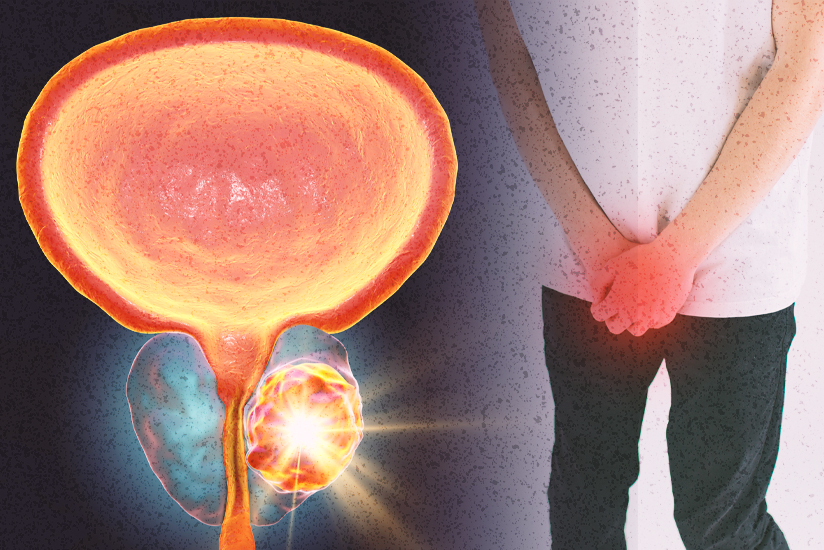
The prostate is a part of the male reproductive system, which includes the penis, prostate, seminal vesicles, and testicles. “The prostate is located just below the bladder and in front of the rectum,” the US Centers for Disease Control and Prevention (CDC) states. “It is about the size of a walnut and surrounds the urethra (the tube that empties urine from the bladder). It produces fluid that makes up a part of semen.”
As a man ages, the prostate tends to increase in size. This can cause the urethra to narrow and decrease urine flow. This is called benign prostatic hyperplasia, and it is not the same as prostate cancer. Men may also have other prostate changes that are not cancer.
Prostate cancer, in which prostate cells can become malignant, is another prostate disease. “Prostate cancer is a relatively silent disease in its early stages,” says Dr. Josefino Castillo, surgeon and head of St. Luke’s Medical Center (SLMC) Institute of Urology in Global City.
However, in the later course of the disease, some symptoms may arise. The CDC said that if you have any of the following symptoms, be sure to see your doctor right away: difficulty starting urination, weak or interrupted flow of urine, urinating often (especially at night), trouble emptying the bladder completely, pain or burning during urination, blood in the urine or semen, pain in the back, hips, or pelvis that doesn’t go away, and painful ejaculation.
“Keep in mind that these symptoms may be caused by conditions other than prostate cancer,” the CDC reminded.
Fortunately, there are “ways to screen even asymptomatic patients for the disease, to catch the disease in early stages and prevent progression,” Dr. Castillo said.
Given the prevalence of this disease and the ways it can be caught early before progression, “Filipino men need reliable healthcare partners to guide them through health education, screening, diagnosis, and treatment,” urged St. Luke’s Institute of Urology.
The CDC said there is no standard test to screen for prostate cancer. However, there are two tests that are commonly used to screen for prostate cancer: prostate specific antigen (PSA) test and digital rectal examination (DRE).
A blood test called a prostate specific antigen (PSA) test measures the level of PSA in the blood. PSA is a substance made by the prostate. The levels of PSA in the blood can be higher in men who have prostate cancer. The PSA level may also be elevated in other conditions that affect the prostate.
“Patients who are between 45 to 75 years old or those with a family history of cancers and prostate diseases are highly recommended to undertake PSA tests and consultations with a urologist to avoid any potential progression of prostate cancer,” the St. Luke’s Institute of Urology suggested.
Meanwhile, DRE is a test to check the prostate gland for any problems or signs of cancer. It involves inserting a gloved, lubricated finger into the rectum to feel the prostate. The doctor will look for any abnormalities, such as hardness, lumps, or irregular shape. The DRE is not a completely accurate test, as it cannot feel the whole prostate or detect all cases of cancer.
The Medical City also recommends Transrectal ultrasound (TRUS) guided biopsy. It is used to detect abnormal prostate growth by guiding a needle to get tissue from the abnormal prostate. The acquired tissue is then examined under the microscope to determine the presence of cancer.
The Philippine Urological Association recommends annual screening with DRE and PSA for men, especially for those presenting the risk factors associated with prostate cancer.
Risk factors include age (more common in older men, with the risk increasing significantly after the age of 50) family history (those with family members who suffer or previously suffered from this disease have a higher risk of getting it due to shared genes or environmental factors) and lifestyle (unhealthy habits like smoking, obesity, and a diet high in red meat and fat).
“Remember, early intervention can significantly improve the prognosis and quality of life for you or your loved ones facing this condition,” The Medical City pointed out. – ###