


In the age of social media, it’s easy to believe that smiling photos mean everything is fine. But sometimes, behind the brightest posts are stories of quiet pain and silent battles. The story of Emman Atienza reminds us that kindness and genuine connection matter more than what we see online.
By Ana Taganile
These days, it’s easy to believe that the people who look the happiest online are truly okay. We see smiles, travels, celebrations—and we assume all is well. But the story of Emman Atienza, daughter of TV personality Kim Atienza, is a painful reminder that social media often hides more than it reveals.
Emman was known for her creativity, her lighthearted energy, and her connection with others. To many, she seemed confident and full of life. Yet her untimely passing opened the nation’s eyes to a quiet truth—that even those who appear strong and cheerful may be silently struggling.
In the digital age, many young people feel the need to keep up appearances. Online, everyone seems successful, beautiful, and content. It creates a silent competition that fuels anxiety and self-doubt. The pressure to look okay, to stay positive, or to appear “unbothered” can become exhausting.

Social media has become both a refuge and a trap. It allows people to express themselves, but it also sets unrealistic standards. For some, posting happy moments becomes a coping mechanism—an effort to convince themselves that things are okay. But when the screen turns off, the loneliness and pain often remain.
It’s heartbreaking how many people choose silence over honesty when they’re in pain. Some fear being judged or misunderstood. Others worry about becoming a burden. While faith and resilience are part of who we are, emotional pain needs more than just strength—it needs understanding, conversation, and compassion. Emman’s story reminds us that even those who seem surrounded by love can still feel unseen in their pain.
We don’t need grand gestures to help. Sometimes, it’s the simple things—checking in, listening without judgment, or offering quiet presence—that make the biggest difference. A genuine “Kamusta ka talaga?” can mean the world to someone who feels invisible.
The Need for Awareness and Safe Spaces
The challenge today is not only about the use of social media, but about how we nurture emotional honesty in an age of filters. Many young people measure their worth by likes and validation, unaware that comparison slowly erodes confidence. Schools, workplaces, and families must become safe spaces where it’s okay to say, “I’m not okay today,” without fear of shame or dismissal.
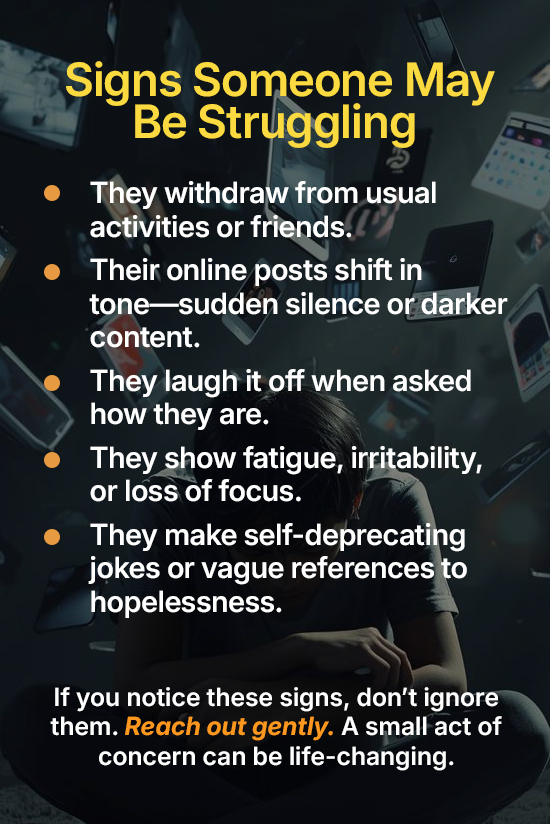
More conversations about mental health should be normalized—not just in hospitals or clinics but in classrooms, offices, and dining tables. When we talk about our emotions, we loosen their grip on us. When we listen to others with empathy, we remind them they’re not alone.
As we scroll through our feeds each day, let’s pause and remember that behind every smiling photo is a story we may never know. Let’s choose compassion over judgment, and kindness over criticism. Because one thoughtful message, one moment of listening, one sincere word of care can quietly save a life.
If you’re struggling silently, please know this: you are not alone. You deserve to be heard, and there is help available. Talk to someone you trust, reach out to a friend, or contact a mental health professional. Healing begins the moment you let someone in.
Let Emman’s story remind us all: it costs nothing to be kind, but it can mean everything to someone who’s hurting.
Faith Reflection: The Healing Power of Presence
Sometimes, healing doesn’t begin with solutions—it begins with presence. God works quietly through human kindness: a friend who checks in, a teacher who listens, a stranger who smiles.
“Carry each other’s burdens, and in this way, you will fulfill the law of Christ.” — Galatians 6:2
“Even the brightest smiles can hide the deepest struggles.”