


By Rebecca L. Castillo, MD
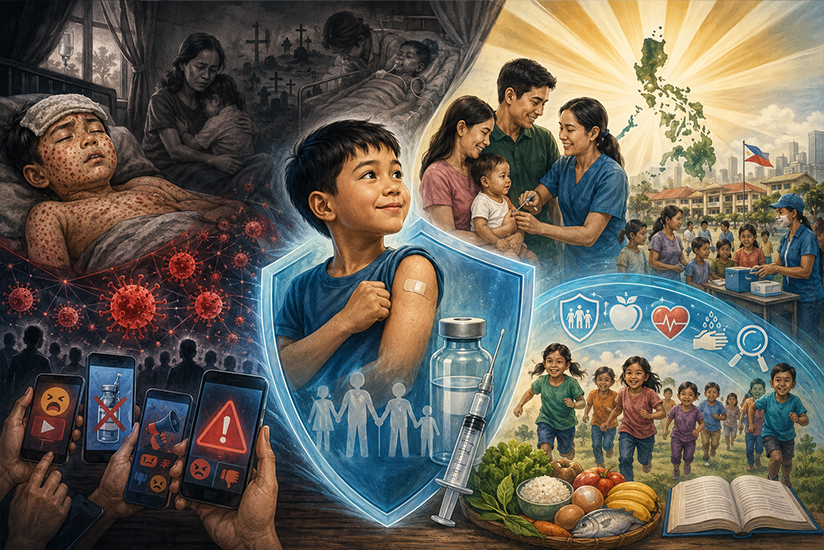
For many younger physicians, measles once seemed like a disease from old medical textbooks—a relic of another era before modern vaccines transformed public health. Yet alarm bells are ringing again worldwide as measles outbreaks resurface in communities with declining vaccination rates. In the Philippines, where crowded urban settings, misinformation, and pandemic-related immunization disruptions intersect, the threat is no longer theoretical. The virus is quietly finding vulnerable children once more.
“When vaccination rates fall, measles does not knock politely at the door. It enters swiftly, spreads silently, and punishes the most vulnerable first.”
There was a time when measles was almost considered “ordinary.” Many older Filipinos remember childhood stories of fever, rash, cough, and darkened rooms because bright light hurt the eyes. Some survived uneventfully. Others did not.
Before widespread vaccination, measles killed millions of children globally each year. It was not merely a harmless childhood inconvenience. It was one of humanity’s deadliest infectious diseases.
Then science intervened.
Vaccines changed history.
Through sustained immunization campaigns, measles deaths worldwide dramatically declined. Entire generations of physicians trained in hospitals without regularly seeing severe measles complications such as encephalitis, pneumonia, blindness, or devastating malnutrition-related infections.
Unfortunately, complacency may now be undoing decades of progress.
The Dangerous Rise of Vaccine Hesitancy
One of the most pressing infectious disease concerns today is not necessarily a new virus—but the erosion of trust in vaccines themselves.
Globally, vaccine hesitancy has become one of the World Health Organization’s major public health concerns. Social media misinformation, fear-driven messaging, pseudoscience, and conspiracy theories have spread faster than many viruses themselves.
The COVID-19 pandemic paradoxically worsened the situation for some communities. While vaccines saved millions of lives, the politicization of public health also intensified skepticism toward immunization programs.
In the Philippines, lingering fears from past vaccine controversies continue to affect parental confidence. Some parents now delay or skip routine childhood immunizations altogether.
That creates dangerous immunity gaps.
And measles exploits those gaps mercilessly.
Why Measles Spreads So Easily
Measles is among the most contagious viruses known to medicine.
If one infected child enters a room of unvaccinated individuals, up to 90% of susceptible people may become infected. The virus can linger in the air even after the infected person has left.
Its early symptoms may deceptively resemble an ordinary viral illness:
- Fever
- Runny nose
- Cough
- Red eyes
- Fatigue
Then comes the classic rash.
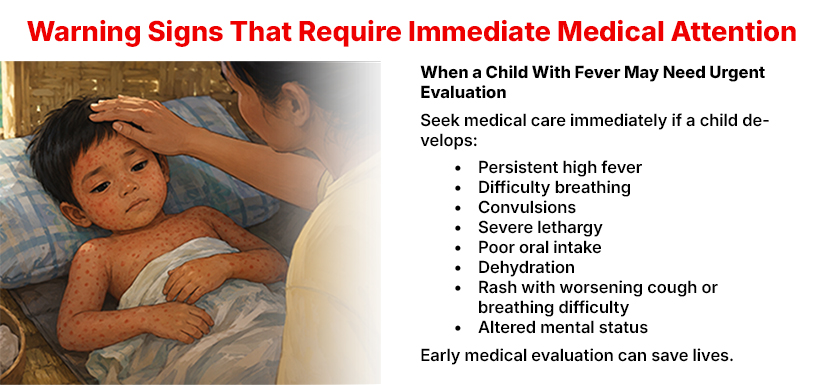
But by the time the rash appears, the patient may already have infected many others.
In crowded urban communities, schools, evacuation centers, public transportation systems, and densely populated barangays, transmission can become explosive.
Why Children Remain Most Vulnerable
Malnourished children are particularly at risk for severe measles complications.
The virus weakens the immune system dramatically—even after apparent recovery. Some experts describe measles as causing “immune amnesia,” where the body partly forgets previous immune protections against other infections.
This means a child recovering from measles may become vulnerable to pneumonia, diarrhea, tuberculosis, or other infections for months afterward.
In severe cases, measles may cause:
- Pneumonia
- Brain swelling (encephalitis)
- Permanent neurologic damage
- Blindness
- Death
This is why physicians become deeply concerned when vaccination rates decline even modestly.
The Pandemic’s Hidden Aftershock
One underappreciated consequence of the COVID-19 pandemic was disruption of routine immunization programs.
During lockdowns, many parents postponed pediatric visits. Some communities lost access to healthcare services temporarily. Outreach vaccination programs slowed down.
As a result, millions of children worldwide missed scheduled vaccines.
Public health experts fear this has created a “perfect storm” for outbreaks—not only of measles, but also pertussis (whooping cough), polio, and other vaccine-preventable diseases.
Infectious diseases often behave opportunistically. They wait patiently for immunity gaps.
Then they return.
The Social Media Problem
Perhaps one of the strangest realities of modern medicine is this:
A mother today may fear a vaccine more than the disease it prevents—not because of scientific evidence, but because of a viral Facebook post or TikTok video.
Fear spreads emotionally.
Science spreads slowly.
Unfortunately, misinformation often sounds more dramatic than evidence-based medicine.
A sensationalized anecdote may emotionally overpower decades of scientific data in the public mind.
This is why healthcare professionals must communicate not only with accuracy—but also with empathy, patience, and clarity.
Public trust is now as important as medical technology itself.
Lessons We Must Not Forget
The success of vaccines ironically became their greatest vulnerability.
When diseases disappear from public memory, people begin questioning the need for prevention.
Younger parents who have never witnessed a child dying from measles may underestimate its dangers. Ironically, they are protected precisely because previous generations accepted vaccination programs.
Public health victories become invisible over time.
Yet infectious diseases never truly disappear. They simply wait for opportunities.
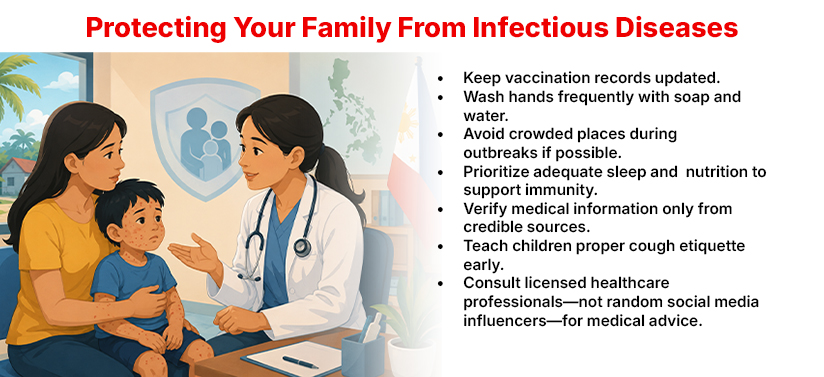
What Families Can Do
The good news is that measles remains highly preventable.
Parents should ensure children receive complete age-appropriate immunizations based on national guidelines. Adults uncertain about their vaccination history should consult their physicians.
Communities should also strengthen:
- School vaccination awareness
- Public health education
- Nutrition programs
- Early outbreak detection
- Evidence-based communication campaigns
Most importantly, society must learn how to distinguish scientific evidence from online noise.
Because viruses do not care about opinions.
They only look for susceptible hosts.
Final Reflection
Modern medicine has accomplished extraordinary things. We have antibiotics, antiviral drugs, advanced ICUs, and sophisticated diagnostics. Yet one of the most powerful lifesaving tools remains remarkably simple and inexpensive: vaccination.
The tragedy is that many infectious disease outbreaks today are no longer caused by lack of scientific knowledge—but by loss of public trust.
History has already shown us what measles can do when society lets its guard down.
We should not have to relearn those lessons the hard way.
References
- World Health Organization. Measles Fact Sheet.
- Centers for Disease Control and Prevention (CDC). Measles (Rubeola).
- UNICEF Philippines. Routine Immunization and Child Health Reports.
- Mina MJ, et al. Measles virus infection diminishes preexisting antibodies that offer protection from other pathogens. Science. 2019.
- World Health Organization. Ten threats to global health.
- Department of Health Philippines. National Immunization Program updates.






Leave a Reply