
Understanding Frailty Before It Steals Independence
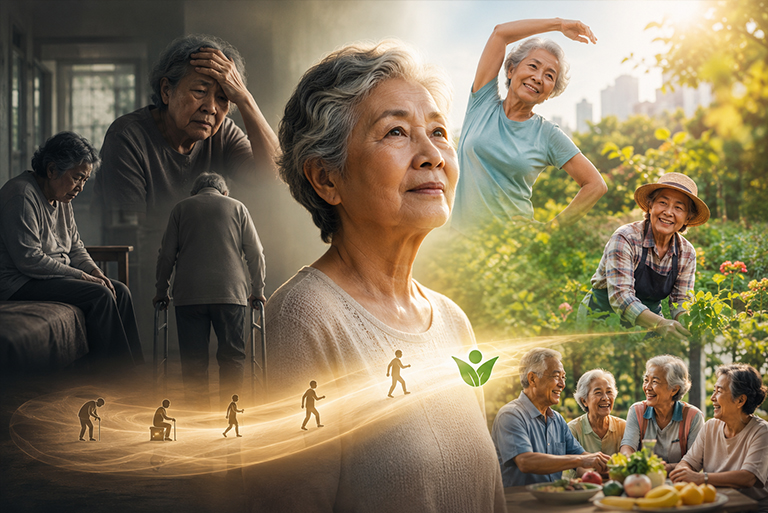
What if the greatest threat to healthy aging isn’t a heart attack or stroke—but the gradual loss of strength, resilience, and independence that often begins years before disability becomes obvious?
By Rafael R. Castillo, MD
One of medicine’s greatest triumphs is that people are living longer than ever before. Yet longevity alone is no longer enough. Across the world—and increasingly in the Philippines—millions of older adults are experiencing frailty, a medical syndrome marked by declining strength, slower movement, reduced physiological reserve, and increased vulnerability to illness and injury.
Once dismissed as an inevitable consequence of aging, frailty is now recognized as a condition that can often be delayed, prevented, or even reversed. Understanding frailty may be one of the most important health conversations of our time—not only for older adults, but for every Filipino who hopes to grow older with vitality, dignity, and purpose.
Part I
Two Seventy-Five-Year-Olds
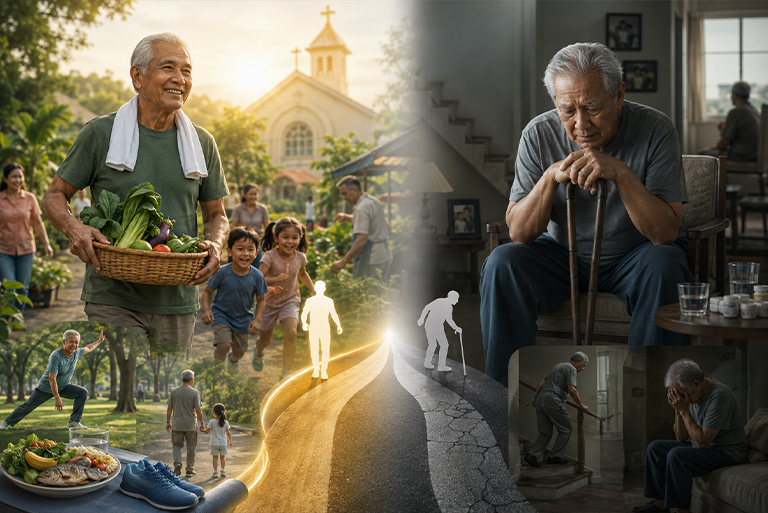
Antonio rises before sunrise every morning.
At seventy-five, he still tends a small vegetable garden behind his home. He walks briskly to the neighborhood market carrying reusable bags, plays with his grandchildren in the afternoon, and serves as a volunteer in his church on weekends. His blood pressure is controlled. His diabetes is well managed. He still laughs easily.
Across town lives Roberto. He is seventy-seven. Only two years older. Yet climbing five steps leaves him breathless. Rising from a chair requires both hands. He has stopped attending family gatherings because walking has become exhausting. Last year he fell while crossing the street. Since then, he has become increasingly fearful of leaving home.
Antonio and Roberto are close in age. But they are aging very differently.
Most people assume the explanation is simply age. Modern geriatric medicine tells us otherwise.
The difference has a name.
It is called frailty.
The New Challenge of Modern Medicine
For centuries, medicine’s greatest challenge was helping people survive.
Today, thanks to vaccines, antibiotics, safer surgery, improved sanitation, and advances in cardiovascular care, millions of people are living decades longer than previous generations.
This remarkable success has created a new question. How do we help people remain healthy throughout those additional years?
Living longer does not automatically mean living better. Many older adults spend the final years of life coping with falls, weakness, disability, dependence, repeated hospitalizations, and loss of independence.
These conditions are often accepted as unavoidable consequences of aging. Yet many are neither inevitable nor irreversible.
Frailty has emerged as one of the most important concepts in modern geriatric medicine because it helps explain why two people of the same chronological age may have dramatically different health trajectories.
Chronological age tells us how many birthdays we have celebrated. Frailty tells us how much physiological reserve remains.
Frailty Is Not Simply Old Age
One of the greatest misconceptions surrounding aging is the belief that frailty and old age are synonymous. They are not.
Many individuals remain vigorous well into their eighties and nineties. Others become frail in their sixties. Frailty is a clinical syndrome, not a birthday.
It reflects the gradual decline of multiple physiological systems, reducing the body’s ability to withstand stress.
A minor infection that a younger person recovers from within days may leave a frail older adult bedridden for weeks. A seemingly minor fall may result in prolonged hospitalization. Even emotional stress or changes in medication may trigger significant deterioration.
This reduced resilience distinguishes frailty from normal aging.
Healthy aging allows the body to adapt. Frailty limits that adaptability.
The Body’s Reserve
Imagine two cars beginning a long journey. One has a full tank of fuel, well-maintained tires, and a powerful engine. The other has worn tires, a weakening battery, and little fuel remaining.
Both may travel the same road. But when unexpected obstacles appear, one continues with little difficulty while the other struggles.
The human body possesses a similar reserve. Throughout adulthood, our organs maintain excess capacity.
The heart pumps more efficiently than immediately necessary. The lungs provide reserve ventilation. The kidneys filter more blood than daily life demands. Muscles generate more strength than routine activities require.
Frailty develops as these reserves gradually diminish across multiple organ systems. Eventually, even relatively minor challenges exceed the body’s remaining capacity.
Recovery becomes slower. Complications become more frequent. Independence becomes increasingly fragile.
The Demographic Revolution
The Philippines is undergoing one of the most profound demographic transitions in its history. Life expectancy has increased dramatically compared with previous generations.
Advances in medicine have reduced deaths from infectious diseases, improved survival after heart attacks and strokes, and expanded access to chronic disease management.
These achievements deserve celebration. Yet they also bring new responsibilities.
An aging population requires healthcare systems designed not only to treat disease but also to preserve function.
Traditional medicine has often focused on diagnosing illnesses one organ at a time. Frailty reminds us that healthy aging depends upon the interaction of the entire person—-
Strength. Balance. Nutrition. Memory. Vision. Hearing. Mood. Sleep. Social connection. Purpose.
Each influences the others. Healthy aging cannot be divided into separate specialties. It must be approached as a whole.
The Forgotten Goal
Many people define successful aging as simply living longer. But longevity without independence is an incomplete victory.
Ask most older adults what they fear. Few mention wrinkles. Many mention becoming dependent on others. They worry about losing the ability to walk independently. To prepare meals. To attend church. To travel. To read to grandchildren. To remain useful. To continue serving.
In other words, they fear losing function more than accumulating birthdays. This is why modern geriatric medicine increasingly emphasizes healthspan rather than lifespan.
Lifespan measures how long we live. Healthspan measures how well we live.
The goal is no longer merely to add years to life. The goal is to add life to years.
A New Way of Thinking About Aging
For much of medical history, physicians were trained to identify diseases. Frailty challenges us to identify vulnerability before disability develops.
Instead of asking,
“What disease does this patient have?”
we increasingly ask,
“How resilient is this person?”
That shift may seem subtle. It is, in fact, revolutionary. Because frailty often develops gradually, there is a precious window during which intervention can change its course.
Nutrition can improve. Muscle strength can increase. Balance can be restored. Medications can be optimized. Social isolation can be reduced. Falls can be prevented.
The earlier these changes occur, the greater the opportunity to preserve independence.
Hope, Not Hopelessness
Perhaps the most encouraging discovery in geriatric medicine is that frailty is not always permanent. Unlike chronological aging, frailty is dynamic.
People may become more frail. They may also become less frail.
Research from around the world has shown that appropriately prescribed resistance exercise, adequate protein intake, treatment of reversible medical conditions, medication review, better sleep, hearing and vision correction, nutritional support, and social engagement can all improve function—even among very old adults.
This is one of the most hopeful messages in modern medicine. Growing older is inevitable. Growing frail is not always.
“The greatest achievement of modern medicine is no longer helping people live longer. It is helping them live longer with strength, independence, and purpose.”
PART II
The Biology of Resilience
Why Some People Grow Older—While Others Grow Frail
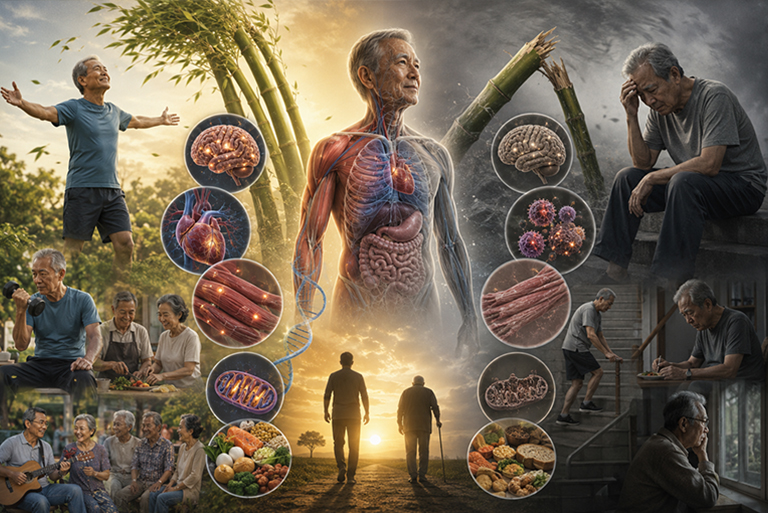
Imagine two bamboo trees standing beside each other during a typhoon. The first bends with the wind, then returns upright when the storm passes.
The second snaps under the same force. The difference is not simply strength. It is resilience.
The human body behaves much the same way.
Every day, we encounter physical and emotional “storms”—a viral infection, a fall, surgery, dehydration, emotional loss, or even a few days of bed rest.
A healthy body absorbs these stresses and recovers. A frail body struggles. Frailty, therefore, is not merely weakness. It is the gradual loss of resilience.
The Orchestra of Healthy Aging
Many people imagine aging as the slow failure of individual organs. The heart weakens. The kidneys decline. The joints wear out. The brain slows down.
Modern geriatric medicine paints a far more complex—and fascinating—picture.
Healthy aging depends upon dozens of biological systems working together like an orchestra. The muscles generate movement. The brain coordinates balance. The inner ear maintains equilibrium. The eyes provide orientation. The heart delivers oxygen. The lungs exchange gases. The kidneys regulate fluids.
Hormones coordinate metabolism. The immune system protects against infection. Nutrition fuels every cell.
When each section of the orchestra performs well, the music remains harmonious.
Frailty develops not because one instrument fails, but because many gradually lose their synchrony. The result is not simply illness. It is diminished reserve.
Muscle: The Forgotten Organ
Ask people which organ most determines healthy aging.
Most answer: The heart. The brain. Perhaps the lungs.
Rarely does anyone say: Skeletal muscle.
Yet muscle may be one of the most important organs of healthy aging. Far from serving only movement, skeletal muscle functions as a dynamic metabolic and endocrine organ.
It stores protein. It regulates blood glucose. It supports bone strength. It contributes to immune function. It produces signaling molecules known as myokines, which influence inflammation, metabolism, and even brain health.
Muscle is therefore much more than the machinery of movement. It is a guardian of resilience.
Unfortunately, beginning around the fourth decade of life, adults gradually lose muscle mass and strength unless they actively preserve it.
This process accelerates with inactivity, illness, poor nutrition, and hospitalization.
Sarcopenia: The Silent Muscle Disease
One of the most important discoveries in aging research has been the recognition of sarcopenia—the progressive loss of skeletal muscle mass, strength, and physical performance.
Unlike osteoporosis, which weakens bones, sarcopenia weakens the body’s engine.
It often develops quietly. A person notices that carrying groceries becomes more difficult. Climbing stairs requires greater effort. Walking slows. Standing from a chair becomes harder.
Eventually, balance deteriorates. Falls become more likely. Because these changes occur gradually, many people assume they are simply “getting old.”
In reality, sarcopenia is now recognized as a diagnosable medical condition and one of the principal biological drivers of frailty.
The encouraging news is that, unlike many aspects of aging, muscle remains remarkably responsive to intervention—even into advanced age.
Inflammaging: The Fire That Smolders
Aging is accompanied by another subtle process that researchers have termed inflammaging.
Rather than the dramatic inflammation seen during infection, inflammaging refers to a persistent, low-grade activation of the immune system over many years.
Imagine a small fire that never completely goes out. It rarely causes immediate damage. But over decades it gradually affects blood vessels, muscles, bones, the brain, and other organs.
Scientists believe this chronic inflammation contributes to many age-related conditions, including frailty, cardiovascular disease, diabetes, osteoporosis, and neurodegenerative disorders.
Healthy lifestyle habits—including regular physical activity, nutritious diets, adequate sleep, smoking cessation, and weight management—appear to reduce this inflammatory burden.
The Aging Immune System
Another hallmark of aging is immunosenescence, the gradual decline in immune function.
Older adults often respond less vigorously to infections and vaccinations than younger individuals. Recovery from illness may be slower.
The interaction between inflammaging and immunosenescence creates a paradox. The immune system becomes simultaneously less efficient and more chronically activated.
This imbalance contributes to vulnerability during periods of physiological stress. It also helps explain why seemingly minor infections can produce profound functional decline in frail older adults.
The Powerhouse Begins to Slow
Within every cell are tiny structures called mitochondria, often described as the body’s power plants.
They convert nutrients into the energy required for every heartbeat, every muscle contraction, and every thought.
Over time, mitochondrial function gradually declines. Cells become less efficient. Muscles tire more easily. Recovery after exertion slows.
Researchers now believe that preserving mitochondrial health through regular exercise, balanced nutrition, and control of chronic diseases may be one of the keys to maintaining vitality well into older age.
Hormones and Healthy Aging
Hormonal changes also influence frailty. With advancing age, levels of growth hormone, testosterone, estrogen, and other anabolic hormones gradually decline.
These changes contribute to reduced muscle protein synthesis, diminished bone density, and slower tissue repair.
Importantly, frailty is rarely caused by hormones alone. Rather, it emerges through the cumulative interaction of hormonal, inflammatory, nutritional, neurological, and musculoskeletal changes.
No single pathway explains everything. Frailty is truly a syndrome of interconnected systems.
Nutrition: More Than Calories
Many older adults consume enough calories but insufficient high-quality protein.
Others experience reduced appetite because of medications, dental problems, depression, or chronic illness.
The result is a gradual loss of lean muscle.
Nutrition during aging should therefore focus not only on quantity but also on quality.
Adequate protein, fruits, vegetables, whole grains, healthy fats, calcium, vitamin D, vitamin B12, and other essential nutrients support muscle maintenance, immune function, and bone health.
For older adults, every meal becomes an opportunity to preserve strength.
Movement Is Medicine
Perhaps the most remarkable discovery in aging research is this: Muscles continue responding to exercise throughout life.
A ninety-year-old who begins an appropriately supervised resistance-training program can still become stronger. Balance can improve. Walking speed can increase. Confidence can return. Falls may decrease. The human body retains an extraordinary capacity for adaptation.
Age slows progress. It does not eliminate it. This may be one of the most hopeful messages modern medicine has to offer.
Frailty Is Biology—But Biology Is Not Destiny
Genes influence how we age. So do environment, education, nutrition, physical activity, sleep, healthcare access, and social connection.
Frailty reflects biology. But biology is shaped by choices made every day. This understanding transforms healthy aging from passive acceptance into active preparation.
Growing older becomes not simply a matter of surviving longer, but of investing in resilience long before frailty appears.
“Frailty is not simply the passage of time. It is the gradual loss of resilience—and resilience can often be strengthened.”
PART III
Can Frailty Be Prevented?
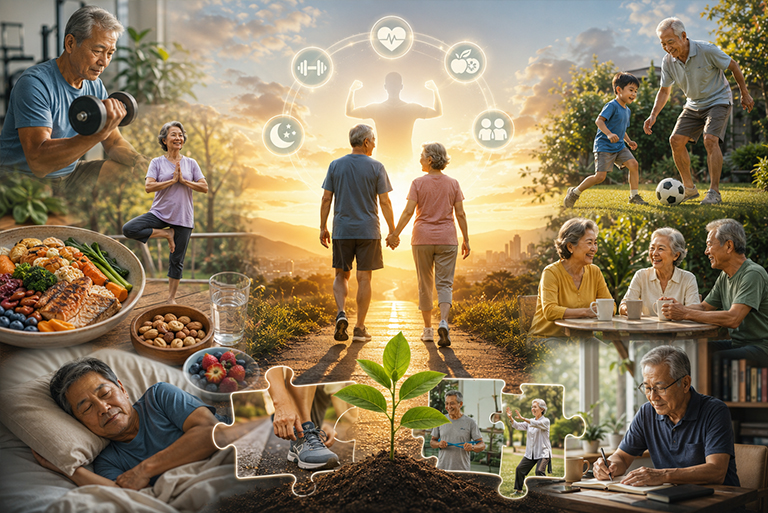
The Remarkable Science of Staying Strong
Perhaps the greatest misconception about frailty is that it appears suddenly. It does not
Frailty usually develops quietly over many years. Long before an older adult becomes dependent on others, subtle changes begin to appear.
Walking becomes slightly slower. Carrying groceries requires more effort. Climbing stairs becomes tiring. Recovery after illness takes longer. Fatigue appears more easily. Balance becomes less certain.
Many dismiss these changes as “just getting older.”
Increasingly, geriatricians recognize them as pre-frailty—an early stage in which the body’s reserves are beginning to decline but meaningful recovery remains possible.
Recognizing this window may be one of the greatest opportunities in modern preventive medicine.
The Decade That Changes Everything
Many people believe healthy aging begins at retirement. In reality, it begins much earlier.
The fifth and sixth decades of life—the years between approximately fifty and seventy—may be among the most important periods for preserving lifelong independence.
During these years, muscle loss gradually accelerates. Bone density begins to decline.
Metabolic diseases become more common. Physical activity often decreases because of demanding careers or caregiving responsibilities. Yet these same years offer enormous opportunity.
Strength can still be built. Balance can still improve. Nutrition can still be optimized.
Healthy habits adopted during midlife often determine how resilient a person remains decades later. The choices made before frailty develops are often the ones that matter most.
The Body Loves to Be Challenged
One of the most extraordinary characteristics of the human body is its ability to adapt. When muscles are challenged appropriately, they respond by becoming stronger.
When balance is practiced, the nervous system becomes more efficient. When bones experience healthy mechanical stress, they become denser. When the heart is exercised regularly, it pumps more efficiently.
This capacity for adaptation never completely disappears. It simply requires greater patience as we grow older.
The opposite is also true. When muscles remain unused, they weaken. When balance is never challenged, it deteriorates. When prolonged bed rest follows illness, strength may decline surprisingly quickly.
Researchers have shown that even a week or two of inactivity in older adults can produce measurable losses in muscle strength and physical performance.
This explains why hospitalization can sometimes accelerate frailty if rehabilitation does not begin promptly.
Movement, therefore, is not simply exercise. It is a biological necessity.
Exercise: The Closest Thing to a Miracle Drug
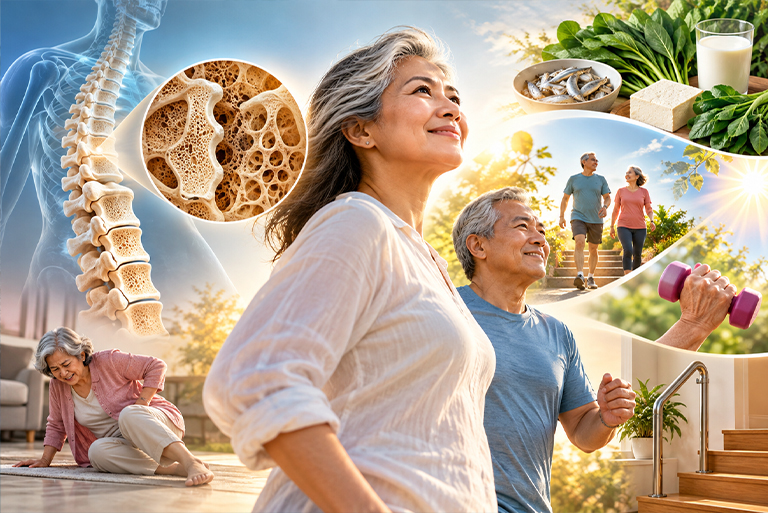
If modern medicine could prescribe a single intervention capable of reducing the risk of heart disease, diabetes, osteoporosis, depression, cognitive decline, falls, and frailty simultaneously, it would likely resemble regular physical activity.
Exercise remains one of the most powerful “medicines” ever discovered. Yet not all exercise serves the same purpose.
For healthy aging, three forms deserve particular attention.
Resistance Training
Resistance exercise—using body weight, resistance bands, free weights, or machines—helps preserve and rebuild muscle strength.
Older adults often worry that strength training is unsafe. When properly prescribed and supervised, it is not only safe for most individuals but highly effective.
Research consistently demonstrates improvements in muscle strength, walking speed, balance, bone health, and quality of life.
Perhaps most remarkably, studies involving adults in their eighties and nineties show that muscles continue to respond to resistance training.
Age slows adaptation. It does not eliminate it.
Aerobic Activity
Walking, cycling, swimming, dancing, and similar activities strengthen the cardiovascular system, improve endurance, enhance mood, and reduce the risk of chronic disease.
Regular aerobic exercise also appears to support brain health by improving blood flow and promoting the release of growth factors that help maintain healthy nerve connections.
|Balance and Flexibility
Balance training often receives less attention than it deserves. Yet balance is one of the strongest predictors of independence.
Simple activities such as tai chi, yoga, standing on one leg while holding a stable support, and supervised balance exercises can reduce the risk of falls.
Flexibility helps maintain joint mobility and makes daily activities easier. Together, these three forms of movement create a foundation for lifelong resilience.
Food as Medicine
Nutrition plays an equally important role. Many older adults unknowingly consume insufficient protein, particularly at breakfast.
Without adequate dietary protein, muscles cannot efficiently repair themselves after exercise or illness.
Current research increasingly supports distributing high-quality protein throughout the day rather than consuming most of it during a single meal.
Lean fish, poultry, eggs, dairy products, soy foods, legumes, and nuts all contribute valuable amino acids necessary for maintaining muscle mass.
Micronutrients also matter. Vitamin D supports muscle function and bone health. Calcium remains essential for skeletal integrity. Vitamin B12 helps preserve neurological function.
Colorful fruits and vegetables provide antioxidants that may help reduce chronic inflammation.
Healthy aging is nourished one meal at a time.
Sleep: The Overlooked Pillar
Sleep often becomes lighter and more fragmented with advancing age. Many people accept poor sleep as inevitable. They should not.
Sleep is when the body repairs tissues, regulates hormones, consolidates memory, and restores energy.
Chronic sleep deprivation contributes to impaired balance, reduced concentration, weakened immunity, mood disorders, and diminished physical performance.
Improving sleep quality may therefore strengthen far more than alertness. It may strengthen resilience itself.
The Importance of Connection
Frailty is influenced not only by biology but also by relationships. Older adults who remain socially engaged generally experience better physical and cognitive outcomes than those living in prolonged isolation.
Conversation stimulates the brain. Shared meals improve nutrition. Community activities encourage movement. Purpose sustains motivation. Friendship protects health.
Loneliness, by contrast, has been associated with increased risks of depression, cognitive decline, cardiovascular disease, and mortality.
Healthy aging is rarely achieved alone. It flourishes within families, friendships, neighborhoods, and communities.
Purpose: The Medicine That Cannot Be Prescribed
Perhaps the most fascinating discovery in longevity research is that people who continue living with a sense of purpose often remain healthier for longer.
Purpose cannot eliminate disease. But it can influence behavior.
People who believe their lives remain meaningful are often more likely to exercise, maintain social relationships, adhere to medical treatment, volunteer, learn new skills, and recover after illness.
Purpose becomes a quiet form of resilience. It gives people reasons to continue moving forward. For many Filipinos, purpose is deeply rooted in faith, family, service, and community.
These may be among the most powerful medicines we possess.
The Opportunity Before Us
Frailty should never be viewed as an inevitable destination. It is better understood as a journey with many opportunities to change direction.
Every walk taken today. Every nutritious meal. Every strength-training session. Every good night’s sleep. Every meaningful conversation. Every chronic disease brought under better control. Each becomes a small investment in future independence.
Healthy aging is rarely determined by one dramatic decision. It is shaped by thousands of ordinary choices repeated over many years.
“The path to healthy aging begins long before old age. Every healthy choice we make today becomes an investment in tomorrow’s independence.”




Leave a Reply