
By Rafael R. Castillo, on behalf of FAME Leaders Academy and H&L Advisory Board
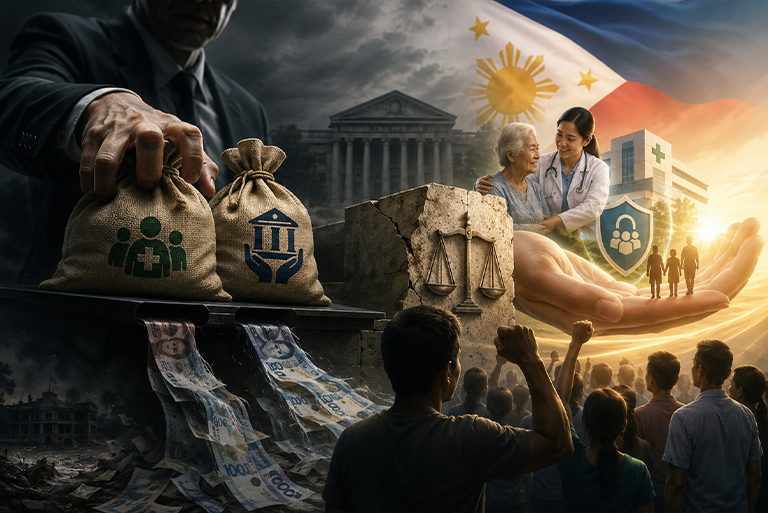
Stepping back from the Philippines—even briefly—offers a vantage point that is both clarifying and sobering. From afar, the recent rallies sweeping parts of Metro Manila appear loud, impassioned, and unmistakably public in their demand for accountability. They have forced Malacañang to act swiftly—reshuffling sensitive positions, firing officials, and making high-profile promises of prosecution. These are not minor tremors; they reflect a public long frustrated by institutional decay.
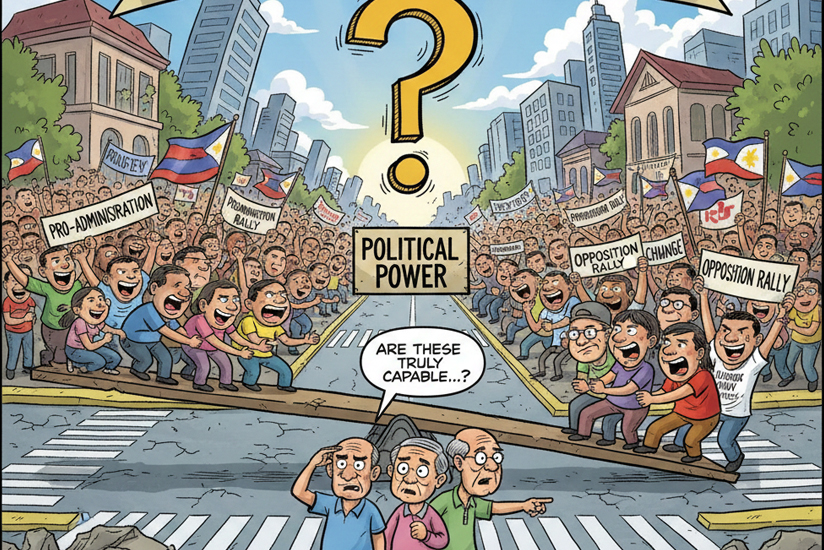
But the harder question remains: Are these rallies truly capable of shifting political power?
So far, the answer is no.
Why These Rallies Are Not (Yet) Destabilizing
Allegations of kickbacks—some raised by former lawmakers—have shaken public confidence and unsettled investor sentiment. Yet these developments fall far short of the historical conditions that trigger regime change.
For an administration to genuinely teeter, two factors must align:
- A unified, broad, non-partisan call for resignation, and
- A fracture within the political or military elite, signaling a withdrawal of support.
Neither condition is present. Even the largest mobilizations, including the INC-led actions, revolve around transparency and accountability—worthy but ultimately abstract demands. Crucially, they do not call for the resignation of President Marcos Jr. or Vice President Sara Duterte.
This is the clearest departure from the historical People Power uprisings.
EDSA 1986 and EDSA 2001 were not simply “mass protests.” They were:

–unified in message,
–morally anchored,
–institutionally endorsed, and
–backed by the Church, business, the middle class, and segments of the military.
Moreover, they had a broadly acceptable successor ready to assume office—a precondition for an orderly transition.
Today’s protests, however passionate, lack all of these elements.
The Real Danger: A Vacuum Without a Successor
The most significant gap today is not anger—it is the absence of a credible, unifying alternative. No figure—not even VP Sara Duterte—commands the cross-sector legitimacy needed to stabilize a transition. This is not a personal judgment but a structural reality.
To force a regime change without a successor is not courageous; it is reckless.
It risks plunging the country into the familiar purgatory of unstable states—where power vacuums invite opportunists, institutions crack, external actors intervene, and national cohesion collapses.
In blunt terms: we risk sliding into banana-republic territory if we push for change without a replacement who can unite the nation.
Reactions from the Public: Insights That Matter
The public reactions to the commentary raised five important themes. Integrating them reveals a more complete national picture:
1. “The train is moving—we must fix everything at once.”
Yes, corruption, patronage, external pressures, and governance failures must be addressed simultaneously.
But effective action requires sequencing.
A conductor who shouts at runaway passengers over the intercom achieves nothing. A real leader stabilizes the engine, controls the speed, and sets direction.
2. “There is a third force waiting in the background.”
Philippine political transitions have never been purely domestic.
When institutions weaken, opportunistic blocs—internal and external—tilt the balance.
This is precisely why institutional cohesion, not fragmentation, is our best shield.
3. “Why not Sara?”
Succession is not about personality.
For any leader to stabilize a transition, four conditions are needed:
–broad cross-sector consensus,
–political elite alignment,
–military confidence, and
–a clear social mandate.
None exist today for any contender.
4. “Gen Z and anti-corruption communities are the sparks of change.”
True! Their energy and idealism are essential. They function as society’s conscience.
But sparks do not sustain a fire. Reform must be translated into institutions, policies, and lasting systems.
5. “Corruption has deep roots. Only decisive leadership can end it.”

Correct—but decisive leadership is effective only within a stable environment.
Destroying the platform before repairs begin will not help us.
THE CENTRAL POINT
We all want reform.
We all want accountability.
We want a Philippines that is stronger, cleaner, and just.
But real change requires both courage and coherence.
Reform must be anchored on:
–institutional stability,
–credible accountability mechanisms,
–protection from opportunistic power blocs, and
–a realistic understanding of succession dynamics.
Yes, let us push for reform.
But let us not push the country off the rails.
Moving Forward: A Practical Path for the Nation
1. Strengthen Institutions Before Individuals
Reforms must follow the logic of the CADENA Act: transparency that is tamper-resistant, real-time, and structural—not personality-based.
2. Demand Measurable Accountability from the Administration
Not slogans, not press releases—but indictments, dismissals, and reforms that survive legal scrutiny.
3. Support Political Stability While Working Toward 2028
Change will come—but it must come with a legitimate, broadly acceptable successor.
A premature power vacuum will only empower the opportunists waiting in the wings.
4. Convert Public Outrage Into Institutional Reform
Gen Z energy and civil society pressure must translate into laws, procurement reforms, digital disclosures, and civic education.
5. Guard Against External Manipulation
Strong institutions—not emotional swings—prevent foreign powers or local blocs from tipping the balance for their own gain.
A Final Word
The path to national renewal is not paved with noise alone—it requires clarity, unity, and disciplined resolve.
We can demand accountability today without sacrificing stability tomorrow.
And with the right alignment of reforms, institutions, and leadership, 2028 may indeed become the reset the country deserves.
———-
This commentary was published initially in CoverStory.ph